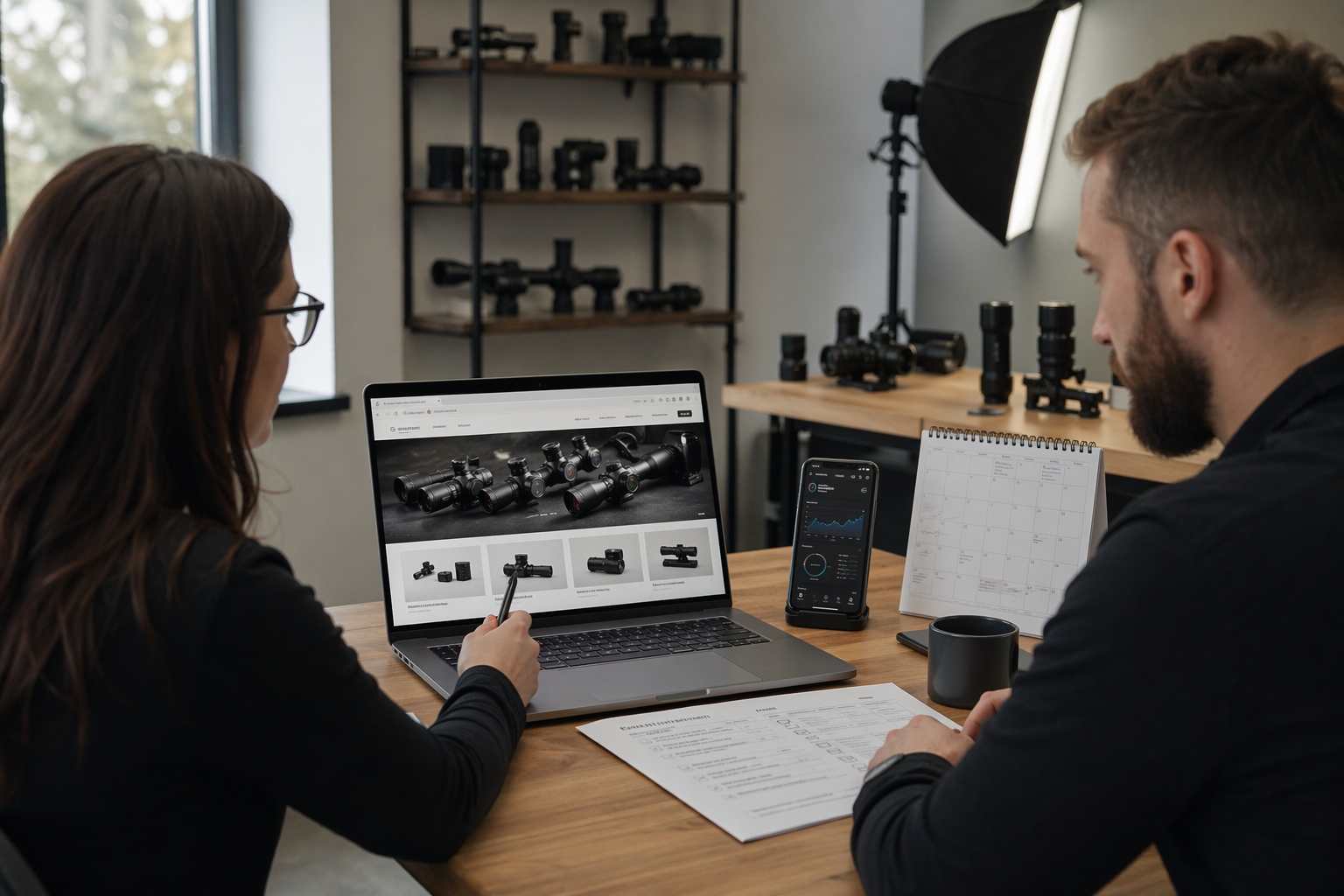
SEO for new, pre-owned and vintage watches

Watch SEO Services for Retailers, Dealers and Watch Brands

Watch buyers type reference numbers, case sizes and condition terms like "box and papers" into search, then compare the same model across a dozen dealers before they buy. Our watch SEO work organizes your brands, collections and individual listings around those searches, handles watches that sell in a day without leaving dead URLs, and marks up condition and reference data so Google and AI assistants read each listing correctly.

Since 2012
Building and growing websites
30+
In-house specialists
800+
Projects delivered

MAK Digital at a glance

  • 15

    Years in eCommerce

    Fifteen years of building, migrating, and growing online stores for B2B and B2C brands.

  • 30+

    In-house specialists

    SEO, AI search, paid media, design, and development experts under one roof.

  • USA

    US-led, globally staffed

    A US-based core team you talk to directly, backed by vetted specialists worldwide.

  • 4.9

    Client rating

    Average score across 650+ verified client reviews.

What we do for watch stores

Watch SEO services

A watch catalog behaves differently from most retail catalogs. New pieces share a manufacturer reference with hundreds of other dealers, while pre-owned pieces exist exactly once and may sell before Google has crawled them. Our eCommerce SEO team builds the plan around both problems.

  • Brand, collection and reference architecture

    We map every brand hub, collection page and reference-level page to the query it should own, so "[brand] [model] 39mm" and "[brand] [model] green dial" land on the right page instead of five near-identical listings.

  • Sold and one-of-one inventory rules

    We write one sold-listing policy for your store: which sold watches stay live as reference records, which redirect to the reference or collection page, and which are retired, then build the templates and redirects to apply it automatically.

  • Watch product page optimization

    We replace pasted manufacturer text with listing copy that covers the specific piece: year, condition grade, what is included, service history, bracelet sizing and a spec table for case, movement, crystal and water resistance.

  • Condition schema and Merchant Center

    We implement Product and Offer markup with brand, model, mpn and itemCondition (new, used or refurbished), and align your Google Merchant Center feed so condition and identifiers match what the listing page says.

  • Filter and facet indexing

    We decide which combinations of case size, material, movement type, complication and dial color earn an indexable page and which stay as crawl-controlled filters.

  • Collector content and AI answers

    Our writers produce movement explainers, sizing guides, authentication pages and buying guides structured so ChatGPT, Google AI Overviews and similar assistants can cite your store, supported by our generative engine optimization work, which is included in MAK SEO plans from $2,000/month.

  • Showroom and repair local SEO

    For stores with a counter or a workshop, we set up Google Business Profile, service pages for battery replacement, servicing and bracelet sizing, and "sell my watch" pages through our local SEO team.

Business models

Watch SEO by business model

The same keyword plan does not fit an authorized dealer and a vintage specialist. We start by placing your store in one or more of these models.

Authorized dealers

Authorized dealers compete with the manufacturer's own site for model names, and some brands set terms in the dealer agreement about online pricing, advertising, use of logos and whether a model can be sold online at all. We plan SEO inside those terms and leave questions about the agreement itself to the brand or your attorney.

Pre-owned and vintage dealers

Every pre-owned listing is unique, so the priorities are fast indexing, reference-level pages and clear condition grading. Vintage dealers add year-specific and dial-variant searches, plus provenance and originality questions (service dials, replaced hands, refinished cases) that buyers check before they inquire.

Gray-market dealers

Gray-market dealers sell new or unworn watches bought outside the authorized network, so buyers search "unworn", "new with stickers" and "[model] dealer warranty". Listings need to say plainly whose warranty covers the piece, since the manufacturer warranty may not apply, and brand names should be used only to describe the genuine watch being sold, without logos or wording that suggests an authorized relationship. Trademark questions go to your attorney.

Microbrands selling direct

A microbrand has no reference-number demand at launch. Its searches come from the attribute side ("affordable automatic diver", "field watch with sapphire crystal") and from its own brand name once reviews and forum discussion start. We build collection pages around those attributes, product pages that explain the movement and case construction, and pre-order and limited-run pages that do not turn into dead ends after the run sells out.

Strap, accessory and parts stores

Strap and accessory sellers live on fitment: lug width in millimeters, quick-release spring bars, curved end links for a specific case, winder rotation settings. Those pages need lug-width and compatibility filters and copy that names the case shapes a strap fits, written without implying a manufacturer endorsement.

Repair and service shops

Service businesses rank on local intent and trust: movement servicing, crystal and gasket replacement, pressure testing, battery changes and estimates by mail.


Site structure

Catalog architecture: brands, collections and references

Most watch searches map onto three levels, and each level needs its own page type with a clear job.

Brand hubs

A brand hub covers the house's history in your store's own words, the collections you carry, the condition range you stock and links into every collection. It should target "pre-owned [brand]" or "[brand] watches for sale" intent, not try to outrank the manufacturer for the brand name alone.

Collection pages

Collection pages (a dive line, a chronograph family, a dress range) carry the most commercial demand on most watch sites. Each needs an introduction that explains how the references within it differ, filters that match the collection's real variations, and links to the reference pages underneath.

Reference pages and individual listings

For references you sell repeatedly, a reference-level page holds the evergreen content: specifications, production years, dial and bezel variants, sizing notes and a live module of every piece you currently have in that reference. Individual listings then link up to it. The reference page survives each sale and keeps its links. We use canonicals only where two URLs are genuinely the same item, because a canonical on a different watch tells Google to ignore a page you want indexed.

One-of-one inventory

Handling one-of-a-kind and sold inventory

A pre-owned watch page can collect links, forum mentions and rankings, then the piece sells. What happens next decides whether that value is kept or thrown away.

Keep, redirect or retire

  • Keep live as sold when the page has backlinks, steady search traffic or is a useful reference record. Mark it sold, set the Offer availability to SoldOut, remove the buy button and show current pieces in the same reference.
  • Redirect to the reference or collection page when the listing has no value of its own and a close match exists. Redirecting everything to the homepage is treated much like a missing page.
  • Retire with a 404 or 410 when nothing similar is in stock and the page has nothing to offer a visitor.

The important part is applying one rule consistently, ideally through the platform rather than by hand, so hundreds of sold listings do not pile up as thin pages.

Getting new arrivals indexed

New arrivals should appear on a crawlable "just in" page and on their reference and collection pages the moment they go live, with an up-to-date XML sitemap carrying accurate lastmod dates. Buyers who watch for a specific reference can sign up for arrival alerts, which gives you an email list built on the same reference data as your pages.

Listings

Watch product pages that rank and convert

A watch listing is judged on detail. Buyers zoom into crown guards, check bracelet stretch and compare the serial range against the claimed year. Search engines reward the same detail when it is written as text rather than hidden in images.

Copy beyond the manufacturer description

Manufacturer text is copied by every dealer carrying the model. For new pieces, add sizing notes, how the bracelet adjusts and what is in the box. For pre-owned pieces, describe this particular watch: year, condition by area (case, bezel, crystal, dial, bracelet), what is included, last service date and who serviced it.

Spec tables

Use a consistent table for case diameter, lug-to-lug, thickness, lug width, case material, crystal, movement type and caliber, power reserve, complications and water resistance. Consistent fields feed your filters, your schema and the comparison questions AI assistants answer.

Images and speed

Watch pages often carry fifteen or more large photos. Responsive image sizes, lazy loading below the first image, modern formats and descriptive alt text ("steel diver, black dial, wrist shot on 7 inch wrist") keep the gallery detailed without hurting Core Web Vitals. Our product page SEO guide covers the template side in more depth.

Structured data

Structured data and Merchant Center for new and pre-owned watches

Product markup is where a watch store tells Google exactly what each listing is. We mark up brand, model, the manufacturer reference as mpn, your stock number as sku, images and an Offer with price, currency and availability. The itemCondition property separates NewCondition, UsedCondition and RefurbishedCondition, which matters when the same reference appears new on one page and pre-owned on another. You can check current markup with our schema check tool.

Merchant Center for used and vintage pieces

Google Merchant Center asks for a condition value of new, used or refurbished, and it expects a GTIN wherever the manufacturer has assigned one. Many vintage pieces and some pre-owned watches have no GTIN on record, so the feed should send brand plus mpn and mark the identifier as missing rather than invent a number. Feed titles should lead with brand, model, reference and condition. Merchant Center can also disapprove images that carry promotional overlays or watermarks, which many dealers add to discourage photo theft, so feed images may need clean versions. Our Google Shopping management team handles the feed side.

Page, schema and feed must agree on price, condition and availability, so in fast-turning pre-owned stores we tie all three to the same inventory field.

Faceted navigation

Which watch filter pages deserve indexing

Watch filters multiply quickly. This is the starting view we use to decide which filter combinations become landing pages and which stay crawl-controlled. Our faceted navigation SEO article explains the mechanics.

Watch filter types, example searches and indexing approach
FilterExample searchIndexing approach
Movement typeautomatic dive watchIndexed as a landing page with its own copy where the range is deep
Complicationpre-owned GMT watchIndexed per complication; combined with condition only where stock supports it
Case size38mm dress watchIndexed for common sizes within a collection; other sizes stay as filters
Dial colorgreen dial watchIndexed for colors with real demand; rare colors noindexed or not linked
Case materialtitanium field watchIndexed with copy on weight and wear; plating variants kept as filters
Condition and setwatch with box and papersOne indexed page per condition group; never stacked with three other filters
Price sort and rangewatches sorted low to highNever indexed; parameter URLs blocked from crawling

Collector content

Content that earns collector trust

Watch buyers spending serious money want to know who they are buying from. These page types answer the questions collectors ask before they send an inquiry, and they give our content marketing writers material that no marketplace listing carries.

  • Authentication and grading pages

    Explain how a piece is inspected: what is checked on the movement, case and dial, how service parts are disclosed, and how your grading scale maps to photos. Link to it from every listing.

  • Movement and complication explainers

    Plain answers to automatic vs manual-wind vs quartz, what a GMT hand does, how a moonphase or perpetual calendar works and why service intervals vary. These pages catch research searches weeks before a purchase.

  • Sizing and fit guides

    Case diameter alone misleads buyers. Guides on lug-to-lug, thickness and wrist size, with your own wrist shots, answer the fit question buyers raise most often before they commit to a piece they cannot try on.

  • Buying guides by collection and budget

    Guides such as a first mechanical watch or a dive watch buying guide link straight to the matching collection and reference pages, so research traffic has a path to inventory.

Standards

Watch SEO standards we check on every store

The audit tests your watch store against these points before any new content is planned.

  • Every listing states the manufacturer reference number in text, the title and the mpn field
  • Sold listings follow one written rule: keep as sold, redirect to the reference, or retire
  • Product markup carries brand, model, mpn and the correct itemCondition for new, used or refurbished pieces
  • Merchant Center condition, price and availability match the listing page and update when a watch sells
  • Each listing discloses box, papers, warranty card, extra links and last service in plain words
  • Every case size, movement and dial filter has a crawl rule, and price sorting is never indexed
  • Reference pages link to all current pieces in that reference, and each listing links back up
  • Galleries use responsive images and descriptive alt text, with clean feed images where photos are watermarked
  • Reviews on the site come from real buyers, shown in line with FTC rules on endorsements and fake reviews

How a MAK watch SEO engagement works

Watch engagements usually start with catalog and data fixes, because sold-listing and condition problems hold back everything built on top of them. How quickly reference and collection pages move depends on how many dealers and marketplaces already compete for them, so we describe the method rather than promise rankings. Fixes to sold listings, indexing and markup tend to register sooner than new collector content and links, which build over months.

  • Watch store audit

    We crawl the store, count sold and expired listings, check indexing of filter URLs, test Product markup and compare your Merchant Center feed against live pages.

  • Architecture and keyword map

    We assign brand, collection, reference and condition searches to owner pages, mark the gaps and agree a sold-inventory rule with your team.

  • Catalog, template and schema fixes

    We update listing templates, spec tables, condition disclosure, image handling, structured data and redirects, working in your platform or alongside your developer.

  • Collector content program

    We publish authentication, grading, movement, sizing and buying guide pages in an order set by demand and by the inventory you carry most.

  • Reporting by brand and reference

    Monthly reports break organic traffic, inquiries and revenue down by brand, reference group and condition, so you can see which parts of the case are earning search demand.

What Clients Say About MAK Digital

Reviews from the businesses whose websites and search programs we run.

  • Anthony DiCicco

    ProDryers

    “MAK is literally my go-to developer for Volusion and BigCommerce. I have used Mary many times and will continue to do so. I have not found a more reliable and knowledgeable person to handle all of our technical issues with both platforms. I made the mistake of going with a company that I thought was bigger and better. I ended up having to hire MAK to fix all of their mistakes that would have cost me hundreds of thousands in lost sales. It's important to have a full understanding of the database structures and business rules of each platform. MAK really understands the fine details behind these platforms. MAK has truly earned my trust for life.”

  • Rohit Rana

    Royalegyptianbedding.com

    “We wanted to redesign our Volusion store and I am glad to say that we found Mak Digital Design. Mary has been very helpful right from the beginning. She was patient enough to listen and understand our requirements in detail. The project was completed in time and Mak designed our website exactly the way we wanted it to be.”

  • ANSGear

    “I've been trying out various website and marketing firms since 2008, and let me tell you, MAKDigital not only takes the cake for professionalism but they're also the most hands-on crew I've ever collaborated with.”

See where your watch store stands in search

Our free audit reviews your brand, collection and reference pages, sold-listing handling, Product condition markup and Merchant Center feed, and shows which watch searches other dealers are taking from you.

Watch SEO FAQs

Questions watch dealers, store owners and watch brands ask before starting SEO.

How is SEO different for a pre-owned watch dealer than for a new-watch retailer?

A new-watch retailer sells the same references as many other dealers and the manufacturer, so the work focuses on store, collection and service pages and on listing content that goes beyond the standard description. A pre-owned dealer has unique pieces that sell quickly, so the priorities are fast indexing of new arrivals, reference pages that keep demand when a piece sells, a consistent sold-listing rule, condition grading and itemCondition markup for used and refurbished watches.

What should happen to a watch product page after the watch sells?

Pick one rule and apply it every time. If the page has backlinks or steady traffic, keep it live, mark it sold, set availability to SoldOut and show similar pieces. If it has no value of its own, redirect it to the reference or collection page. If nothing similar exists, return a 404 or 410. Avoid redirecting sold watches to the homepage.

Should every reference number have its own page?

Not every one. References you stock repeatedly or that people search for by number deserve a reference-level page with specifications, variants and every current piece in that reference. Rare references can live as individual listings linked from the collection. The goal is one page per search intent, not a thin page for each number in a catalog.

Can authorized dealers do SEO within brand advertising rules?

Yes. Some watch brands set terms on online pricing, logo use, advertising and online sales in their dealer agreements, and SEO has to stay inside them. That still leaves store and showroom pages, appointment and waitlist pages, service department pages, local search and editorial content about the collections you carry. We follow the guidelines you share with us; we do not give legal advice on dealer agreements or trademark use.

How do you show authenticity and condition so buyers and search engines trust a listing?

Publish an authentication page that explains your inspection, a grading scale tied to example photos, and per-listing disclosure of box, papers, service history and any replaced parts. Photograph the actual watch, not stock images. Mark up condition with itemCondition, show your warranty and return terms, and collect reviews from real buyers. Our luxury goods SEO page covers trust signals for other high-value categories.

Which eCommerce platform works best for a watch store?

It depends on catalog size, how quickly inventory turns and which inventory, consignment or point-of-sale tools you use. BigCommerce and Shopify both handle watch catalogs well when filters, condition fields and sold-listing logic are set up properly. MAK Digital is a BigCommerce Elite Partner and also runs Shopify SEO. If you are moving platforms, every reference and listing URL needs a mapped redirect; our Volusion to BigCommerce migration service is one example of how we handle that.

How long does watch SEO take to show results?

It depends on the state of the store and on how many dealers, marketplaces and brand sites already compete for your references. Technical work such as fixing sold-listing handling, filter indexing, condition markup and Merchant Center errors usually shows up in crawl and indexing reports first. Reference and collection pages that face heavy competition, collector content and earned links build more slowly. We report progress by brand, reference group and condition each month rather than promising a ranking date.

Does watch repair and servicing belong in an SEO plan?

Yes, if you have a bench or a service partner. Searches for battery replacement, servicing, pressure testing and bracelet sizing are local and high intent, and a service customer often becomes a buyer or a seller later. Separate service pages, a Google Business Profile with service categories and a booking or mail-in estimate form cover most of it.

SEO Resources

From the eCommerce Experts

Read Our Blog

Start Your Project With Us

Share some details, and our team will follow up.

Please write at least 20 characters.

Click to upload or drag and dropUp to 5 files, 10 MB each

    Get the MAK Digital Newsletter

    eCommerce design, development, SEO, and marketing insights, a few times a month. No spam, unsubscribe any time.

    By subscribing you agree to our privacy policy.