
Crawlability
Can AI crawlers reach and read the site at all?
- HTTPS
- robots.txt present and sane
- AI crawler access: GPTBot, ClaudeBot, PerplexityBot, Google-Extended, Bingbot not blocked
- XML sitemap declared
- llms.txt present
- No noindex on the page
 We help you sell moreRequest a Free Quote
ChatGPT, Perplexity, Gemini, and Google's AI Overviews decide whether to cite a site from signals most owners never see: whether their crawlers are allowed in, whether the business is defined as an entity in structured data, whether the page answers questions in a form a model can lift. Run the free scan to see where you stand, in plain language, with the fix for each item.
Start here · free technical pre-check
Enter your homepage. We read the page, your robots.txt, llms.txt, and sitemap, and grade the technical signals AI assistants use to find and cite a business. You get a score out of 100, every signal as pass, warn, or fail, and what each one means.
Free · no signup · scores 17 signals · about 20 seconds. We save the address you test, the result, and your IP address and browser type, so we can improve the scan and help if you get in touch; see our privacy policy.
Want these fixed, and the content and authority work that turns readiness into citations?
15
Fifteen years of building, migrating, and growing online stores for B2B and B2C brands.
30+
SEO, AI search, paid media, design, and development experts under one roof.
USA
A US-based core team you talk to directly, backed by vetted specialists worldwide.
4.9
Average score across 650+ verified client reviews.
What the scan checks
Each signal is something an AI system actually reads before it decides to cite a site. None of them is a guarantee of being cited; all of them are prerequisites.
Can AI crawlers reach and read the site at all?
Does the page describe itself clearly to machines?
Is the business defined as an entity, and the content as a type?
Can an assistant lift a clean answer from the page?
After the scan
The scan measures readiness. Being chosen as the source is a separate program, and here is how we run it.
Crawler access, structured data, and metadata gaps are implemented by our developers, not handed back as a checklist, usually within the first two weeks.
Organization, product, and author markup, consistent naming, and sameAs references across your profiles, so every AI system resolves your brand to the same thing.
Pages restructured and new content written so the question, the direct answer, and the proof appear in that order, with our content team.
Monthly checks of where you appear in AI Overviews, AI Mode, ChatGPT, and Perplexity for your priority queries, reported with rankings and revenue through our SEO services.
Google's AI Overviews now reach about two billion people a month, and when one appears the first organic result loses roughly half its clicks. The traffic that assistants do send converts several times better than a search click, because the visitor arrives already recommended. Only about a third of the pages AI engines cite also rank in the organic top ten: being cited is its own discipline, and these signals are its entry ticket.
What the score means, what it does not, and what to do next.
Technical readiness: whether AI crawlers can reach the site, whether the page describes the business as an entity in structured data, and whether its content is shaped so an assistant can lift an answer. It is a weighted total across 17 signals, each pass, warn, or fail. It is not a measure of how often AI currently cites you; that is what a full audit measures.
A single page is enough to grade site-wide signals (HTTPS, robots.txt, sitemap, llms.txt, entity schema) and to sample the page-level ones. A full audit reads your category, product, and content templates, your crawl logs, and your current AI citations across engines.
It is a choice. Blocking GPTBot or ClaudeBot keeps your content out of training sets, but it also keeps you out of the answers those assistants give shoppers today. Most stores choose to allow the search-oriented crawlers (OAI-SearchBot, PerplexityBot, Google-Extended) and decide separately about training bots; we can set the rules either way.
A plain-text file at /llms.txt that tells AI assistants what the site is and where its key pages are. It is optional and lightly adopted so far, which is why we score it as a warning rather than a failure, but it costs little and is one more clear signal.
It means nothing technical is stopping it. Citations depend on content that answers the questions your buyers ask, on authority (links and mentions the engines trust), and on consistent entity data across the web; our schema validator checks that entity markup property by property. The free SEO audit looks at those and reports where you appear today.
We store the address, the score, and the signal results, along with your IP address and browser type, so we can improve the scan and, if you ask for help, pick up where it left off. The scan asks for no name or email. We do not sell or share it; see the privacy policy.
The free SEO audit goes beyond the scan: your templates, crawl logs, current AI citations, Core Web Vitals, and the three fixes worth the most, reviewed by a strategist on a call.
From the eCommerce Experts
Pages built only to earn search rankings and clicks are no longer structured enough for every search surface. In AI-era discovery, the…
Read More: Answer-First Content Structure: Writing Pages That Win AI CitationsA brand-new domain. Zero authority. Zero backlinks. Zero sales history. How performance-first development, surgical technical SEO, and an AI-driven content engine built…
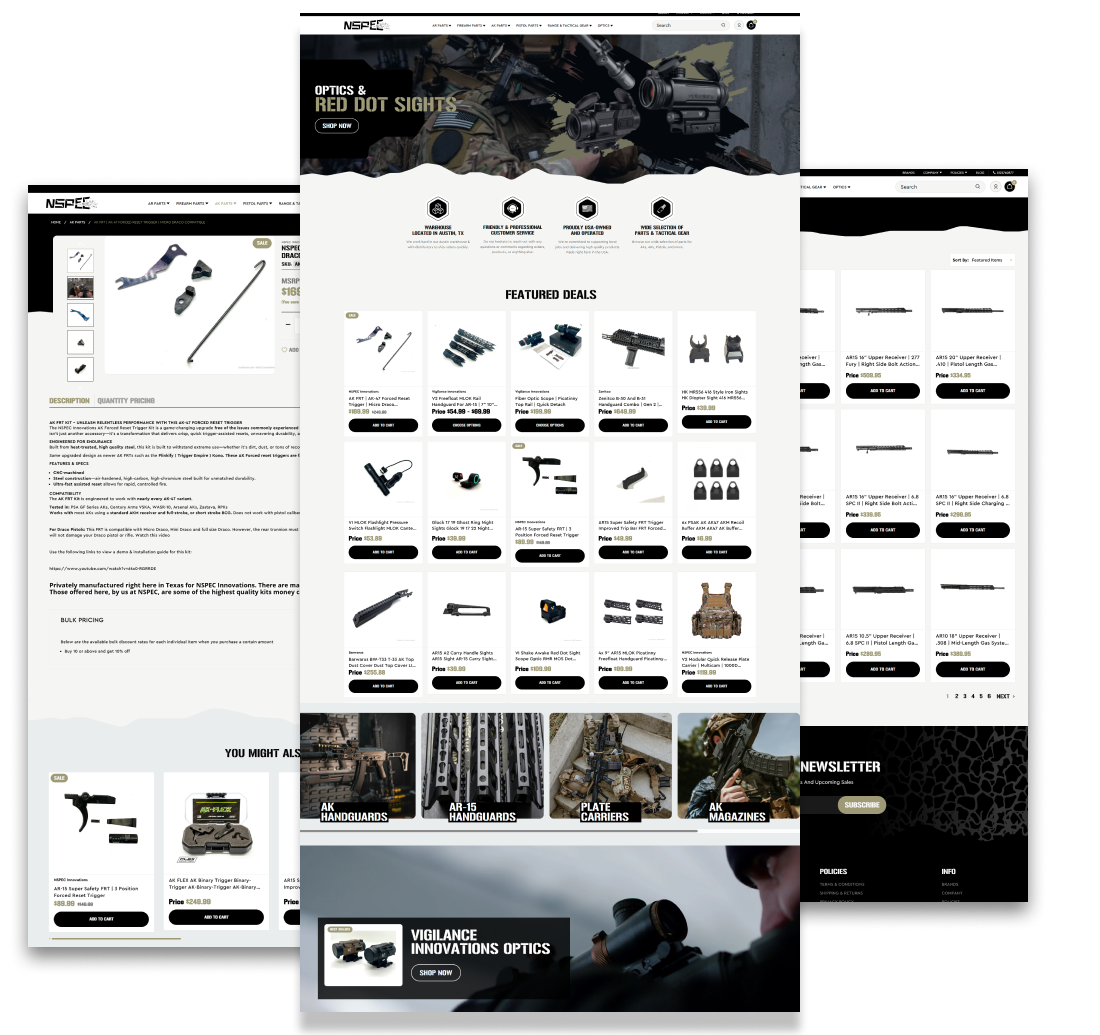
Read More: From Zero to $1M+ in 10 Months: How Technical SEO and AI-Powered Content Launched NSpec Innovations Into a Competitive MarketGoogle AI Overviews mark a major change in how search results are delivered, using generative AI to assemble instant answers at the…
Read More: Google AI Overviews: Complete SEO Strategy Guide for 2026Choosing MAKDigital means partnering with a team of experienced professionals dedicated to your success. We offer tailored solutions, expert advice, and a commitment to delivering exceptional results. Our focus on innovation and customer satisfaction sets us apart in the eCommerce industry.
Twice a month: what changed in Google and AI search, what it means for your store, and exactly what to do about it. Written by the people who build and rank stores for a living.
First issue lands within two weeks. Check your inbox for a hello from us in the meantime.