AI SEO for eCommerce: The Complete 2026 Strategy for Online Stores

Winning now means treating discovery as a product data problem, not only a rankings problem. AI SEO for eCommerce is the discipline of making your products, categories, brand proof, reviews, policies, and availability easy for search systems and AI answer systems to interpret, trust, compare, and send qualified shoppers toward.
That does not replace eCommerce SEO. It expands it. Traditional online store SEO still needs crawlable category pages, indexable product pages, clean internal links, useful copy, fast templates, and strong commercial intent targeting. The shift is that those same assets must also be structured well enough to support summaries, product comparisons, shopping modules, feed-based discovery, and assistant-style recommendations where the shopper may never begin on your homepage.
- Weak signal: a product page with a manufacturer description, vague title, missing specs, thin reviews, unclear shipping terms, and inconsistent price or availability across the page and feed.
- Strong signal: a product page with a precise product name, variant-level attributes, unique use-case copy, structured specs, visible reviews, current price and stock status, clear fulfillment details, and internal links from relevant categories and guides.
The operating model is simple: improve the quality, consistency, and accessibility of every commercial signal that helps a machine understand what you sell and helps a shopper decide whether to buy. AI-written blog posts are not the strategy. Better product data, stronger category architecture, trustworthy content, validated structured data, cleaner feeds, and revenue-based measurement are the strategy.
How AI Is Changing eCommerce Search in 2026
The shopper journey is becoming less linear: a query can turn into a summarized recommendation, a comparison table, a shopping module, a cited answer, or a traditional results page before the customer ever reaches a product detail page.
For online stores, the practical change is that pages are no longer evaluated only as destinations. They are also inputs. AI-assisted systems can use visible copy, structured product data, reviews, category context, pricing language, availability signals, and brand information to form short answers or product comparisons. A page that says “lightweight jacket” is less useful than one that states “men’s waterproof shell, 2.5-layer nylon, 10,000mm water resistance, packable hood, 11 oz, best for hiking and travel.” The second version gives machines and shoppers usable attributes.
- Confirmed behavior to plan around: search experiences increasingly summarize, compare, and extract information from pages instead of sending every shopper directly to a list of links. That makes clarity, crawlability, and structured commercial data more important.
- Likely 2026 development: generative search will keep blending informational and transactional discovery. Queries like “best dishwasher-safe lunch boxes for kids under $25” may surface buying criteria, product shortlists, review themes, and retailer options in one experience.
- Durable best practice: stores still need pages that deserve to rank. AI visibility does not compensate for thin category pages, duplicated manufacturer copy, blocked resources, inconsistent feeds, or weak internal linking.
This is why AI eCommerce SEO should focus on being both rankable and quotable. “Rankable” means the page can be crawled, indexed, understood, and matched to demand. “Quotable” means the page contains concise, corroborated statements an AI system can safely reuse: exact specs, clear pros and cons, visible review patterns, shipping and return terms, and category-level buying guidance.
AI Overviews and answer engines tend to favor information that can be reconciled across signals. If the product page says an item is in stock, the feed says it is unavailable, reviews mention sizing issues, and the description hides material details in an image, the store is harder to trust algorithmically. If the page, schema, feed, reviews, and category copy all reinforce the same facts, the store gives search systems a cleaner basis for interpretation.
The takeaway is not to chase every new AI surface separately. Build commercial pages that answer comparison questions directly, expose attributes in machine-readable formats, support claims with reviews and policies, and remain technically accessible. That gives the store a stronger chance to appear in traditional rankings, AI Overviews, shopping results, and assistant-style recommendations without depending on any single feature.
Build the Technical and Product Data Foundation AI Systems Can Trust
The foundation is not a tool stack; it is a store that can be crawled, rendered, indexed, and reconciled against the commercial data you distribute elsewhere.
Start with crawlability and indexation. Crawlability means search systems can reach the URL and its resources; indexation means the page is eligible to appear in search results. A product page blocked in robots.txt, hidden behind broken pagination, or dependent on unavailable scripts may exist for shoppers but remain unreliable for discovery. Your priority pages should return clean 200 status codes, load their primary content in the rendered HTML, and avoid accidental noindex directives.
Canonical tags tell search engines which version of a similar or duplicate page should be treated as the primary URL. This matters for product variants, tracking parameters, filtered category pages, and duplicate collection paths. A strong setup points color or size variants to the main product when the content is substantially the same; a weak setup lets every parameterized URL compete with the original and dilute signals.
Clean URLs, XML sitemaps, and robots controls work together. Clean URLs are readable, stable addresses such as /mens-waterproof-hiking-jackets/ instead of long parameter strings. XML sitemaps list the canonical URLs you want crawlers to discover, especially important for large catalogs where not every product is close to the homepage. Robots controls define what crawlers may access; use them to reduce crawl waste on cart, internal search, and low-value filtered URLs, not to hide pages that still need to be indexed.
JavaScript is a risk when essential product information appears only after client-side rendering. Price, availability, reviews, product name, images, and core specifications should be visible in a crawlable rendered state. If a crawler sees a blank template before scripts execute, the page becomes harder to interpret, even if it looks complete to a shopper.
- Performance: product and category templates should be fast under real shopping conditions, not just on an empty test page. Heavy apps, oversized images, review widgets, personalization scripts, and third-party tracking can slow the path from click to product evaluation.
- Structured data: use Product, Offer, AggregateRating, and Review markup only where the page visibly supports those facts. Schema markup helps search engines identify the product entity, price, availability, ratings, and merchant offer details.
- Product feeds: feeds support shopping discovery and commercial accuracy by sending product titles, images, prices, availability, GTINs, brands, conditions, shipping attributes, and category mappings to merchant systems. The page, feed, and structured data should agree.
A practical AI SEO for eCommerce checkpoint is simple: pick ten revenue-critical products and compare the live page, canonical URL, sitemap entry, rendered HTML, structured data, and feed row. If price, availability, variant naming, images, or identifiers differ, fix the data pipeline before adding more content. In modern eCommerce SEO, inconsistent product truth is a visibility problem as much as an operations problem.
Design Category Architecture for Search Intent, AI Interpretation, and Crawl Control
Once the store’s product truth is consistent, the next leverage point is how the catalog is grouped. Category and collection pages are where broad commercial demand, product relationships, and crawl priorities meet; they should not be treated as interchangeable product grids.

Map the architecture to demand and search intent before designing navigation. A primary category targets a broad buying intent such as “running shoes.” A subcategory narrows the choice set, such as “trail running shoes” or “stability running shoes.” Modifier pages capture attributes shoppers actively use to decide, such as “waterproof trail running shoes,” “wide running shoes,” or “running shoes for overpronation.” Comparison intent belongs on pages that help shoppers choose between meaningful alternatives, not on random filtered URLs.
Strong category page SEO starts with a page that explains the assortment. A useful collection page has a clear H1, short buying guidance, visible product availability, sort and filter controls, links to important subcategories, and enough context to distinguish one product group from another. A weak page shows the same title, boilerplate copy, and product cards as dozens of other collections, leaving both shoppers and crawlers with little reason to prefer it.
Faceted navigation needs deliberate rules. Facets are filter combinations such as size, color, price, brand, material, fit, compatibility, or feature. Some facets deserve indexable landing pages when they match real demand and produce a stable, useful assortment; for example, “black cocktail dresses” or “stainless steel undermount sinks.” Other facets should remain crawlable but non-indexable, canonicalized to the parent, or excluded from crawl paths when they create near-duplicate pages such as every size-plus-price-plus-sort combination.
- Indexable category or subcategory: use when the page has distinct demand, stable inventory, unique copy, and internal links from navigation, breadcrumbs, or related collections.
- Noindex filtered page: use when the filter helps shoppers refine results but does not deserve to compete in search, such as temporary price ranges or low-volume combinations.
- Canonical to parent: use when a filtered URL is substantially the same as the main category and should consolidate signals rather than become a separate search page.
Internal linking should teach relationships, not merely distribute links. The homepage and main navigation identify the store’s core categories; breadcrumbs clarify hierarchy; related category modules connect adjacent intents; buying guides support decisions; product pages link back to the collections where shoppers compare alternatives. For AI SEO for eCommerce, this structure helps machines infer that products belong to a coherent assortment, not just a disconnected database of SKUs.
Optimize Product Pages for Rankings, AI Summaries, and Conversions
At SKU level, the job shifts from organizing choices to proving that one item is the right choice. A product page should give search systems a clean entity to understand and give shoppers enough evidence to buy without needing to leave for comparisons, reviews, policy details, or basic specifications.
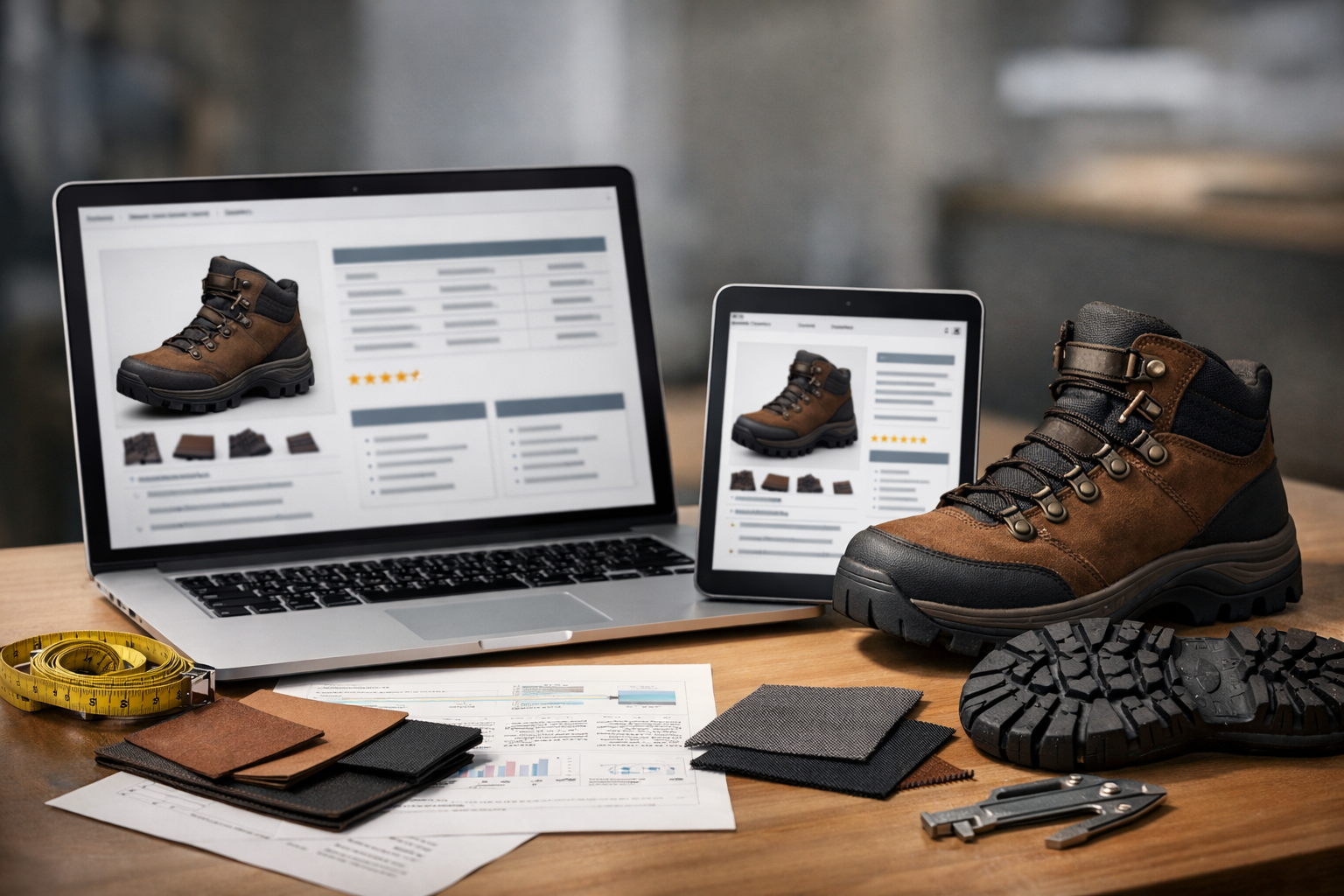
- Title tag: use it to summarize the commercial query the page should satisfy: product name, defining attribute, brand, and category where space allows. “Valken Alpha Paintball Jersey â Lightweight Padded Tactical Jersey” is stronger than “Alpha Jersey” because it carries the product, category, use case, and differentiator.
- H1: make it the visible product identity, not a keyword-stuffed rewrite. The H1 should usually match or closely mirror the real product name so shoppers, crawlers, structured data, and feeds are describing the same item.
- Product name: standardize naming across variants. If size, color, material, model year, compatibility, or pack quantity changes the buying decision, expose it clearly in the name, selector, or variant label rather than hiding it in body copy.
Product page optimization depends on replacing generic manufacturer copy with decision-making content. A weak description says, “Premium quality backpack for everyday use.” A useful description says who it fits, what it holds, what it weighs, what material it uses, whether it fits a 16-inch laptop, how weather-resistant it is, and what tradeoff the shopper should expect. That is the difference between filler text and product information that can support rankings, AI summaries, and conversions.
Specifications should be structured for comparison. Put dimensions, materials, ingredients, voltage, fit, capacity, care instructions, included accessories, warranty, compatibility, and model numbers in scannable fields where relevant. Product schema should reinforce the same core data found on the visible page: name, image, description, SKU or identifier, brand, offers, price, availability, and reviews when eligible. The takeaway is simple: if an attribute affects purchase confidence, make it visible to humans and legible to machines.
Media should answer what text cannot. Use original product images that show scale, angles, packaging, texture, components, and in-use context. Add descriptive alt text where it helps identify the product or important visual detail, not as a place to repeat keywords. Video is most valuable when it demonstrates assembly, fit, size, movement, before-and-after use, installation, or comparison against adjacent models.
Commercial details belong on the product page, not only in checkout. Price, availability, shipping cost or threshold, delivery timing, return window, warranty, payment options, and inventory status change whether a shopper trusts the page. When these details are missing, AI systems have less reliable commercial context and shoppers have more reasons to return to search results.
Reviews should be mined as product intelligence, not treated only as star ratings. Review schema can help eligible review information align with structured data, but the larger value is in the language customers use: “runs small,” “works with older models,” “quiet motor,” “hard to install,” “giftable packaging.” Feed those findings back into descriptions, size guidance, comparison tables, and on-page buyer questions.
Use embedded buyer-question sections only when they answer real objections that the description and specs do not already resolve. Good questions cover compatibility, sizing, care, setup, shipping, returns, bundles, or use cases. Avoid turning the product page into a generic FAQ dump; the goal is to remove friction at the point of purchase.
AI-generated product descriptions can help at scale, but only as a production assistant. Ground the draft in verified product attributes, review themes, support tickets, return reasons, and on-site search queries. Then edit for accuracy, differentiation, and usefulness. Publishing lightly rewritten manufacturer copy at scale creates sameness; publishing unsupported claims creates risk. The best use of AI SEO for eCommerce is not mass text generation, it is converting messy product knowledge into accurate, buyer-focused pages.
Create Trustworthy Content That Supports Products Instead of Competing With Them
The safest role for AI-assisted content is not to manufacture demand; it is to organize the questions that sit between a category and a purchase. Treat content as commercial infrastructure: every guide, comparison, explainer, and support page should clarify what the store sells, who each product is for, and where the shopper should go next.
- Buying guides help shoppers choose within a category. A strong guide maps decision factors to collections: “best running shoes for flat feet” should explain arch support, cushioning, stability, terrain, and fit, then link to the relevant shoe categories and filtered collections. A weak guide lists ten products with generic praise and no buying criteria.
- Comparison pages reduce uncertainty between brands, models, materials, sizes, or bundles. They should explain the differences that affect the purchase: price tier, durability, capacity, use case, warranty, included accessories, and ideal buyer. The takeaway should not be “everything is great”; it should be “choose this if you need X, choose that if you need Y.”
- Use-case pages connect products to real scenarios, such as “gear for first-time paintball players,” “outdoor furniture for coastal patios,” or “protein snacks for travel.” They differ from category pages because the organizing principle is the buyer’s situation, not the catalog hierarchy. Link them to starter kits, collections, and best-fit products.
- How-to content explains setup, sizing, care, installation, maintenance, or troubleshooting. It supports buyer confidence before purchase and reduces friction after purchase. Keep it tied to products through parts lists, compatible accessories, replacement items, and relevant category links.
- Brand education explains materials, sourcing, design philosophy, testing standards, policies, and customer support promises. This is where expert input, firsthand testing, original images, transparent methodology, review analysis, and clear service information strengthen trust rather than adding generic blog volume.
AI-driven eCommerce SEO works best when AI helps structure raw knowledge, not when it publishes unreviewed articles. Use it to cluster support tickets, reviews, return reasons, on-site search queries, and sales-team questions into content briefs. Then add human judgment: expert notes, original visuals, product-specific tradeoffs, and links to the exact categories or SKUs the page should support.
Internal linking should make the commercial path obvious. Educational pages should link upward to parent categories, sideways to related guides, and downward to products or collections that match the intent. For answer engine optimization, write concise sections that define choices clearly, but keep the business goal intact: content should make the store easier to understand and make the next product click easier to justify.
Measure support content by assisted conversions, product clicks, engaged sessions, email captures, add-to-cart paths, and revenue influence, not only pageviews. A guide that sends qualified shoppers into a profitable collection is doing its job; a high-traffic article that traps visitors away from products is competing with the store.
Optimize for AI Overviews, Answer Engines, and Shopping Discovery Surfaces
Visibility outside the classic results page depends on whether another system can lift a clean, defensible answer from your store without guessing. For AI Overviews and answer engines, build pages with extractable sections: a short summary near the top, plain definitions for confusing terms, comparison tables for choice points, and product attributes written in consistent language. “Waterproof hiking boot with Gore-Tex membrane, 6-inch shaft, Vibram outsole, 2 lb 4 oz pair weight” is easier to cite and compare than “built tough for any adventure.”
- Clear summaries give AI systems and shoppers the page’s commercial answer in one compact block. Use them on category guides, comparison pages, and product detail pages to state who the product or assortment is for, what differentiates it, and what the buyer should consider next.
- Comparison tables turn scattered product differences into structured decisions. Compare attributes that change the purchase: size range, material, capacity, warranty, compatibility, shipping threshold, return window, included accessories, and ideal use case.
- Concise definitions help answer engines interpret niche terms. If your category uses technical language, thread count, lumen output, protein isolate, cold cranking amps, shaft flex, define it once, then connect it to buyer impact.
- Corroborated claims are claims supported on the page by specs, reviews, tests, policies, certifications, or original photos. “Best for narrow feet” is weak without fit notes and review patterns; “rated highly by narrow-footed reviewers and built on our narrowest last” is more usable.
- Crawlable content means the useful answer is present in indexable HTML, not trapped only in images, tabs that do not render, scripts, or downloadable PDFs. AI search optimization for eCommerce still starts with content that search systems can fetch and parse.
Shopping discovery surfaces require the same discipline in feed form. Google Merchant Center is the operational layer many stores use to submit product data for shopping placements, while free listings are unpaid product appearances that depend on eligible, accurate commercial data. Treat the product feed as a second storefront: titles, descriptions, images, price, sale price, availability, GTIN or MPN, brand, color, size, condition, shipping, tax, and promotions should match the live page and structured data.
Prioritize the fields that change buyer confidence. Images should show the exact variant where possible, not only a lifestyle shot. Ratings should point to the reviewed product, not a loosely related parent category. Availability should update quickly when inventory changes. Price and promotional data should match the landing page, because a mismatch can break trust even when it does not immediately remove visibility.
The practical checkpoint is simple: choose your top revenue SKUs and compare the page, schema, feed, image assets, review display, price, sale badge, shipping promise, and inventory status. If those signals disagree, answer engine optimization will be weaker because the store is asking discovery systems to reconcile conflicting facts.
BigCommerce, Shopify, and Platform Choices: What Matters for SEO Control
Platform selection matters most when it changes how quickly and accurately your team can control the signals already discussed: indexable URLs, product attributes, schema, feeds, redirects, page templates, and performance. BigCommerce SEO and Shopify SEO can both succeed or fail; neither platform automatically produces strong search visibility without disciplined configuration, clean theme work, and ongoing data governance.
- URL control is the ability to shape category, product, blog, and filtered-page paths. Clean URLs help humans and crawlers understand hierarchy, while inconsistent paths, duplicate variants, and unmanaged parameters can dilute signals. The practical test is whether your core category and product URLs remain stable, readable, canonicalized, and easy to redirect during catalog changes.
- Metadata and structured data determine how titles, descriptions, product schema, breadcrumbs, reviews, availability, and pricing are generated. A strong setup lets teams customize templates while preserving accurate SKU-level data. A weak setup hard-codes generic schema, omits variants, or lets apps output conflicting markup.
- Product feed management controls how catalog data moves into shopping surfaces. The key distinction is whether feed fields are mapped from reliable product data or patched manually after errors appear. AI SEO for eCommerce depends on this consistency because the page, schema, and feed should describe the same item in the same terms.
- App dependency changes maintainability. Apps can solve reviews, feeds, filtering, translation, and schema gaps, but every added layer can affect rendering, speed, duplicate markup, or data ownership. Prefer fewer, better-integrated extensions over a stack of overlapping SEO fixes.
- Faceted navigation is the filtering system for size, color, price, brand, fit, and other attributes. It should create indexable landing pages only where there is real search demand; otherwise filters should be controlled with canonicals, noindex rules, parameter handling, or crawl restrictions.
- Page speed and developer access determine how much control you have over theme code, scripts, image handling, and template logic. Strong platforms still underperform when themes are bloated, tracking scripts are excessive, or product media is unmanaged.
- International SEO, redirects, and content flexibility affect expansion and migrations. Look for reliable hreflang handling, market-specific URLs, bulk redirect workflows, editable category content, and blog templates that support internal linking back to commercial pages.
The right choice is the platform your team can operate cleanly. BigCommerce may be attractive when catalog complexity, native commerce controls, and technical customization are priorities; Shopify may fit teams that value ecosystem breadth, theme velocity, and operational simplicity. The deciding factor is not the logo in the footer, but whether the implementation gives SEO, merchandising, and development teams precise control over the data and templates that drive discovery.
The 2026 AI SEO Takeaway for eCommerce Teams
The teams that turn this into revenue will not treat SEO as a campaign that ends after titles, copy, or schema are updated. They will run it as an operating system for merchandising, content, analytics, and platform decisions: every new product, collection, guide, feed change, and template update should make the catalog easier to crawl, interpret, compare, and trust.
Use a simple priority order. First, fix the foundations: indexable pages, clean canonicals, fast templates, accurate structured product data, consistent feeds, logical categories, and complete product page optimization. Next, improve usefulness: comparison-ready specs, original descriptions, review signals, policy clarity, buying guides, and internal links that move shoppers toward the right commercial page. Then layer on AI search work: concise answer sections, entity-consistent product attributes, citation-worthy explanations, and shopping data that matches the live store.
The practical distinction is this: a weak store says “premium waterproof jacket” in five different places with missing size, material, availability, and return details; a strong store presents the same jacket consistently across the page, schema, feed, category copy, reviews, and support content. That is the real takeaway for AI SEO for eCommerce in 2026: build clarity first, tune the platform second, and keep testing what drives qualified visibility, traffic, and revenue.