


eCommerce User Experience Design That Turns Browsers Into Buyers

UX audits, usability testing, checkout optimization, and conversion-focused design for BigCommerce, Shopify, WooCommerce, and Magento stores.

MAK Digital is an eCommerce UX agency. We find where shoppers hesitate, get lost, or give up on your store, then redesign navigation, product pages, cart, and checkout around how customers actually shop: on a phone, in a hurry, with a competitor one tab away. Every recommendation is backed by research and measured against add-to-cart, checkout completion, and revenue per visitor.

Start Your Project With Us

Share some details, and our team will follow up.

Please write at least 20 characters.

Click to upload or drag and dropUp to 5 files, 10 MB each

    MAK Digital at a glance

    • 15

      Years in eCommerce

      Fifteen years of building, migrating, and growing online stores for B2B and B2C brands.

    • 30+

      In-house specialists

      SEO, AI search, paid media, design, and development experts under one roof.

    • USA

      US-led, globally staffed

      A US-based core team you talk to directly, backed by vetted specialists worldwide.

    • 4.9

      Client rating

      Average score across 650+ verified client reviews.

    eCommerce UX services

    What Our eCommerce UX Services Cover

    From a one-time audit to an ongoing optimization program, each service targets a specific leak in the path from landing page to order confirmation.

    • eCommerce UX Audit

      A page-by-page review of your store against 200+ usability guidelines, your analytics, and session recordings, delivered as a prioritized list of fixes ranked by revenue impact and effort.

    • User Research & Usability Testing

      Moderated and remote tests with real shoppers in your category, customer interviews, and surveys that show why people leave, in their own words, before you redesign anything.

    • Checkout Optimization

      Guest checkout, address autofill, digital wallets up front, fewer fields, visible totals and delivery dates, clear error handling: the fixes that recover the biggest share of abandoned orders.

    • Product Page Optimization

      Image galleries, variant selection, pricing and shipping clarity, reviews and UGC placement, and the add-to-cart area rebuilt so the page answers every question before the customer has to ask.

    • Navigation, Category & Search UX

      Information architecture, mega menus, faceted filters, and site search tuned so shoppers find the right product in two clicks, on any screen, with results that handle typos and synonyms.

    • Mobile Commerce UX

      Mobile-first flows with thumb-sized targets, sticky add-to-cart, streamlined forms, and fast pages, because most of your traffic is on a phone and most of your lost revenue is there too.

    • Conversion Rate Optimization & A/B Testing

      A testing roadmap built from the audit, run with proper sample sizes and revenue as the success metric, so every change to your store is proven before it is permanent.

    • Accessibility & Compliance

      WCAG 2.2 AA audits and remediation, keyboard and screen-reader testing, color contrast, and form labeling that keep you inside the European Accessibility Act and ADA expectations while widening your audience.

    • Speed & Core Web Vitals

      Largest Contentful Paint, Interaction to Next Paint, and layout stability fixed at the theme and app level, since every second of load time costs conversions and page experience feeds rankings.

    AI in the shopping experience

    AI-Enhanced eCommerce UX, Measured Like Everything Else

    AI belongs in a store where it removes effort: finding the right product faster, answering the question that blocks a purchase, or showing a returning customer what they are likely to want. We add it where the data says it helps, test it like any other change, and keep the experience honest and fast.

    • AI-Powered Site Search

      Semantic search that understands "warm boots for wide feet", corrects typos, and ranks results by what converts, with merchandising rules you control.

    • Personalized Recommendations

      Recommendation blocks on home, product, cart, and post-purchase pages that fill from browsing and purchase history and are measured by revenue per session.

    • Shopping Assistants

      Conversational assistants grounded in your catalog, sizing, shipping, and return policies, placed where shoppers stall and handing off to a human when they should.

    • Agent-Ready Product Data

      Structured product, offer, and availability data so AI shopping agents and AI search summaries describe your products accurately and link to the right page.

    • Behavioral Analytics at Scale

      AI-clustered session replays and heatmaps that surface rage clicks, dead ends, and form errors across thousands of visits instead of a sample of ten.

    • Visual Search & Try-On

      Image-based search and AR previews where they fit the category (furniture, eyewear, apparel), built so they degrade gracefully on slower devices.

    What we fix first

    The Checkout and Mobile Checklist Behind Most Lost Orders

    About seven in ten carts are abandoned, and Baymard Institute estimates the average store can lift conversion by roughly 35% through checkout design alone. These are the items we verify on every store before anything else:

    • Guest checkout offered before account creation, with the option to save details afterward
    • Total cost, shipping, taxes, and delivery date shown before the checkout starts
    • Apple Pay, Google Pay, PayPal, and Shop Pay at the top of the payment step, not the bottom
    • Seven to eight form fields, address autocomplete, and inline validation with plain-language errors
    • A visible progress indicator and a single-page or two-step flow on mobile
    • Trust signals, return policy, and support contact within reach at every step
    • Sticky add-to-cart and a cart drawer that confirms the add without leaving the page
    • Tap targets of at least 48 pixels and no hover-only interactions on touch screens
    • WCAG 2.2 AA: contrast, focus states, labels, and keyboard access through the entire funnel

    Platforms and Tools We Work With

    We design and implement on the platforms we develop for, and we bring the research and testing tools that make UX decisions measurable.

    How Our eCommerce UX Process Works

    UX work is research, design, and measurement in a loop. We start with how your shoppers actually behave, prototype and test before anything is built, and keep measuring after launch so the wins compound.

    • Discover

      Analytics review, funnel and device breakdown, session recordings, and a heuristic audit of every template, plus interviews with your team about goals, margins, and constraints.

    • Research

      Usability tests with shoppers who match your customers, customer surveys, and competitor benchmarking to separate what people say from what they do.

    • Design & Prototype

      Wireframes and high-fidelity prototypes for the pages that matter most, tested with users again before a line of code is written.

    • Build & Test

      Implementation on your platform by our developers, A/B tests for the changes with the highest stakes, and accessibility and performance checks before launch.

    • Measure & Iterate

      Monthly reporting on conversion, add-to-cart, checkout completion, AOV, and revenue per visitor, feeding the next round of tests.

    • Scale the Wins

      Proven patterns rolled into the design system and every template, documented so new pages and campaigns inherit them, with a quarterly research round to catch what shoppers' behavior changed.

    Stores That Convert Better After Working With Us

    The stores we redesign keep their customers, and their owners keep coming back. A few of them in their own words.

    • Ryan

      TYTY Nursery, tytyga.com

      “From the initial consultation to the final launch, this team was a game-changer for our e-commerce venture. They provided invaluable insights and strategic guidance that elevated our store to new heights. Their attention to detail and innovative approach transformed our online presence, attracting a wider audience and driving conversions. Our business has never been stronger.”

    • Rob

      Right To Bear, righttobear.com

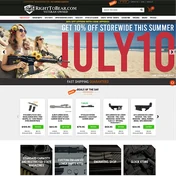
      “I had a great experience working with the team at MAKdigitaldesign. Will definitely come back for future projects. Our BigCommerce store looks great, and everything was done in a timely and orderly fashion.”

    • Anthony DiCicco

      ProDryers

      “MAK is literally my go-to developer for Volusion and BigCommerce. I have used Mary many times and will continue to do so. I have not found a more reliable and knowledgeable person to handle all of our technical issues with both platforms. I made the mistake of going with a company that I thought was bigger and better. I ended up having to hire MAK to fix all of their mistakes that would have cost me hundreds of thousands in lost sales. It's important to have a full understanding of the database structures and business rules of each platform. MAK really understands the fine details behind these platforms. MAK has truly earned my trust for life.”

    Want to know where your store is losing orders?

    Send us your URL and we will reply with the three highest-impact UX issues we can see, before you spend a dollar.

    eCommerce UX Questions, Answered

    What an audit covers, what it costs, how it differs from CRO, and what results to expect.

    What is an eCommerce UX audit?

    A structured review of how shoppers move through your store, from landing page to order confirmation. We combine analytics (where people drop off), behavior data (session replays, heatmaps, form analytics), and an expert review against established usability guidelines, then deliver a prioritized list of issues with the fix, the expected impact, and the effort for each. Most audits take two to three weeks.

    How much do eCommerce UX design services cost?

    A UX audit for a mid-sized store typically runs in the low thousands of dollars. A full research, design, and implementation project for the key templates (home, category, product, cart, checkout) runs from the low five figures depending on platform and scope. Ongoing optimization programs are monthly retainers. We quote fixed prices after a short discovery call.

    What is the difference between UX and conversion rate optimization?

    UX design is about making the store easy, clear, and trustworthy to use; CRO is the practice of testing changes and measuring their effect on conversion. They overlap almost completely on an eCommerce site: good UX work produces the hypotheses, and CRO testing proves which ones pay. We do both, and we use revenue per visitor rather than conversion rate alone as the yardstick, so an increase in orders does not hide a drop in order value.

    What is a good eCommerce conversion rate?

    Across categories, stores convert roughly 1.5 to 3 percent of visitors, with the best performers above 4 percent. The number depends heavily on traffic source, device, price point, and category, so we benchmark you against comparable stores and track the leading indicators (add-to-cart rate, checkout initiation, checkout completion) that move it.

    Why do shoppers abandon carts, and can UX fix it?

    Around 70 percent of carts are abandoned. Some of that is browsing behavior that no design can change, but the top reasons shoppers give are unexpected costs, being forced to create an account, a long or confusing checkout, no visible total, slow pages, and missing payment options. All of those are design problems, which is why Baymard Institute estimates the average store can lift conversion by about 35 percent through checkout improvements alone.

    Do you redesign the whole store or fix what is there?

    Whichever the data supports. Many stores get the most return from targeted fixes to product pages, cart, and checkout on the existing theme. Others have navigation, performance, or accessibility problems deep enough that a rebuild is cheaper than patching. The audit tells us which, and we are the same team that would build either.

    How does AI fit into eCommerce UX?

    AI earns its place when it removes effort: search that understands natural language, recommendations that reflect what a customer actually browsed, and assistants that answer the sizing or shipping question that was blocking a purchase. It also matters on the other side of the screen: AI shopping agents and AI search summaries now read your product data, so structured, accurate product information is part of UX. We test AI features like any other change and keep them fast.

    Is accessibility required for an online store?

    In the EU, the European Accessibility Act has applied to eCommerce services since June 2025; in the US, ADA lawsuits against online retailers continue to rise, and WCAG 2.2 AA is the standard courts and regulators reference. Beyond compliance, accessible stores convert better for everyone: clearer labels, better contrast, and keyboard-friendly forms reduce errors for all shoppers.

    Does UX affect SEO?

    Yes. Google measures page experience through Core Web Vitals (loading, interaction responsiveness, and layout stability), and engagement signals reflect whether visitors find what they came for. Fast, clear pages with good internal navigation rank better and convert better, so UX and SEO work are planned together here.

    How long until we see results?

    Checkout and product page fixes usually show measurable change within the first month after launch. A/B tests need enough traffic to reach significance, typically two to six weeks each. A full redesign is a two to four month project, with results compounding over the following quarter as testing continues.

    eCommerce UX Resources

    From the eCommerce Experts

    Read Our Blog

    Start Your Project With Us

    Share some details, and our team will follow up.

    Please write at least 20 characters.

    Click to upload or drag and dropUp to 5 files, 10 MB each

      Get the MAK Digital Newsletter

      eCommerce design, development, SEO, and marketing insights, a few times a month. No spam, unsubscribe any time.

      By subscribing you agree to our privacy policy.