Product results, not citations

ChatGPT Shopping Optimization for Online Stores

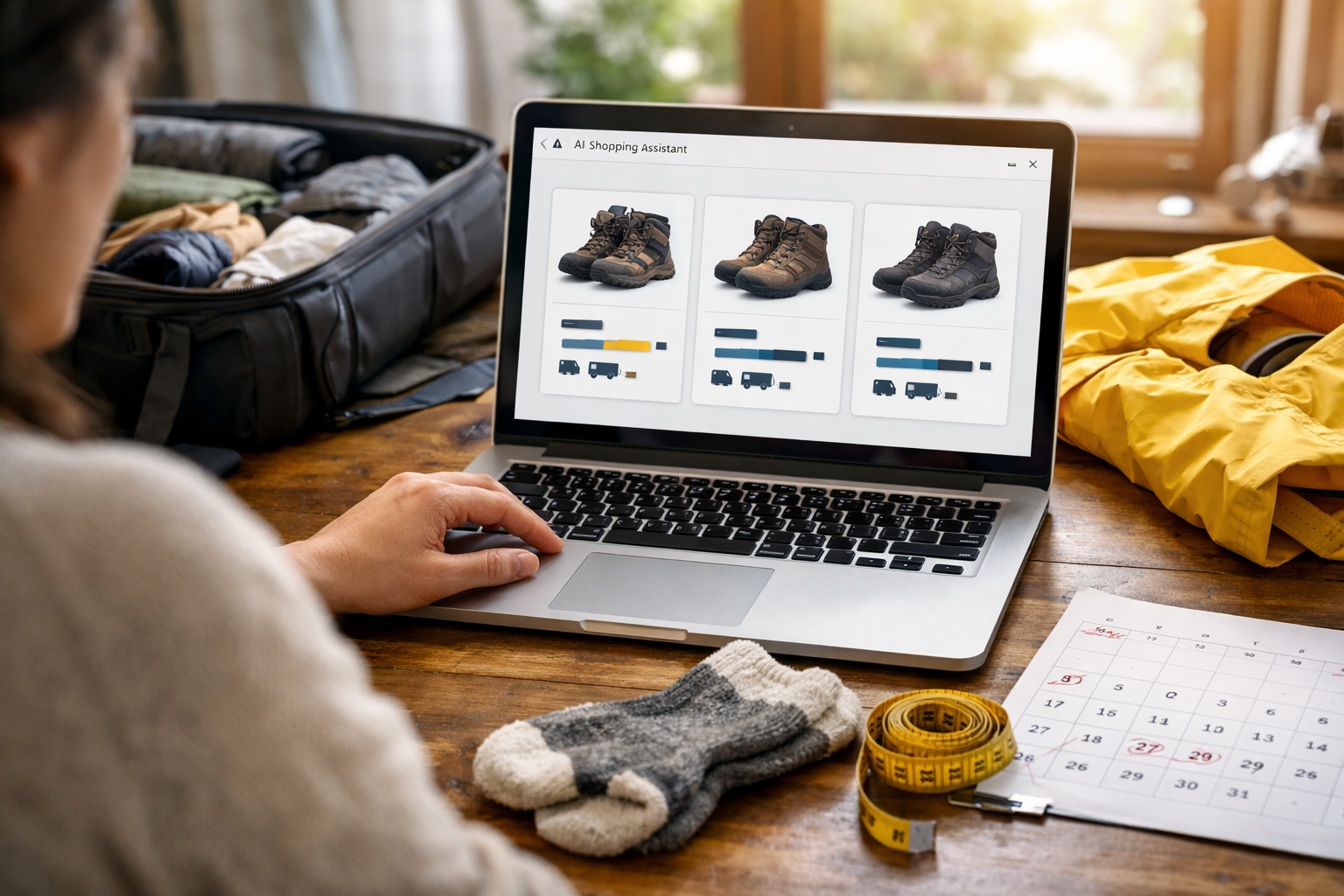
When a shopper asks ChatGPT for a product, the answer can include product results with prices, merchants and a 'Best price' label. OpenAI says that list draws on structured product metadata such as price and description, alongside other third-party content, so the catalog data behind it matters as much as the pages. We set up your ChatGPT product feed, make your titles, attributes, prices and stock agree everywhere, and make sure OpenAI's crawler and cloud browser can reach your store, as part of our AI search optimization work.

Since 2012
Building and growing online stores
30+
In-house specialists
800+
Projects delivered

MAK Digital at a glance

  • 15

    Years in eCommerce

    Fifteen years of building, migrating, and growing online stores for B2B and B2C brands.

  • 30+

    In-house specialists

    SEO, AI search, paid media, design, and development experts under one roof.

  • USA

    US-led, globally staffed

    A US-based core team you talk to directly, backed by vetted specialists worldwide.

  • 4.9

    Client rating

    Average score across 650+ verified client reviews.

What we do

Our ChatGPT Shopping Optimization Services

This is catalog work first and content work second. Each item below maps to a part of OpenAI's merchant documentation, so you can see exactly what is being changed and why.

  • Product feed setup in Business Hub

    We prepare the claim and identity-verification steps your team completes in ChatGPT Business Hub, choose countries and currencies with you, build the feed to OpenAI's schema and pick a delivery method: manual upload, a hosted HTTPS URL or SFTP. Then we work through the upload review until errors are cleared.

  • Identifier and variant cleanup

    Stable item_id values that never get reused, one group_id per parent product, a variant_dict for size and colour, and GTIN or MPN only where a real one exists. This is the layer that stops a two-battery kit being shown at the tool-only price.

  • Feed, page and schema alignment

    The same price, availability and variant on the feed row and the product page, and in the Product and Offer markup. OpenAI does not say ChatGPT reads on-page JSON-LD directly. We keep the markup in step anyway, because other search systems read it and a mismatch leaves two prices for one product. We check pages with our free schema check and fix the templates on your platform, not product by product.

  • Crawler and cloud browser access

    Robots.txt rules that keep OAI-SearchBot allowed while you decide separately on GPTBot, plus firewall and CDN settings so ChatGPT's signed cloud browser is not stopped by bot protection on product and checkout pages.

  • Product page content for comparison prompts

    Shoppers ask ChatGPT comparison questions: battery included or not, torque, weight, what comes in the box. We add the facts those questions need to titles, attributes and page copy, using your spec sheets and reviews, not invented claims.

  • Measurement and reporting

    A team-run monthly prompt panel for your categories, part of our AI visibility tracking service, plus ChatGPT referral segments in GA4 and a review of feed upload errors. You get a written report of what changed and what we saw, with no promised placement.

How it works

How Products Get Into ChatGPT

ChatGPT has more than one shopping surface, and each one draws on slightly different inputs. Getting the work right starts with knowing which one you are trying to appear in and what OpenAI says it uses.

Product results, merchant lists and shopping research

In ordinary conversations ChatGPT can show product results: a product, a price, a list of merchants that sell it, and sometimes a 'Best price' label when several merchants offer the same item. OpenAI's help center says the price shown first typically belongs to the first merchant listed. Separately, OpenAI began rolling out shopping research on November 24, 2025, a buyer's-guide experience for logged-in Free, Go, Plus and Pro users. OpenAI says shopping research asks the shopper about budget and the features they care about, then reads trusted sites and synthesizes across many sources. In practice, the specifications and differences your product pages state plainly are what it has to work with.

Where ChatGPT gets product data

As of November 2026, OpenAI describes three routes. Pages on the public web, which OAI-SearchBot crawls for ChatGPT search. Shopify Catalog, which already passes Shopify merchants' product data into ChatGPT. And direct product feeds, which other merchants submit through Business Hub. When it chooses what to show, OpenAI says ChatGPT weighs structured metadata from first-party and third-party providers (such as price and description), other third-party content, model responses and its own policies.

What you control and what you don't

You control the feed, the product pages, the markup and whether OpenAI's agents can reach your site. You do not control the ranking. OpenAI lists availability, price, quality and whether you are the maker or primary seller among the merchant factors, and its feed schema is explicit that a product being eligible for search is not the same as it being shown. OpenAI also says product results are not ads; ads are a separate product with their own feed fields. Paid placement is covered on our ChatGPT ads page. This page is about the organic results.

Feed reference

What the ChatGPT Product Feed Needs

OpenAI publishes a full feed schema. Most of the problems we expect to find are not missing fields; they are fields that are present but wrong, stale or filled with placeholders. Here is what we check, field group by field group, as documented in November 2026.

Required fields and stable IDs

Every row needs nine product fields: item_id, title, description, url, brand, seller_name, image_url, availability and price, plus two geo fields, target_countries and store_country. OpenAI asks for a real brand and seller name, plain-text descriptions and concise titles (it suggests at most 150 characters). The item_id must stay the same when the price, stock, title or images change, and it must never be reused for a different product. Stores that regenerate IDs on every export, or recycle SKUs for new seasons, break this rule without noticing.

Variants and grouping

Each purchasable selection gets its own row with its own item_id, price, availability, URL and images. All rows for one product share a group_id that differs from every item ID, set listing_has_variations to true and carry a variant_dict such as colour and size. Without a group ID, OpenAI's schema falls back to the item ID, which does not form a variant group, so a product sold in six sizes looks like six unrelated products. GTIN and MPN are optional, but OpenAI says to submit them only when real: a GTIN must have a valid check digit, and an MPN should never be invented to fill a missing barcode.

Price, availability and reviews

Availability must be one of in_stock, out_of_stock, pre_order, backorder or unknown; an empty or unrecognised value rejects the row, and unknown is the honest choice when you cannot confirm stock. A sale_price is only used when it is above zero, strictly below price and in the same currency. Sale dates in the feed do not schedule anything, so the sale price has to be added when the sale starts and removed when it ends. For reviews, review_count and star_rating must describe the same set of product reviews. Seller and store reviews are excluded; they have their own fields, which need setup with OpenAI. Elsewhere, placeholder strings such as 'n/a' or 'null' are not valid values: leave the field out instead.

Markets: the US default

The shared format can represent the US, Canada and Mexico, but OpenAI's schema says standard uploads are treated as US regardless of what the country columns say. If you sell internationally, plan the feed for US shoppers first and confirm with OpenAI before assuming other markets are covered.

Illustration

Worked Example: One BigCommerce Product, Before and After

This is an illustration with a fictional store and product, not a client result. Northgate Tool Co. runs a BigCommerce store and resells the Halvard DD20 cordless drill driver in two versions: tool only, and a kit with two batteries and a charger. Halvard, the maker, also sells both versions direct. Here is the product as a typical export would leave it, and what we would change.

Title

Before: HV DD20-K2 KIT. That is a purchasing code. Nobody asks ChatGPT for a DD20-K2; they ask for a cordless drill kit with two batteries. After: Halvard DD20 20V Brushless Cordless Drill Driver Kit with 2 Batteries and Charger. Brand first, then the product type and the things shoppers compare on, well inside OpenAI's suggested 150 characters.

Variants and identifiers

Before: one row for the product, with tool only and kit offered as a dropdown option, so the row carried the lower tool-only price under a title that said kit. The GTIN field held Northgate's internal SKU. After: two rows, one per version, sharing a group_id of DD20, each with its own price, URL, image and the barcode from Halvard's product list, plus Halvard's part number in mpn alongside the brand. An illustrative row, shortened (required fields such as price, url, description and image_url are left out here):

{"item_id":"DD20-KIT2","group_id":"DD20","listing_has_variations":true,"variant_dict":{"configuration":"Kit with 2 batteries"},"title":"Halvard DD20 20V Brushless Cordless Drill Driver Kit with 2 Batteries and Charger","brand":"Halvard","mpn":"DD20-K2","seller_name":"Northgate Tool Co.","availability":"in_stock","target_countries":["US"],"store_country":"US"}

Stock from a drop-ship supplier

Before: the kit ships from a distributor that sends stock levels once a day, and the feed was rebuilt overnight. A kit that sold out at noon stayed in_stock in the feed while the product page showed it as backordered. OpenAI's help center says there may be a delay before merchant updates show in ChatGPT, so stale stock in the feed only adds to that gap. After: the hosted feed snapshot is regenerated whenever BigCommerce inventory changes. OpenAI documents full snapshots but no refresh interval, so the schedule is whatever the store's tooling can sustain. When the distributor's count can't be confirmed, the row says unknown rather than guessing.

The holiday sale

Before: a sale price went into the feed with start and end dates, on the assumption that it would switch itself off. OpenAI's schema says sale dates do not schedule price changes, so the sale price would have stayed after the sale ended. After: the same job that starts and ends the sale on BigCommerce adds and removes sale_price, which has to stay strictly below price.

Supporting content

Before: a two-line supplier description. After: the product page states torque, chuck size, battery voltage and capacity, weight with battery and exactly what is in the box, all taken from Halvard's spec sheet. The review_count and star_rating values come from the drill's own product reviews, not Northgate's store rating. None of this promises that Northgate will be the first merchant listed. Halvard sells the same kit as maker, and OpenAI counts that. What the work does is make Northgate's offer accurate, complete and comparable, which is the part a reseller can actually influence.


Access

Letting the Right OpenAI Agents Into Your Store

It is easy to block OpenAI traffic without meaning to, for example with a security rule written for scrapers. The fix is not to open everything, because OpenAI runs several different agents and each has its own control.

Three OpenAI agents, three different jobs

OAI-SearchBot crawls pages for ChatGPT search, and OpenAI says sites that opt out of it will not be shown in ChatGPT search answers. GPTBot collects content that may be used to train models; it is set separately in robots.txt, so blocking it does not remove you from search. ChatGPT-User makes some visits a person triggers inside ChatGPT. OpenAI says robots.txt rules may not apply to those visits and that ChatGPT-User is not used to decide what appears in search. OpenAI also says robots.txt changes can take about 24 hours to apply.

Product and image URLs in the feed

For shopping, the same question applies to every URL in the feed. OpenAI's schema says product and image URLs must be publicly accessible. We check that the url and image_url on each row resolve without a login, a geo-redirect or a hotlink-protection rule on the image CDN. Our guide on whether to block AI crawlers covers the training-versus-search decision in more depth.

The cloud browser and bot protection

ChatGPT's cloud browser is a different thing again: it visits your site on a user's behalf to look at a product or finish a task, and it signs its requests. OpenAI's documentation says Akamai, Cloudflare, HUMAN and Vercel verify those signatures automatically; with other CDNs or firewalls, your rules can check the Signature-Agent header and the HTTP message signatures defined in RFC 9421. A bot-protection challenge on the product or cart page can stop that visit even when your robots.txt is perfect. We test the product page, cart and checkout paths and adjust allowlist rules without loosening your other protections. A first look at robots.txt and markup signals is available with our free AI visibility check, a one-time technical scan.

Buying paths

From Product Result to Purchase

Discovery and checkout are separate projects. OpenAI's feed documentation says a feed does not update a cart or confirm a purchase. You can be visible in product results without any in-chat checkout at all. Here is where each buying path stood when we checked OpenAI's documentation in November 2026.

Click-through to your store

The default. The shopper taps through to your product page and buys there, so the page must show the price and stock the feed promised. This path needs no integration with OpenAI.

Cloud browser with ChatGPT Wallet

Documented and current. The cloud browser can use your existing checkout, and the shopper can pay with ChatGPT Wallet. OpenAI says Wallet works with existing checkout pages and payment forms without a Wallet-specific integration. Your business still handles the order, fulfillment, support and fraud decisions, and receives a network token rather than the full card number. The practical risk is fraud and bot systems flagging the browser, which is why the access work above matters.

Plugins and checkout integrations

More work, and changing. OpenAI describes a plugin as an MCP server plus skills. The Model Context Protocol connects ChatGPT to your own tools and data, so it can call actions such as a product lookup or a cart update directly instead of navigating your pages. OpenAI's guide says this takes more integration work than browser use. We cover that architecture on MCP for eCommerce. In-chat checkout itself requires a separately enabled integration: setting is_eligible_checkout in the feed does not complete onboarding. For history, OpenAI launched Instant Checkout on September 29, 2025 for US users buying from US Etsy sellers, single items only at launch, built on the Agentic Commerce Protocol with Stripe. Its current commerce docs no longer describe Instant Checkout, so treat any article that presents it as the standard route with caution. The protocol is open source under Apache 2.0, and implementing it does not list your products anywhere by itself. Checkout and protocol projects run through our agentic commerce readiness service; background reading is in our Agentic Commerce Protocol setup guide.

Platforms

ChatGPT Shopping on Shopify and BigCommerce

The platform changes the route your data takes, not the standard it has to meet.

Shopify Catalog

OpenAI's help center says Shopify merchants' product data is already integrated into ChatGPT through Shopify Catalog, with no additional work required to connect it. That removes the feed upload, not the quality problem. Whatever is in your product records is what travels: warehouse-style titles, variants that are really separate products, missing barcodes and stale sale prices all arrive as they are. On Shopify we work in the product data and theme templates, the same layer our Shopify SEO team already manages, and keep the product page and markup in step with it.

BigCommerce and other platforms

OpenAI's help page does not name a built-in connector for BigCommerce, Adobe Commerce or custom platforms as of November 2026. Those stores can be found through the public web, and can apply for a direct product feed through Business Hub. MAK Digital is a BigCommerce Elite Partner, so on BigCommerce we build the feed from the catalog and inventory data the store already holds and map variants, custom fields and options into OpenAI's schema, alongside the work described on our BigCommerce SEO page. On other platforms the approach is the same; the export method is what differs.

If you already run Google Shopping

A Merchant Center feed is a good starting point, because the hygiene is shared: real identifiers, clean titles, current prices. It is not a substitute. OpenAI's schema has its own field names and rules, and OpenAI does not say it reads Merchant Center feeds directly. We reuse the clean data from our Google Shopping management work and transform it, rather than maintaining two catalogs by hand.

Pick the right service

ChatGPT Shopping vs ChatGPT SEO vs Google Shopping

These three overlap in data and differ in where results show up. Use this to decide which one your problem belongs to; many stores need two of them.

How ChatGPT shopping optimization compares with ChatGPT SEO and Google Shopping management (OpenAI documentation checked November 2026)
ChatGPT shopping optimizationChatGPT SEOGoogle Shopping management
Where results appearProduct results, merchant lists and shopping research in ChatGPTWritten ChatGPT answers that cite or mention your brand and pagesGoogle Shopping ads, free listings and Performance Max
Main inputProduct feed (Business Hub) or Shopify Catalog, plus product pagesCrawlable, well-sourced pages and brand mentions across the webGoogle Merchant Center feed
Paid or organicOrganic; OpenAI says product results are not adsOrganicMostly paid, plus free listings
Typical problem it fixesWrong price or stock in ChatGPT, products missing, a reseller losing to the maker on incomplete dataBrand absent or misdescribed in category answersFeed disapprovals, wasted spend, weak product titles
Technical accessOAI-SearchBot plus the signed cloud browser on product and checkout pagesOAI-SearchBot and page crawlabilityGooglebot and Merchant Center crawls
How we reportMonthly prompt panel for product prompts, ChatGPT referrals, feed error reviewMonthly prompt panel for brand and category questions, referralsAd platform metrics and feed diagnostics
MAK serviceThis pageChatGPT SEO servicesGoogle Shopping management

Seller type

Maker, Reseller or Marketplace: How the Feed Changes

OpenAI ranks merchants partly on whether they are the maker or primary seller of an item. The feed should state plainly which of these you are.

  • Brands selling their own products

    You are the maker, so brand and seller_name both name your business. The work is completeness: every version as its own row, real GTINs from your own barcode allocation, and specifications that match your spec sheets.

  • Authorized resellers

    The maker may be listed beside you for the same item. Use the maker's GTIN and part number unchanged, since a GTIN identifies the specific trade item, keep your own name in seller_name, and compete on accurate price, stock and delivery terms.

  • Sellers on a marketplace

    OpenAI's schema has a separate marketplace_seller field for third-party marketplace offers, kept distinct from the supplying seller_name. It needs setup with OpenAI, so confirm the arrangement before adding it rather than guessing.

  • Several offers on one product page

    If one product URL carries more than one offer, OpenAI's schema uses a stable offer_id to tell them apart. The offer ID must never include the price. OpenAI also says not to rely on it to separate several sellers at one URL, so confirm the setup with OpenAI before you submit a multi-seller page.

Standards

Our ChatGPT Product Data Standards

The checks every product in scope passes before we call the feed done.

  • Every row has all nine required product fields and both geo fields, with a real brand and seller name and no placeholder strings such as n/a or null
  • item_id values are stable across price, stock and title changes and are never reused
  • Variants share one group_id, set listing_has_variations, and carry their own URL, price, stock and image
  • GTIN and MPN appear only when real; no internal SKUs in identifier fields
  • Availability uses a documented value on every row, with unknown used honestly instead of blanks
  • sale_price appears only while a sale runs, sits strictly below price, and matches the page and Offer markup for the same variant
  • Every url and image_url in the feed opens publicly, with no login, redirect or hotlink block
  • review_count and star_rating describe the same product reviews; store reviews stay in their own fields
  • OAI-SearchBot is allowed and the cloud browser reaches product, cart and checkout pages without a challenge

How We Run a ChatGPT Shopping Program

AI search optimization, including ChatGPT shopping work, is part of our SEO plans from $2,000/month, run alongside eCommerce SEO for stores. Checkout or plugin builds are scoped separately.

  • Audit what ChatGPT has

    We ask ChatGPT the product questions your buyers ask, then log the products and merchants it lists along with the prices and stock it displays. Then we compare that with your catalog, product pages and markup, and test whether OAI-SearchBot and the cloud browser can reach the store.

  • Fix the catalog at the source

    Titles, identifiers, variant structure and attributes get corrected in your platform's product data, so the feed, the page and Shopify Catalog all inherit the fix. Priority goes to the products that earn the most revenue.

  • Build and submit the feed

    For non-Shopify stores: Business Hub claim and identity verification with your team, the feed built to OpenAI's schema, a delivery method chosen, and upload errors cleared. For Shopify stores: checking what Shopify Catalog is passing along.

  • Open access without lowering defences

    Robots.txt rules per OpenAI agent, firewall and CDN allowlisting for signed cloud browser requests, and a test purchase path walked end to end.

  • Monitor and report monthly

    A team-run prompt panel, ChatGPT referral traffic and conversions in GA4, and a feed error review each month. We report what moved and what did not, and adjust the product priority list.

What Clients Say About MAK Digital

Reviews from the businesses whose websites and search programs we run.

  • Jeff Gawronski

    DormCo.com

    “Mak Digital is the real deal! I have been in online retail since roughly 2005 and have worked with dozens of IT professionals. Not until meeting Mary and Mak Digital was I able to stop the carousel of developers. Our store DormCo.com has been under Mak's care since fall of 2014 and Byourbed.com was a customized store that was launched by Mak in 2016.”

  • Webeyecare

    “If you're a BigCommerce user, hitting up MAKDigital is a smart move. It's a hive of skilled web designers and coders. Rest assured, they'll deliver what you're looking for.”

  • Marc Frankel

    CEO, Longislandwatch.com

    “The MakDigital crew whipped up a gorgeous website for me, and they went the extra mile! The bespoke site they churned out knocked my socks off and exceeded all my expectations.”

Find out what ChatGPT shows for your products

Send us your store, platform and main categories. As part of an SEO plan proposal we will run a set of your category prompts in ChatGPT, compare what it shows with your catalog and list what to fix first. MAK Digital is a BigCommerce Elite Partner with 800+ projects since 2012. No placement promises, just a clear list of work.

ChatGPT Shopping Optimization FAQ

Answers based on OpenAI's merchant documentation as checked in November 2026. These features change often.

Where do we submit a ChatGPT product feed, and which fields are required?

As of November 2026, in ChatGPT Business Hub. You claim the business, verify your identity in the product section, choose countries and currencies, then deliver full snapshots by manual upload, a hosted HTTPS URL or SFTP. Every row needs item_id, title, description, url, brand, seller_name, image_url, availability and price, plus target_countries and store_country. A feed makes products eligible, and OpenAI's schema is clear that an eligible product may still not be shown.

If we opt a product out of ChatGPT ads, can it still appear in product results?

Yes. OpenAI says product results are not ads, and its feed schema keeps the ads flag, is_ads_eligible, independent of search eligibility. Setting is_ads_eligible to false opts an item out of ads only; its search eligibility is set separately. The paid side is covered on our ChatGPT ads page, listed with the related pages below.

Is my Shopify store already in ChatGPT?

OpenAI says Shopify merchants' product data is integrated through Shopify Catalog with no extra work to connect it. What gets passed along is whatever is in your product records, so weak titles, missing identifiers and mismatched prices still need fixing, and your pages still need to be reachable by OAI-SearchBot.

Do I need a product feed if I'm not on Shopify?

Not strictly, since ChatGPT can find products on the public web through OAI-SearchBot. A direct feed gives ChatGPT structured prices and stock from you instead of leaving it to what it finds elsewhere. Standard uploads are currently treated as US regardless of the country columns, so stores selling elsewhere should confirm coverage with OpenAI first.

Why does ChatGPT list another seller first, or show a price we no longer charge?

OpenAI says the price shown first typically belongs to the first merchant listed. Merchants are ranked on factors like availability, price, quality and whether they are the maker or primary seller, and a 'Best price' label may go to the lowest-priced option ChatGPT knows about. Old prices usually trace to update delays, which OpenAI acknowledges, or to a sale_price left in the feed after the sale ended, since feed sale dates do not switch prices off.

Can customers buy my products inside ChatGPT?

Partly, and it is changing. As of November 2026, ChatGPT's cloud browser can use your existing checkout with ChatGPT Wallet without a Wallet-specific integration, while plugins and in-chat checkout need separate integration work. Instant Checkout launched in September 2025 with a limited US scope and is no longer described in OpenAI's current commerce docs. Our agentic commerce readiness service handles that build.

How is ChatGPT shopping optimization different from ChatGPT SEO?

This service works on product results and merchant lists, driven by feeds and product data. ChatGPT SEO works on the written answers, where ChatGPT cites or mentions your brand and pages. Both depend on OAI-SearchBot access and accurate pages, so many stores run them together.

How much does ChatGPT shopping optimization cost?

It is included in MAK Digital's SEO plans, which start from $2,000/month. Building a plugin or a checkout integration is scoped and quoted separately because the effort depends on your platform and payment setup.

AI Search Resources

From the eCommerce Experts

Read Our Blog

Start Your Project With Us

Share some details, and our team will follow up.

Please write at least 20 characters.

Click to upload or drag and dropUp to 5 files, 10 MB each

    Get the MAK Digital Newsletter

    eCommerce design, development, SEO, and marketing insights, a few times a month. No spam, unsubscribe any time.

    By subscribing you agree to our privacy policy.