How to Get Your Products Cited by ChatGPT: What the Data Actually Shows

Every ecommerce team now wants the same new kind of visibility: a product that appears when a shopper asks ChatGPT what to buy, which brand to compare, or which option is best for a specific use case. The problem is that AI citations are not a placement you can buy, a tag you can add, or a switch you can flip. They are probabilistic outcomes shaped by what an AI system can find, understand, trust, and assemble into an answer.
This article takes the evidence-first route. Direct evidence means observable citation patterns from AI answer engines and repeatable tests. Indirect evidence means signals we know help machines interpret ecommerce pages, such as crawlable content, structured product data, clear brand entities, and strong search rankings. Speculation means tactics that sound plausible but have little public proof behind them.
The practical takeaway is familiar but more demanding than traditional eCommerce SEO alone: make the product page accessible, make the product data clean, make the category and use case unmistakable, and earn third-party proof through reviews, comparisons, and credible mentions. Good product page optimization helps machines understand what you sell; external validation helps them decide whether it is worth citing.
ChatGPT Product Citations Are Not a Switch You Can Flip
Think of ChatGPT visibility as a set of possible paths, not one ranking system. A product may be mentioned from pretrained knowledge, surfaced through live retrieval or browsing, associated with a search integration, or supported by pages the answer engine chooses to cite. Those modes behave differently: pretrained knowledge can favor established entities, retrieval can favor pages that are accessible and fresh, and cited answers can lean on third-party articles, reviews, or comparison pages rather than the merchant’s own product page.
That is why the same prompt can produce different ChatGPT product recommendations when the wording changes from “best trail running shoes” to “best waterproof trail running shoes for wide feet,” or when a model has browsing enabled versus relying on prior knowledge. Location, freshness, personalization settings, and the phrasing of the buyer’s need can all change which sources are retrieved and which products are summarized.
The practical distinction is this: strong evidence supports making product information crawlable, indexable, structured, and semantically clear; plausible evidence supports building stronger entity signals through consistent brand, product, review, and category references across the web; speculation begins when someone claims a single prompt trick, schema field, or hidden “AI optimization” tactic can force AI citations.
For ecommerce teams, the right response is not to chase a shortcut. Treat AI visibility as an extension of disciplined eCommerce SEO: a strong product page says exactly what the item is, who it is for, what attributes matter, and how it compares; a weak signal is a thin page with vague copy, missing identifiers, inconsistent product names, and no independent validation. Correlation between search strength and AI mentions is useful, but it is not proof of a private ChatGPT ranking formula.
What the Data Actually Shows About Products Mentioned by AI Answer Engines
The useful pattern is not a single “ChatGPT factor,” but a hierarchy of visibility signals. Direct evidence is what you can observe in answer outputs: which pages get cited, which product names appear, and whether the answer leans on merchant pages, publishers, review sites, forums, or shopping-style results. Indirect evidence is the surrounding footprint: search visibility, clean product data, repeated brand mentions, and credible third-party references. Speculation is anything that claims one hidden tactic can reliably force a citation.
For ecommerce queries, the strongest observable pattern is that AI answer engines often favor products that are easy to identify and easy to support with external context. A product with a clear name, consistent category language, detailed attributes, reviews, comparison mentions, and coverage from independent sources gives the system more usable material than a thin product page that only repeats manufacturer claims. That does not prove causation, but it gives ecommerce teams a practical direction for AI search optimization for ecommerce.
Authority also appears to matter at the source level. When an answer cites a buying guide, review roundup, publisher list, documentation page, Reddit thread, or merchant page, the cited page is usually doing more than hosting a product name. It explains the category, compares options, answers a specific buyer need, or contains language that matches the prompt. For example, “best insulated water bottle for hiking” is more likely to surface pages that connect insulation, durability, size, lid type, and outdoor use than pages that simply say “premium bottle.”
The takeaway for LLM visibility is to build evidence around the product, not just on the product page. Strong signals include crawlable pages, unambiguous product names, structured attributes, consistent merchant data, substantive reviews, and credible third-party brand mentions. Weaker signals include vague category copy, inconsistent naming across marketplaces, missing identifiers, and no independent discussion of the product. The data does not support guaranteed citation formulas; it supports making the product easier to find, understand, compare, and trust.
Strongest Foundation: Crawlable, Indexable, and Unambiguous Product Pages
A product’s technical footprint is the first place where visibility can quietly fail. If an item is buried behind filters, rendered only after heavy scripts run, marked noindex, or split across several near-identical URLs, an AI system that depends on web retrieval has less reliable material to quote, summarize, or associate with the product.

Crawlability is the ability for bots to reach a page through links and allowed resources. Indexability is the permission and suitability for that page to be stored as a discoverable result. The practical distinction matters: a page can be crawlable but not indexable if it carries a noindex directive, and it can be technically indexable but hard to discover if no category, collection, sitemap, or related-product link points to it. For product page optimization, the stronger signal is a stable product URL reachable from meaningful category paths, not a product that only appears after a shopper selects a temporary faceted filter.
Canonicalization tells crawlers which version of a page should be treated as the main one when duplicates exist. In ecommerce, duplicates often come from color variants, tracking parameters, sort orders, faceted navigation, or products appearing in multiple categories. A strong setup gives the core product a clear canonical URL while still making meaningful variants understandable. A weak setup creates five URLs for the same SKU, each with the same manufacturer description, competing titles, and inconsistent breadcrumbs.
Rendering also changes what machines can understand. If price, availability, specifications, reviews, or variant data only appear after delayed JavaScript execution, the visible shopper experience may be richer than the machine-readable page. Fast, server-rendered or reliably hydrated product content gives retrieval systems a cleaner target. Hidden tabs are not automatically a problem, but critical details should not depend on interactions that a crawler or answer engine may never perform.
This is eCommerce SEO infrastructure, but not only for search rankings. Use internal links to connect products to categories, buying guides, comparison pages, and replacement products. Give discontinued products a deliberate path: keep the URL useful with alternatives when there is demand, or redirect when the product has no ongoing value. The goal is unambiguous access: one clear product, one preferred URL, visible content, and enough linked context for machines to understand why the page exists.
Structured Data Helps Machines Understand the Product, But It Is Not a Citation Guarantee
The next layer is not more copy; it is cleaner product facts in a format machines can parse without guessing.
Product schema is the machine-readable description of the item itself: name, brand, SKU, GTIN, image, description, category, and related identifiers. Those fields reduce ambiguity. “Apex Pro” alone could be a shoe, a keyboard, or a supplement; “Apex Pro Trail Shoe,” with a brand name, GTIN, size variants, and category context, is easier to recognize as a specific product entity.
Offer schema describes the commercial terms attached to the product: price, currency, availability, condition, seller, and sometimes shipping or return details. Review schema and aggregate rating markup describe user feedback, either as individual reviews or summarized ratings. The distinction matters because a product can be well identified but commercially unclear, or purchasable but weakly supported by visible review signals.
A strong implementation aligns the visible page, structured data, and merchant feed. The product name in the page title should match the schema name closely. The brand should be consistent. SKU and GTIN should not be swapped or omitted when they exist. Price and availability should match what shoppers see. Ratings should reflect reviews actually visible on the page, not a disconnected marketing claim.
Merchant feeds add another layer by sending product data directly into shopping and merchant surfaces. They are especially useful for catalogs with many variants, frequent price changes, or inventory shifts. For AI visibility, the practical value is not that a feed forces a ChatGPT citation; it is that clean, consistent product data gives search and commerce systems fewer reasons to misunderstand the item.
The takeaway is disciplined but limited: schema markup can support rich-result eligibility, merchant visibility, and cleaner interpretation of product facts. It cannot make ChatGPT recommend a product by itself. Treat structured data as evidence hygiene for product page optimization, not as an AI citation lever that works without crawlable pages, clear content, credible reviews, and external validation.
The Signal Many Stores Miss: Independent Reviews and Third-Party Mentions
A shopper asking for the “most reliable,” “best,” “safest,” or “most recommended” product is not asking for your product page rewritten in neutral language. They are asking for judgment, and judgment usually needs evidence beyond the seller’s own claims.
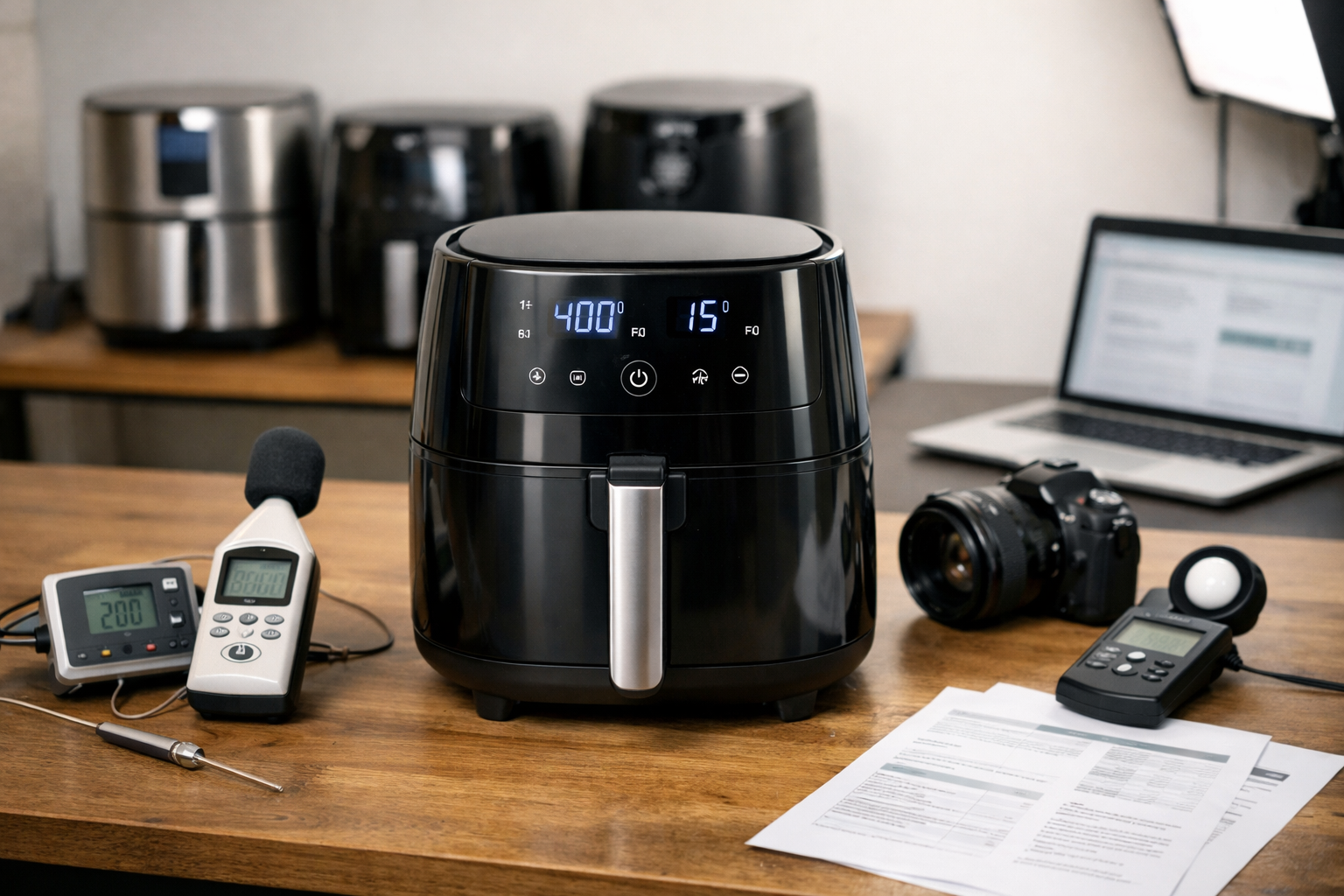
That is why independent coverage matters. Third-party reviews are product evaluations published outside your store, such as specialist review sites, trade publications, creator videos, marketplace feedback, and customer discussions. They do something your own page cannot fully do: show how other people describe, test, compare, complain about, and recommend the product.
- Review sites and editorial roundups compare options within a category. A strong mention explains testing criteria, tradeoffs, ideal users, and competing products; a weak mention is a thin affiliate paragraph that repeats your product copy.
- Marketplace reviews show buyer-level patterns at scale. Verified purchase feedback, repeated praise for the same feature, and recurring complaints are more useful than a small set of generic five-star comments.
- Expert comparisons give category context. A cycling publication comparing helmets by ventilation, weight, fit, and impact certification creates clearer evidence than a brand page that only says “premium protection.”
- Creator reviews can help when they include hands-on use, photos, measurements, setup notes, or durability observations. They are weaker when they are undisclosed sponsorships or script-like summaries.
- Customer discussions on forums, communities, and social platforms surface use-case language brands often miss: “works for narrow feet,” “too loud for apartments,” “good for beginners,” or “hard to clean.”
- Authoritative niche publications add topical credibility because they understand the category’s real decision criteria, not just the product’s marketing angle.
The practical takeaway is to treat external validation as part of eCommerce SEO, not as a public relations afterthought. Build products worth reviewing, make review samples and technical details easy for credible reviewers to use, monitor recurring language in customer feedback, and earn brand mentions in places where shoppers already compare alternatives. Do not confuse volume with quality: ten syndicated press releases are weaker than one named expert review that explains exactly where the product wins and where it does not.
Make the Product Easy to Recognize as an Entity
A review can validate a product, but the product still has to be recognizable as the same thing wherever it appears. Treat the item as a named entity, not just a page in a catalog: one brand, one product name, one model number, one category, and a stable set of attributes that repeat across your store, feeds, reviews, comparison articles, and marketplace listings.

Weak signals create unnecessary ambiguity. “Performance Hoodie” is vague; “Acme ThermoGrid Men’s Running Hoodie RH-240” gives a system more anchors: brand, product line, audience, category, and model. A page that calls the item a “jacket,” a feed that calls it a “sweatshirt,” and a reviewer who receives no model number creates a muddier identity than a consistent naming pattern used everywhere.
- Brand and product relationship: make clear who makes the product and whether the name is a model, collection, bundle, variant, or accessory. “Acme TrailLite 20L Backpack” is clearer than “TrailLite Pack” with no brand attribution.
- Category context: use the category shoppers actually compare within. “Cordless stick vacuum for pet hair” is more useful than “home cleaning solution” because it places the item among alternatives.
- Use cases and differentiators: connect features to buyer problems. “Wide toe box for trail runners” is clearer than “built for comfort.” “Ceramic burr grinder for espresso” is clearer than “premium coffee tool.”
- Identifiers: SKUs help your internal catalog stay organized; GTINs, UPCs, MPNs, and model numbers help distinguish one real-world product from a similar variant. Missing or inconsistent identifiers make product page optimization harder across channels.
- Comparison language: name the alternatives and decision criteria: lighter than the Pro model, cheaper than the bundle, better for beginners, not designed for commercial use. This gives large language models more semantic relationships to work with.
The practical aim is entity recognition: enough repeated, consistent, specific context for a system to associate the product with its maker, category, attributes, and use cases in a knowledge graph-style way. That still does not guarantee a ChatGPT citation, but it reduces the chance that your product is treated as a generic item, confused with a variant, or excluded because the surrounding evidence is too unclear.
BigCommerce, Shopify, and the Platform Question: Execution Matters More Than the Logo
Platform choice becomes useful only when it is translated into crawlable, structured, fast, consistent outputs. In a BigCommerce vs Shopify debate, the better AI-visibility question is: what does the finished store expose to crawlers, search systems, merchant feeds, reviewers, and comparison pages?
- Templates: product and category templates control what information appears by default. A strong template includes unique descriptions, visible specs, internal links, review content, and clear headings; a weak one repeats generic copy across hundreds of SKUs.
- Metadata and canonical logic: editable titles, descriptions, index controls, and canonical URLs help distinguish the main product page from variants, filtered URLs, and duplicate collection paths. The practical takeaway is fewer conflicting URLs for the same item.
- Structured data and feeds: schema markup describes product facts on the page, while feeds distribute commercial data such as price, availability, identifiers, and images. They should agree with each other; mismatched prices, missing GTINs, or stale availability create avoidable ambiguity.
- Navigation and sitemaps: crawlable category paths and XML sitemaps help expose important products beyond internal search or JavaScript-heavy filters. A product that can only be found after selecting several dynamic filters is a weaker discovery candidate.
- Speed and app load: apps, tracking scripts, visual builders, and custom code can improve merchandising, but they can also bloat pages or hide content. The issue is not whether the store runs on BigCommerce or Shopify; it is whether the rendered page is usable, fast, and complete.
So treat BigCommerce SEO, Shopify SEO, and broader eCommerce SEO as implementation disciplines, not platform identities. A well-built store on either system can produce clean product evidence; a poorly customized store on either system can bury it. Claims that ChatGPT inherently favors one major ecommerce platform should be treated as speculation unless they come with repeatable, query-level evidence.
A Practical Action Plan: What to Prioritize, Test, and Avoid
Turn the platform discussion into a work queue: fix the signals most likely to affect discovery first, then run controlled tests around the signals that may influence AI search visibility but are harder to prove.
- Tier 1: strong evidence, highest priority. This tier covers inputs that make a product findable, understandable, and supportable: crawlable product URLs, indexable pages, accurate product and offer schema, unique product copy, visible specifications, clean internal links, review content, credible third-party mentions, and existing category or product search visibility. The practical difference is that these signals improve both conventional eCommerce SEO and the material AI systems may retrieve, summarize, or cite. A strong page has one clear canonical URL, a named product, consistent identifiers, real attribute detail, and links from relevant categories or buying guides. A weak page has duplicated copy, hidden specs, conflicting prices, missing identifiers, and no external validation.
- Tier 2: plausible or indirect evidence, test deliberately. This tier includes entity consistency across marketplaces and profiles, comparison-page inclusion, expert quotes in relevant articles, digital PR, community discussions, and better merchant feed quality. These signals do not prove citation causation, but they can strengthen the product’s footprint around a category or use case. For example, a recurring product name in reviews, marketplace listings, creator comparisons, and forum discussions is a cleaner entity signal than a product that appears under several names with inconsistent claims.
- Tier 3: speculative, risky, or low priority. Avoid hidden text aimed at LLMs, mass AI-generated brand mentions, fake reviews, low-quality directory submissions, and the belief that one schema field will trigger ChatGPT citations. These tactics either create weak evidence, reputational risk, or both. If a tactic would look manipulative to a human reviewer or useless to a shopper, it is unlikely to be a durable online store SEO investment.
Measure progress as a visibility system, not a single ranking report. Track recurring prompt tests, what AI tools say about your store, cited URLs, branded search growth, third-party review coverage, share of voice in roundups, product-page impressions, category rankings, merchant feed diagnostics, and conversions from AI or referral sources where analytics exposes them. The goal is not to prove that one edit caused one citation; it is to see whether your product becomes easier to find, describe, trust, and recommend over time.
The Real Takeaway: Earn Visibility Before You Expect Citations
The final decision is where to spend effort: on assets that make the product easier to discover and trust, or on shortcuts that only imitate optimization. A durable signal is a product page with a stable URL, specific attributes, consistent identifiers, clear use cases, honest reviews, and credible mentions elsewhere on the web. A weak signal is a thin page wrapped in schema, surrounded by copied descriptions, conflicting product names, and no independent support.
That is the real shape of AI citation work. ChatGPT product mentions are probabilistic, so the goal is not to “trigger” a citation; it is to reduce the reasons an answer engine would overlook, confuse, or distrust the product. eCommerce SEO gives teams the operating system for that work: crawlability, product page optimization, structured data, internal linking, search demand, review acquisition, and category authority all improve the evidence base that AI systems may draw from.
Platform choice should support that execution, not distract from it. A well-built store can expose clean product evidence; a poorly implemented one can bury the same catalog behind weak templates, inconsistent data, and vague content. Keep testing prompts, tracking citations, improving pages, and earning external validation. If the product becomes easier for search engines, reviewers, comparison sites, and shoppers to understand, it becomes a better candidate for AI visibility too.