Team-run, monthly

AI Visibility Tracking, Run by Our SEO Team

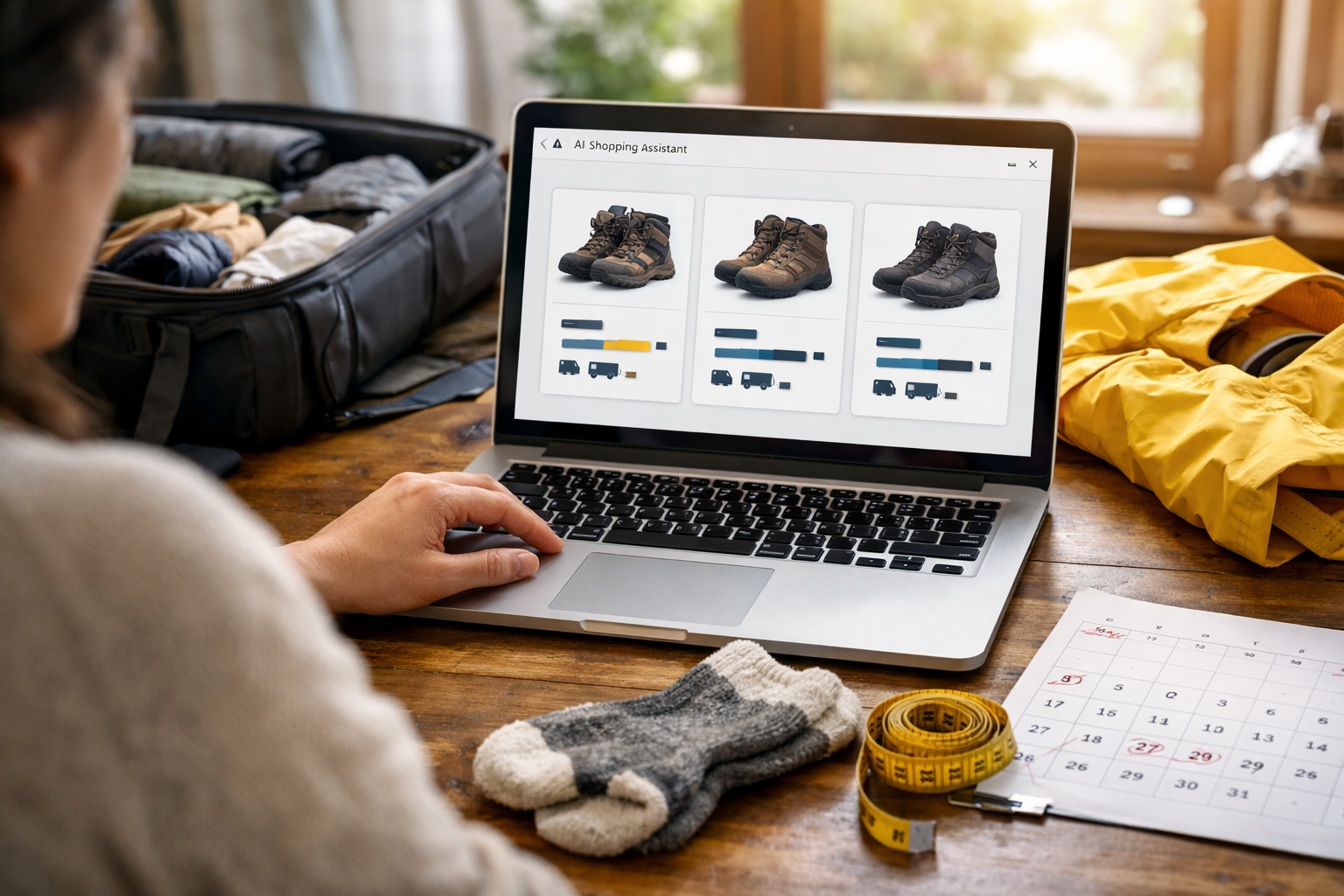
MAK's AI visibility tracking is a monthly service, not software: our team asks AI assistants the same agreed set of buyer questions several times over, then records whether your brand is named, whether your pages are linked, who appears instead and whether what the answer says about you is true. You get a written report with rates, not screenshots, and a short list of fixes our SEO team then works on.

Since 2012
Building and growing online stores
30+
In-house specialists
800+
Projects delivered

MAK Digital at a glance

  • 15

    Years in eCommerce

    Fifteen years of building, migrating, and growing online stores for B2B and B2C brands.

  • 30+

    In-house specialists

    SEO, AI search, paid media, design, and development experts under one roof.

  • USA

    US-led, globally staffed

    A US-based core team you talk to directly, backed by vetted specialists worldwide.

  • 4.9

    Client rating

    Average score across 650+ verified client reviews.

What the service includes

What We Track Each Month

Tracking is one recurring piece of work, not a tool subscription. These are the parts our specialists produce and review every cycle.

  • A prompt panel built from your buyer questions

    A fixed list of questions grouped by intent: category questions ("best X for Y"), comparisons, problem questions, trust questions about returns or warranty, and a small set of branded checks. The panel stays stable so month-to-month changes mean something.

  • Mentions and recommendations

    Whether the answer names your brand at all, and whether it recommends you or only lists you among others. We record both, because being named and being suggested are not the same outcome.

  • Linked citations and the sources behind answers

    Which URLs the assistant links or lists as sources, whether any of them are yours, and which third-party sites (review sites, marketplaces, forums, publishers) keep appearing for your category.

  • Competitors named instead of you

    Who is named or linked on the prompts where you are absent, including brands that were not on your original competitor list. New names are flagged in the report.

  • Accuracy checks on what AI says about you

    Wrong prices, an old return window, discontinued products, a shipping region you no longer serve. Each error is logged with the prompt, the assistant and the page that likely needs correcting.

  • A content gap list with a fix for each gap

    Every prompt where you are missing or misdescribed becomes a gap record with a proposed fix: a page change, a product data or schema fix, a crawler access fix, or off-site work.

  • First-party data alongside the prompt checks

    Search Console, Bing Webmaster Tools and your analytics, read next to the prompt results so you can see where AI visibility shows up in data your own accounts record.

  • A monthly report and review call

    A written report, not a dashboard login, followed by a call where we agree which fixes go into next month's SEO work.

Method

How Our AI Visibility Tracking Works

The method is deliberately plain so you can check it. Nothing runs on a live feed and there is no MAK software involved: our team runs the checks by hand and, where volume makes it sensible, with third-party tracking tools, then reviews every result before it goes into a report.

1. We build your prompt panel

We start from evidence of what buyers actually ask: your Search Console queries, on-site search terms, sales and support questions, and the category pages that make you money. From that we write a panel of questions in plain buyer language, grouped so each group answers one business question.

  • Category prompts: "best trail running shoes for wide feet", with no brand named.
  • Comparison prompts: your brand against a named alternative, or two product types against each other.
  • Problem prompts: the question a buyer has before they know which product solves it.
  • Trust prompts: returns, warranty, shipping times, whether a store is legitimate.
  • Branded checks: a short set that shows what assistants say when someone asks about you directly.
  • Local prompts where you have showrooms or service areas, run with a stated location; fixing what they show is part of local AI SEO.

Unbranded prompts carry most of the weight. If every prompt names your brand, the panel only proves that assistants know you exist.

2. We fix the conditions before the first run

AI answers change with context, so each run records the assistant, the interface used, the date, the location set, and whether the session was signed out or signed in with memory off. OpenAI's help documentation, as of November 2026, says ChatGPT search can use location information and, when memory is on, saved memories when rewriting a search query. A check run from our office with memory on would not represent your buyers, so we control what we can and write down what we cannot.

We also note whether a result came from the consumer app or from a developer API. The two are configured differently: with a developer tool, the caller chooses settings such as allowed domains and user location, while consumer apps add their own context such as memory and location. Nobody has shown that API output matches what signed-in shoppers see, so we do not treat it as a stand-in, and the report states which surface each number comes from.

3. We run every prompt more than once

One answer is an anecdote. Each prompt is run several times per cycle on each agreed assistant, and the report gives rates: in how many of the collected answers were you named, and in how many were you linked. No platform publishes guidance on how many runs make a rate reliable, and there is no agreed standard, so we size the runs to the panel and the plan and print the sample behind every number.

4. We record each answer the same way

Every answer becomes one row in a scoring sheet. An illustrative row, not client data:

  • Prompt: best espresso grinder for a small cafe (category group)
  • Assistant and conditions: ChatGPT, signed out, US location, 12 November
  • Named: yes, fourth of five brands
  • Linked: no; a review site and a marketplace listing were linked
  • Accuracy: warranty described as one year; the store offers two
  • Action: update the warranty wording on the product template; add the comparison table to the grinder buying guide

5. You get a report and an action list

The report shows what moved, what stayed flat, which errors appeared, and what we propose to change. Actions go straight into the work your SEO plan already covers, so tracking and fixing are done by the same people. If you want the overall program first, our AI search optimization services page explains how tracking fits into it.


Measurement rules

How We Measure Citation Share

"Citation share" and "AI share of voice" are not standard metrics. No AI assistant publishes a brand-level figure, and tools calculate their scores in different ways, so the first job is to say exactly what we count.

Three things we count separately

  • Mention: your brand or product is named in the text of the answer.
  • Linked citation: a page on your domain is linked or listed as a source. In ChatGPT that is an inline citation or the Sources view; in Perplexity, a numbered citation; in Google AI Overviews and AI Mode, a supporting link.
  • Recommendation: the answer suggests you as a choice, rather than listing you in passing or naming you to say you are not suitable.

A brand can be mentioned without being linked (the assistant knows the name but cites a marketplace), and a page can be linked without the brand being recommended (your guide is used as background). Each points to a different fix, so we never fold them into one score.

The formula we report

Our citation share is prompt-based: of the answers we collected for a prompt group on one assistant, the share in which a page on your domain was linked. Mention rate is the same calculation for named-in-text. A worked, hypothetical example: 40 category prompts, each run 3 times in ChatGPT, gives 120 answers; if your domain was linked in 30 of them, citation share for that group is 30 of 120, or one in four.

Another common formula divides your citations by all citations in the answers. We can show it on request, but we do not headline it, because one answer that links ten sources and another that links two count very differently, and the number swings with answer length rather than with your visibility.

Sampling, variance and what counts as a change

Answers vary between runs even with fixed conditions, so a small panel will move from month to month by chance. We report a change as real only when it holds across at least two cycles, or when it lines up with something we changed. Rates are compared with your own baseline and with the named competitors on the same prompts, never with scores from other tools, which use different panels and formulas.

Where the metric stops

The idea of measuring visibility inside generated answers comes from research, including the 2023 GEO paper by Aggarwal and colleagues, which proposed such metrics as a research framework. It is not an industry standard, and a rate from our panel describes our panel. It does not describe every conversation your buyers have. For a longer explanation of share of voice as a concept, read our post on AI share of voice.

From findings to work

Content Gap Analysis: From Tracked Prompts to Fixes

A gap is a tracked buyer question where the answer names or links someone else and not you. We treat each gap as a diagnosis rather than an order for a new article, because the cause is often not missing content.

Four kinds of gap

  • Mention gap: competitors are named and you are not. Usually an entity and evidence problem: too few trusted sources describe you for that category.
  • Citation gap: you are named, but a marketplace, reseller or review site is linked instead of your page. Usually a source-page problem: your page does not answer the question as directly as the one being linked.
  • Open question: no brand is named at all. A clear, specific page has no cited competitor to displace, so we usually look at these early; that is a working assumption, not something any platform documents.
  • Wrong-facts gap: you are named with outdated or incorrect details. This is the most urgent type, because it can cost a sale even when visibility looks fine.

What each gap record contains

The prompt, the assistants and runs where the gap appeared, who was named or linked instead, which of your pages should be the answer (or a note that none exists), the likely cause, the proposed fix and the month we will check again. Gaps are ranked by the revenue and margin of the category they sit in, not by how many prompts they touch.

How each gap gets closed

  • Improve or create a page: a buying guide, comparison or FAQ that answers the question directly. Written and reviewed by people, using Google's helpful content questions of who wrote it, how and why. Execution runs through our content marketing team and the answer engine optimization program.
  • Fix product data and structured data: prices, availability, warranty and return details that disagree between the page, the markup and the feed. Our free schema check is a quick first look.
  • Remove technical blockers: some gaps have nothing to do with content. OpenAI's crawler documentation says sites that opt out of OAI-SearchBot will not be shown in ChatGPT search answers, and Perplexity says PerplexityBot is what surfaces and links sites in its results. A robots.txt rule written to stop training crawlers can catch these search crawlers too.
  • Work on the sources AI already cites: when every answer links the same two review sites, the fix may be getting your products reviewed there, correcting a marketplace listing or improving your presence on a comparison site. This is where our generative engine optimization work comes in.

Checking whether a gap closed

A gap is marked closed only when the change holds over repeated runs in more than one monthly cycle. Publishing a page does not make an assistant cite it; neither Google nor OpenAI documents any mechanism that guarantees that, so we report what changed and leave gaps open until the data says otherwise.

Data you own

Search Console, Bing and Analytics: What Your Own Accounts Show

Prompt checks show what assistants say. Your own accounts show what happened next. We read both, and we are careful about what each one can prove.

Google Search Console

Google's documentation states that sites appearing in AI Overviews and AI Mode are included in overall search traffic in Search Console, in the Performance report under the Web search type. Google has been rolling out generative AI insights in Search Console since June 2026 (impressions and which pages appear in AI responses, by country), at first for a subset of sites. Where a property has them, we report them; elsewhere we look for patterns (queries where impressions hold while clicks fall, or long question-style queries growing) and label them as patterns, not as AI Overviews traffic.

Bing Webmaster Tools AI Performance

Microsoft introduced an AI Performance report in Bing Webmaster Tools as a public preview in February 2026. It shows how often a site is cited across Microsoft Copilot, AI-generated summaries in Bing and select partner integrations: total citations, average cited pages, grounding queries and page-level citation activity. Bing notes that grounding-query data is a sample, and that citation counts reflect how often pages are cited, not importance, ranking or placement in an answer. Where you give us access, this is the only first-party citation count we can include, and it covers Microsoft surfaces only.

Analytics referrals

Visits from assistants show up as referrals only when the referring domain is passed and recognisable. Many are not: links copied out of an answer, apps that strip referrers, and buyers who read an answer and later search your brand all arrive as direct or branded traffic. We report identifiable AI referrals and say plainly that they undercount. Our guide to tracking AI traffic in GA4 covers the setup.

Server logs and crawler access

Bot visits are not one thing. OpenAI documents OAI-SearchBot for search, GPTBot for training and ChatGPT-User for pages fetched when a person asks a question; Perplexity documents PerplexityBot for search results and Perplexity-User for user-requested fetches. If logs show search crawlers being blocked or failing, that goes to the top of the action list before any content work.

Coverage

Recording Rules for Each Assistant

Every assistant shows sources differently, and some of the documented behaviour changes what counts as a fair run. These are the recording rules we apply on top of the standard conditions, based on each platform's documentation as of November 2026. What each platform needs for you to be cited is covered on its own page; this section is only about measuring it consistently.

  • ChatGPT: ChatGPT may decide to search on its own, so an answer written without a web search is logged as "no search" rather than scored as a miss for your site. OpenAI also warns that search results and citations can be incomplete, outdated or incorrect, which is why the accuracy column is filled in for every ChatGPT answer that names you. The optimization side is on our ChatGPT SEO page.
  • Google AI Overviews and AI Mode: Google says AI Overviews often do not trigger, and that both features may use query fan-out and different models, so the supporting links vary. A query with no overview is recorded as "not triggered" and kept out of the citation-share denominator, because counting it would make you look less visible than you are.
  • Perplexity: follow-up questions use the context of earlier queries and Pro subscribers can choose between models, so every prompt is run as a new thread and the model is written down. Numbered citations make the linked-citation count straightforward to record.
  • Microsoft Copilot: prompt results sit next to Bing's AI Performance preview data where you share access, and the two are never added together, because one is our sample and the other is Microsoft's own count.
  • Gemini and Claude: checked where your buyers use them, under the same session and location rules. Answers collected through Anthropic's API web search tool, where citations are always returned, are labelled as API results and reported separately from the consumer app.

Fewer assistants checked properly beat six checked once. A store selling mostly through Google may need Google AI features and ChatGPT only; a B2B supplier whose buyers use Copilot at work needs that one covered.

Honest limits

What Tracking Can and Cannot Tell You

What it can show

  • Whether your brand is named and linked for a defined set of questions, under stated conditions, and how that rate changes over months.
  • Which competitors and third-party sources assistants rely on for your category.
  • Specific wrong facts, with the prompt that produced them.
  • Whether a fix was followed by a lasting change on the prompts it targeted.

What it cannot show

  • Every buyer's answer. Signed-in sessions with memory, location and earlier conversation all change answers. Our panel is a consistent sample, not a census.
  • Private conversations. No one can see what your buyers ask in their own accounts.
  • Full traffic attribution. Referral data is partial, and Google reports AI features inside normal Web search data.
  • A promise of placement. No agency controls what an assistant says. We cannot guarantee citations or rankings; tracking tells you where you stand and whether the work is moving it.

Why it is still worth doing

The objection we hear most is that AI answers are random, so measuring them is pointless. Individual answers do vary. Rates across a fixed panel, repeated over months, still show direction, and the accuracy checks catch problems no traffic report would surface. Asking ChatGPT yourself once a week is a fine start; the difference is a stable panel, recorded conditions and someone whose job is to fix what the checks find.

Three ways to track

Checking It Yourself, a Tracking Tool or a Team-Run Service?

You can track AI visibility three ways, and each suits a different team. Tool features vary widely and change often, so the middle column describes what you would still have to decide or do yourself, not any one product.

Manual self-checks, self-serve tracking tools and MAK's team-run AI visibility tracking compared by who does each part of the work
Asking assistants yourselfSelf-serve tracking toolMAK team-run tracking
Who writes the promptsWhoever is checking, often from memoryYour team enters themOur team drafts them from your query, search and support data; you sign off
Run conditionsUsually your own signed-in account, with memory and locationSet by the tool; check its documentation for which surface it collects fromRecorded per answer: assistant, interface, date, location, session state, app or API
Repeated runsRarely; one answer per questionDepends on the tool and planSeveral runs per prompt per cycle, sample shown on every number
Mention, citation and recommendationHard to keep apart by eyeDepends on the tool's definitionsCounted separately, with the formula stated
Wrong facts about youNoticed if someone happens to read closelyUsually needs manual review of the answer textLogged per prompt with the page to correct
Search Console, Bing and analyticsSeparateUsually separateRead alongside the prompt results each month
Who acts on the findingsYouYour teamOur SEO team, inside your SEO plan
SuitsA first look at a handful of questionsIn-house teams with time to analyse and actBrands that want the measuring and the fixing done by the same people

Standards

Our Tracking Standards

The rules every report follows, so a number in month six means the same as a number in month one.

  • The prompt panel is written from your own query, search and support data, and most prompts are unbranded.
  • The panel is changed only at agreed quarterly reviews, and changes are noted so trends are not broken silently.
  • Every run records the assistant, interface, date, location and session state.
  • Every number in the report shows the sample behind it (prompts and runs).
  • Mentions, linked citations and recommendations are counted separately and never merged into one score.
  • A change is reported as real only when it holds for at least two cycles or matches a change we made.
  • Wrong facts are logged with the prompt and assistant that produced them and the page to correct.
  • API results and consumer app results are labelled and never mixed in one figure.
  • We do not guarantee placement; the report states what was measured and what was not.

How a Tracking Engagement Runs

Tracking starts with a short setup, a baseline and then a steady monthly cycle inside your SEO plan.

  • Readiness and access

    We run the free AI visibility check and review robots.txt rules for search crawlers, then request Search Console, Bing Webmaster Tools and analytics access. Blocked search crawlers are fixed before tracking begins, otherwise the first report only measures the block.

  • Panel and competitor set agreed

    We draft the prompt panel from your data, propose the assistants and conditions, and agree the competitor list with you. You sign off the panel before any runs.

  • Baseline cycle

    The first full set of repeated runs. The baseline report shows mention rate and citation share by group and assistant, the sources assistants rely on and the first list of wrong facts and gaps.

  • Monthly cycles and fixes

    Each month: the same panel, the same conditions, a report on what moved and a review call. Agreed fixes go into the month's SEO work: pages, product data, technical changes or off-site sources.

  • Quarterly panel review

    Every three months we retire prompts that no longer matter, add new product lines or questions, and document each change so trend lines stay honest.

What Clients Say About MAK Digital

Reviews from the businesses whose websites and search programs we run.

  • Fantasia by Deserio

    “I really enjoyed working with them to build my company's new website. Very responsive and professional. We were extremely happy with the results.”

  • Robert Palori

    Zuum Media, zuummedia.com

    “I have worked with Mak Digital Design a few times. We have done a custom wish list on our website along with many other custom features to allow better navigation. Communications have been excellent and pricing for our projects very reasonable. Thank you for the great service.”

  • Daniel Johnson

    “We did a major upgrade to our ecommerce site and are extremely happy with the results. We got excellent advice and customer support before, during and after the project.”

Find Out What AI Says About Your Brand

Tracking is included with AI search optimization in our SEO plans from $2,000/month. MAK Digital has been doing SEO since 2012, with 30+ in-house specialists and Google Premier Partner status. Tell us your categories and we will propose a prompt panel.

AI Visibility Tracking FAQ

Straight answers about what we track, how and what it costs.

What is AI visibility tracking?

It is checking a fixed set of buyer questions in AI assistants and AI search features, repeatedly and under recorded conditions, and logging whether your brand is named, whether your pages are linked, who appears instead and whether the answer describes you correctly. At MAK it is a monthly service run by our team, with a written report and fixes carried out in your SEO plan.

Should we start with the free check, an AI search audit or monthly tracking?

It depends on what you already know. The free AI visibility check is a one-time technical scan of signals such as crawler rules and structured data; it never asks an assistant a question, so it suits a first look. An AI search audit runs a buyer-question panel once and gives you a ranked fix list. Monthly tracking re-runs an agreed panel every cycle to show whether the fixes are moving anything. They fit together in that order, but none is a prerequisite for the next.

How do you choose which assistants to track and how often to run them?

From where your buyers actually search, which we judge from your referral data, your market and your sales team's experience, then agree with you. A typical panel starts with ChatGPT and Google's AI features and adds Perplexity, Gemini, Copilot or Claude where there is a reason. Every tracked assistant gets several runs per prompt each monthly cycle; we would rather check three assistants properly than six once each.

If AI answers change every time, can the numbers be trusted?

A single answer cannot. Google and OpenAI both document reasons answers vary, including query fan-out, location and memory. That is why we fix the conditions, run each prompt several times, show the sample behind every rate and only call a change real when it holds for two or more cycles. Read the numbers as direction over time, not as a fixed position.

What does the monthly report contain?

Mention rate, linked-citation rate and recommendation rate for each prompt group and assistant, each with its sample size; the competitors and third-party sites named or linked instead of you; wrong facts with the prompt that produced them; the open content gap list; and the fixes we propose for next month. Mentions and citations are reported apart, because being named while a marketplace gets the link needs a different fix from not being named at all.

Do you use your own software or give us a dashboard?

No. There is no MAK platform, login or live scan. Our specialists run the checks manually and with third-party tools where they help, review the results and send a monthly written report, followed by a review call.

Do AI assistants report how often they cite my site?

Mostly not, which is why prompt tracking exists. As of November 2026 the exception is Microsoft: Bing Webmaster Tools has an AI Performance report, in public preview since February 2026, with citation counts across Copilot, Bing's AI summaries and select partners. Google includes AI Overviews and AI Mode in Search Console's Web search data without separating them, and we know of no brand-level citation report from OpenAI, Perplexity, Google's Gemini app or Anthropic.

How much does AI visibility tracking cost?

Tracking is part of AI search optimization, which is included in MAK's SEO plans from $2,000/month. The scope of the panel and the number of assistants are set in the plan. See our AI search optimization services for how the program is put together, or ask for a quote.

AI Search Resources

From the eCommerce Experts

Read Our Blog

Start Your Project With Us

Share some details, and our team will follow up.

Please write at least 20 characters.

Click to upload or drag and dropUp to 5 files, 10 MB each

    Get the MAK Digital Newsletter

    eCommerce design, development, SEO, and marketing insights, a few times a month. No spam, unsubscribe any time.

    By subscribing you agree to our privacy policy.