BigCommerce Product Options vs Variants: The SEO and Indexing Difference

Start with the attribute: a color, size, material, model, kit contents, or bundle configuration is either a buying choice inside one product experience or a search-worthy product idea that may need its own page.
The way a store models those differences can change the search surface of the catalog. A size selector for the same T-shirt usually supports one consolidated product page, because “medium” or “large” rarely changes the buyer’s search intent. A walnut dining table versus a black oak dining table may be different: the finish can affect imagery, copy, internal links, and the exact query a shopper uses.
The core BigCommerce SEO tradeoff is concentration versus specificity. Keeping variations on one product page can concentrate links, engagement signals, reviews, and product content around a single URL. Splitting variations into separate product pages can help when each version has enough distinct demand, imagery, attributes, and copy to justify its own indexable page.
Weak reasons to create separate pages include minor size differences, near-identical colors with no search demand, or SKU-level inventory needs that do not change the shopper’s decision. Stronger reasons include materially different products: a leather version versus a silicone version, a camera body kit versus a lens bundle, or a furniture color that shoppers search for by name and expect to compare visually.
The practical question behind product structure is therefore not simply “How do I build the catalog?” It is “Which product differences deserve crawlable URLs, unique content, internal links, and indexation, and which would only create thin or duplicative pages?”
Product options, variants, and modifiers: what each means in BigCommerce
Before deciding what should be indexable, separate three BigCommerce catalog concepts that often get collapsed into one conversation: options, variants, and modifiers.
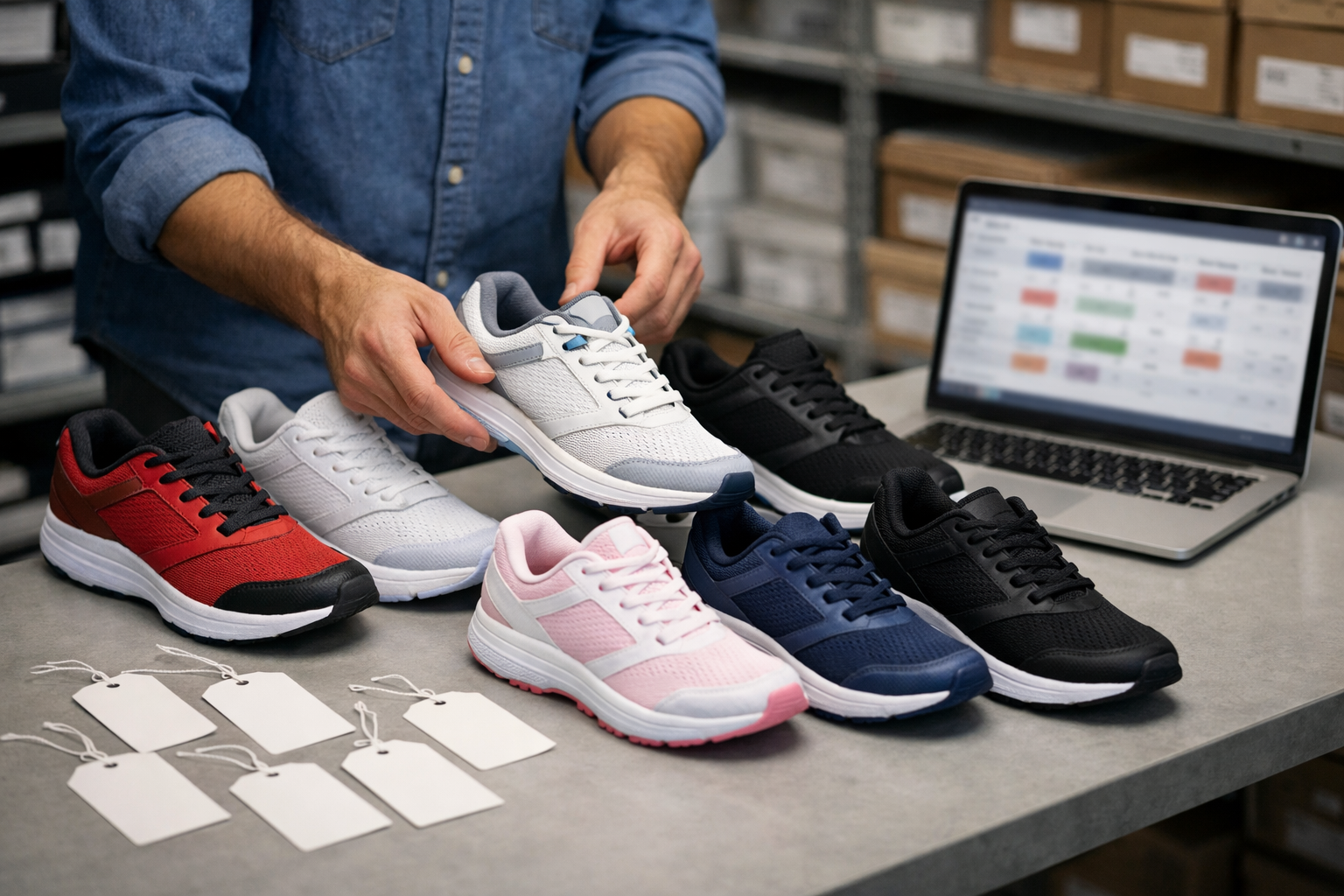
- Product options are the choices a shopper sees on a product page, such as size, color, finish, material, pack quantity, or bundle-style configurations. They shape the buying interface: the shopper selects a value before adding the item to cart. In practical terms, options answer “what can the customer choose?” A size dropdown on one T-shirt page is the simple version; a furniture page with finish, leg style, and upholstery choices is a more complex one.
- Variants are the purchasable combinations created from variant-style options. If a shirt has size and color selections, “Medium / Navy” can be a variant with its own SKU-level data. Variants matter operationally because the combination can carry different SKU, price, inventory, weight, and image behavior. This is the heart of the BigCommerce variants vs options distinction: options present the choices, while variants represent the specific sellable combinations behind those choices.
- Modifiers collect or apply additional customization details without necessarily creating a separate stock-tracked variant for every possible input. Examples include engraving text, a checkbox for gift wrapping, a file upload, or an add-on selection. A modifier can change the order detail or price, but it is usually better understood as customization attached to the product rather than a separate product version that deserves its own search landing page.
For SEO, these structures are not automatically good or bad. BigCommerce product options SEO and BigCommerce product variants SEO depend on how the storefront exposes the experience: whether the selection has a crawlable URL, whether internal links point to it, whether the template renders unique content, and whether indexation controls allow search engines to keep it. A SKU-level variant can be crucial for inventory and fulfillment while still living behind one consolidated product URL.
The takeaway is simple: treat options, variants, and modifiers as catalog and merchandising tools first. Only after that should you decide whether a particular difference also needs a distinct URL, unique on-page content, and a place in the index.
How options and variants affect URLs, crawlability, and indexing
The indexing question starts at the storefront URL, not at the catalog record. A BigCommerce product can contain many option values and SKU-level variant combinations, but those combinations usually remain inside one product detail page unless the storefront creates distinct, crawlable URLs for them.
Google generally discovers and evaluates pages as URLs. That matters because a selectable “Walnut” finish, “Size 10” shoe, or “14k Rose Gold” material choice may change what the shopper sees, while still leaving Google with only the parent product URL to crawl and index. In that setup, BigCommerce variant indexing is not really variant indexing at all; it is one indexed product page with selectable purchase states.
There are three common storefront behaviors to separate:
- No URL change: the shopper selects a size, color, or configuration, and the page updates price, image, SKU, or availability without changing the address bar. This is clean for consolidation, but it gives search engines no separate URL for that selected state.
- JavaScript state change: the theme updates the product experience dynamically after an option selection. This can improve shopping usability, but a state change is not the same as a durable landing page with its own title, copy, links, and indexation signals.
- Parameter or fragment URL: a selection may appear as something like a query parameter or hash fragment. These can preserve a user selection, but they are weaker SEO candidates than intentional product URLs unless they are crawlable, internally linked, canonicalized appropriately, and supported by unique content.
This is the practical difference behind BigCommerce product option indexing: an option can influence the visible product experience without creating a new indexable page. A shopper may experience “blue” and “red” as different choices, while a crawler may see one canonical product URL unless the site architecture exposes separate URLs for those choices.
A strong indexable variation page has a stable URL, a crawl path through internal links, a 200 response, no noindex block, canonical signals that point to itself, and enough unique content to justify its existence. A weak variation URL is merely a preselected dropdown state with the same title, same description, same imagery, and no meaningful internal links. The first can compete for specific search rankings; the second usually creates more noise than value.
Duplicate content, canonicals, and faceted URL risk
Risk starts when merchandising states become addressable at scale. A single product page with selectable choices is usually manageable; dozens of crawlable URLs for the same product, separated only by color, size, sort order, filter state, or preselected option, can create duplicate content and waste crawl attention on pages that do not add search value.

A canonical URL is the preferred version of a page that you want search engines to treat as the main representative. It is useful when near-identical URLs must exist for usability, tracking, or sorting, but it is not a license to generate unlimited low-value URLs. If /chair/?color=walnut, /chair/?color=oak, and /chair/?sort=price all show the same title, description, reviews, and product intent, the canonical should usually consolidate them back to the main product URL rather than invite each one to compete separately.
A robots meta noindex tag serves a different purpose: it tells search engines not to keep a page in the index. That can be appropriate for thin filtered pages, internal search results, or utility URLs that users may need but search results do not. The tradeoff is that noindex removes the page as a ranking candidate, while a canonical URL keeps the preferred page eligible and attempts to consolidate signals there.
Parameter handling is the discipline of deciding which query strings matter. Parameters used for sorting, pagination, tracking, option preselection, or filtering can multiply quickly. Faceted navigation is especially sensitive because every combination of attributes, brand, size, color, material, price, availability, can create another URL. For online store SEO, the strong pattern is to index only facets with clear demand and unique content; the weak pattern is allowing every filter combination to be crawlable and indexable by default.
The issue is not that BigCommerce product options vs variants exist. The issue is uncontrolled URL multiplication. If a variation URL does not have distinct intent, copy, imagery, internal links, and self-supporting canonical signals, it is usually a duplicate content liability rather than an SEO asset.
When a variant should stay on one product page
A good consolidation candidate is a variation that helps the shopper choose, but does not change the search intent enough to deserve its own landing page.
Keep the child variant inside the parent product when the same title, description, benefits, reviews, and buying objections would apply across the choices. Small, medium, and large apparel sizes are the cleanest example: size affects fulfillment and inventory, but “men’s black cotton hoodie size medium” usually does not need a separate product page if the buyer is really searching for the hoodie. The practical takeaway is that size-only differences are usually operational SKU distinctions, not separate SEO targets.
Minor visual differences often belong in the same structure as well. A color option such as black, charcoal, or navy may matter to conversion, swatches, images, and stock control, but if search demand is weak and the copy would be nearly identical, separate URLs are more likely to split attention than create useful search coverage. A single stronger page can still mention available colors, show variant imagery, and let the shopper select the exact configuration.
The same logic applies when separate pages would compete for the same keyword. If five near-identical pages all target “adjustable office chair,” each with only a different finish or size, they can dilute internal links, backlinks, reviews, engagement signals, product schema, and content depth across multiple weak URLs. Consolidation gives one page a clearer role: rank for the product concept, answer the buyer’s questions, and carry the accumulated trust signals.
A practical checkpoint: if you cannot write a meaningfully different title tag, product description, image set, comparison angle, and internal link anchor for the variation without forcing it, keep it under the parent product. The option or variant still matters to merchandising; it just does not need to become an indexable page.
When to create separate, indexable BigCommerce product pages
The stronger case for separation is when the variation can win a searcher that the parent page would underserve. Instead of exposing a selectable value inside one product, you create a standalone BigCommerce product page with its own clean URL, indexable intent, and content built around that specific demand.
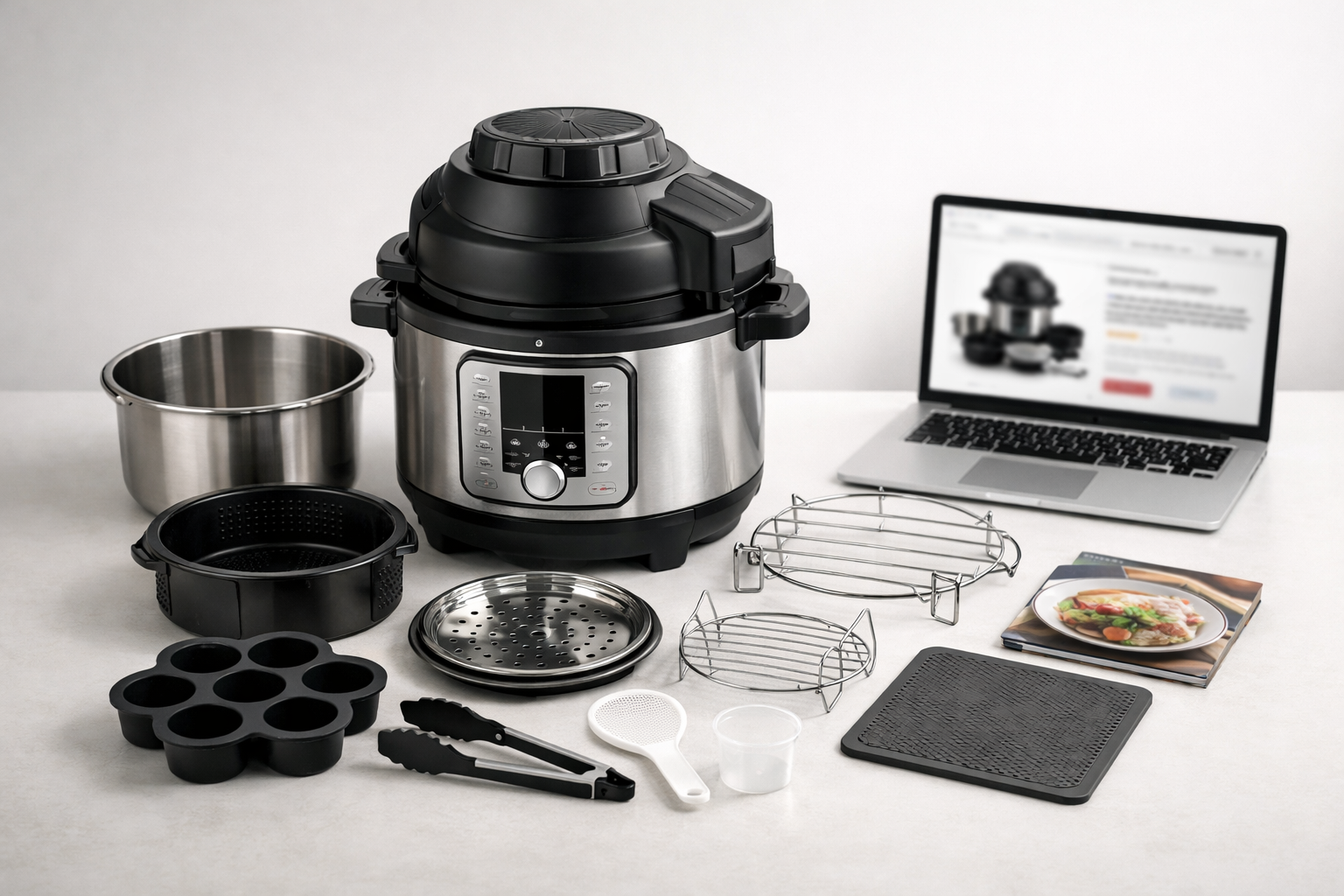
Distinct search demand is the first signal. If shoppers search the modifier as part of the product phrase, such as “black leather sofa,” “blue velvet sofa,” “14k rose gold tennis bracelet,” or a replacement part by model number, that wording is no longer just a catalog choice. It describes how the buyer thinks about the product. In that case, a separate page can target the exact color, material option, model, or compatibility phrase without forcing one generic page to serve every intent.
Different buyer intent is the second signal. A black leather sofa and a blue velvet sofa may share a frame, but they can attract different shoppers, rooms, objections, images, care instructions, and comparison language. Leather may invite durability, cleaning, and pet-resistance copy; velvet may need styling, texture, and color-depth copy. The practical tradeoff is worthwhile only when those differences produce a page that feels purpose-built, not cloned.
Separate pages are also justified when the variation changes the economics or evaluation criteria. A material option that substantially changes price, warranty positioning, specifications, or use case can deserve its own page because the buyer needs different proof before purchasing. The same applies to bundles or kits when the included items change the value proposition enough to support distinct merchandising copy.
Before making the page indexable, require a full content set: a unique title tag, H1, product description, image set, alt text, specifications, internal link anchors, product schema, review presentation, and comparison language. For BigCommerce SEO, the page should also have a stable crawlable URL, self-supporting canonical signals, relevant category or collection links, and sitemap inclusion only if you intend search engines to treat it as an index candidate.
The weak version is a page that swaps one word in the title and leaves everything else identical. The strong version earns its URL because the search query, buyer questions, visuals, specifications, and internal links all change. That is the real eCommerce SEO distinction in BigCommerce product options vs variants: not whether the catalog can represent the difference, but whether the difference can support a useful page in the index.
How to optimize whichever structure you choose
Optimization should follow the URL decision, not fight it. If the variation remains inside one consolidated product page, the goal is to make important choices visible to shoppers and search engines without turning the page into a bloated catalog dump.
- Use concise copy blocks for meaningful attributes. A size-only apparel page may need one fit paragraph and a size chart, while a sofa page with several important colors can mention finish, room style, and material behavior in a short “Available colors” section. The tradeoff is coverage without repetition: name the variants buyers search for, but do not write a mini landing page for every dropdown value.
- Use clear option labels. “Color: Navy Blue” is more useful than “Option 3,” because the label tells the shopper what is changing and gives the page cleaner visible language. For product page optimization, option labels should match how customers describe the attribute: color, size, material, finish, capacity, bundle contents, or model fit.
- Attach strong variant images where they matter. If a selected color, material, or bundle changes the visual decision, show that selected state clearly. The practical benefit is merchandising clarity: the page can support variant-level discovery and conversion without needing separate indexable URLs for minor choices.
- Keep structured data aligned with the purchasable product experience. Product schema is machine-readable product information such as name, image, offers, price, availability, SKU, and review data. When variants affect offers or SKUs, the markup should not contradict the visible product selection.
- Point internal links at the consolidated page from relevant categories, comparison guides, and buying guides. Anchor text can include important variant language, such as “navy performance polo” or “walnut TV stand,” even when the destination is the parent product page.
For separate pages, BigCommerce product variants SEO becomes more demanding because each URL has to stand on its own. Write a unique title tag, meta description, product intro, specification emphasis, image set, alt text, and schema for the specific page. A rose gold bracelet page should not read like the yellow gold page with one metal name replaced; it should address the metal color, styling context, care notes, matching items, and buyer objections that justify the separate URL.
Canonical tags are the control that tells search engines which URL should be treated as the preferred version when similar URLs exist. Use self-referencing canonicals for variation pages you intend to index, and point parameter or duplicate versions back to the clean preferred URL. The practical takeaway for online store SEO is simple: separate pages need separate value, separate links, and clean canonical signals; consolidated pages need rich enough content to capture variant demand without manufacturing thin URLs.
A brief platform note: BigCommerce vs Shopify variant SEO
Cross-platform teams should be careful not to turn BigCommerce vs Shopify into a false shortcut. Both platforms commonly support product pages with selectable choices, but catalog variation data is not the same thing as a separate SEO landing page. Shopify often exposes a selected variant through a URL parameter such as a variant ID, while BigCommerce behavior depends more on the theme, product template, option handling, and any custom URL logic in the storefront.
The practical distinction is what that URL can do. A parameterized variant state may help preserve a selected color or size for shoppers, but that does not automatically make it a strong indexable page. Likewise, a BigCommerce implementation can show many purchasable combinations on one page or build separate pages for specific variations; the SEO value comes from the page experience, not the platform label.
Use the same standard either way: index a variation only when it has a clean URL strategy, unique content, crawlable internal links, and independent search intent. Without those signals, the variant is usually better treated as a merchandising state inside the main product page rather than another URL competing for the same query.
Decision checklist: options, variants, or separate product pages?
Make the final call by matching the catalog structure to the search opportunity, not by treating every purchasable difference as a new landing page.
- Keep it as an option when the choice is mainly a shopper preference on the same product experience: gift wrap, engraving text, accessory add-ons, or a simple selectable attribute. The takeaway is consolidation; the page should rank as one product, while the option helps conversion.
- Keep it as a variant when the difference affects selling operations such as SKU, inventory, price, image, or purchasability, but not search intent. Size-only apparel is the cleanest example: “medium” and “large” usually belong under one product URL unless shoppers search for them as separate products.
- Create separate product pages when each version deserves its own query target, copy, imagery, specifications, and internal links. A walnut dining table, white oak dining table, gold necklace, silver necklace, or prebuilt bundle may justify separation if the page can answer different buying questions instead of swapping one word in the title.
Use this as the practical BigCommerce product options vs variants checkpoint: if the variation cannot support a distinct title tag, description, image set, internal anchor text, and self-contained buying rationale, keep authority on one URL. If it can, build a clean, crawlable, indexable page for it.
The strongest BigCommerce SEO structure is not the largest index; it is the most deliberate one. Consolidate minor differences to reduce duplicate content and crawl waste, then give valuable variations their own optimized URLs when they can carry real eCommerce SEO demand.