

Alliedflag.comBigCommerce Brand Unification
Allied Flag manufactures premium American-made flags and serves both consumer and commercial markets through two separate storefronts. But customers shopping on AlliedFlag.com (B2B) and USFlagStore.com (B2C) had no idea they were buying from the same company, the sites looked like completely different brands. After 3-4 months of design work, MAKDigital unified both storefronts under one cohesive brand while preserving the distinct messaging each audience needed.
The Situation
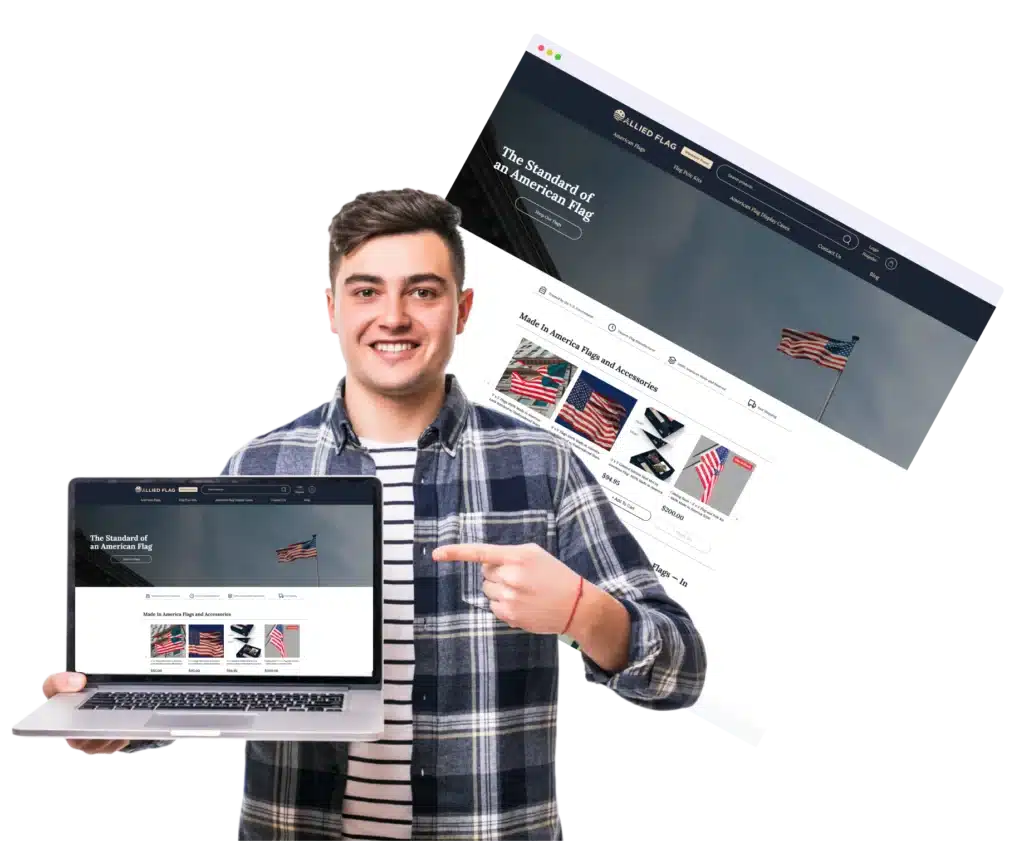
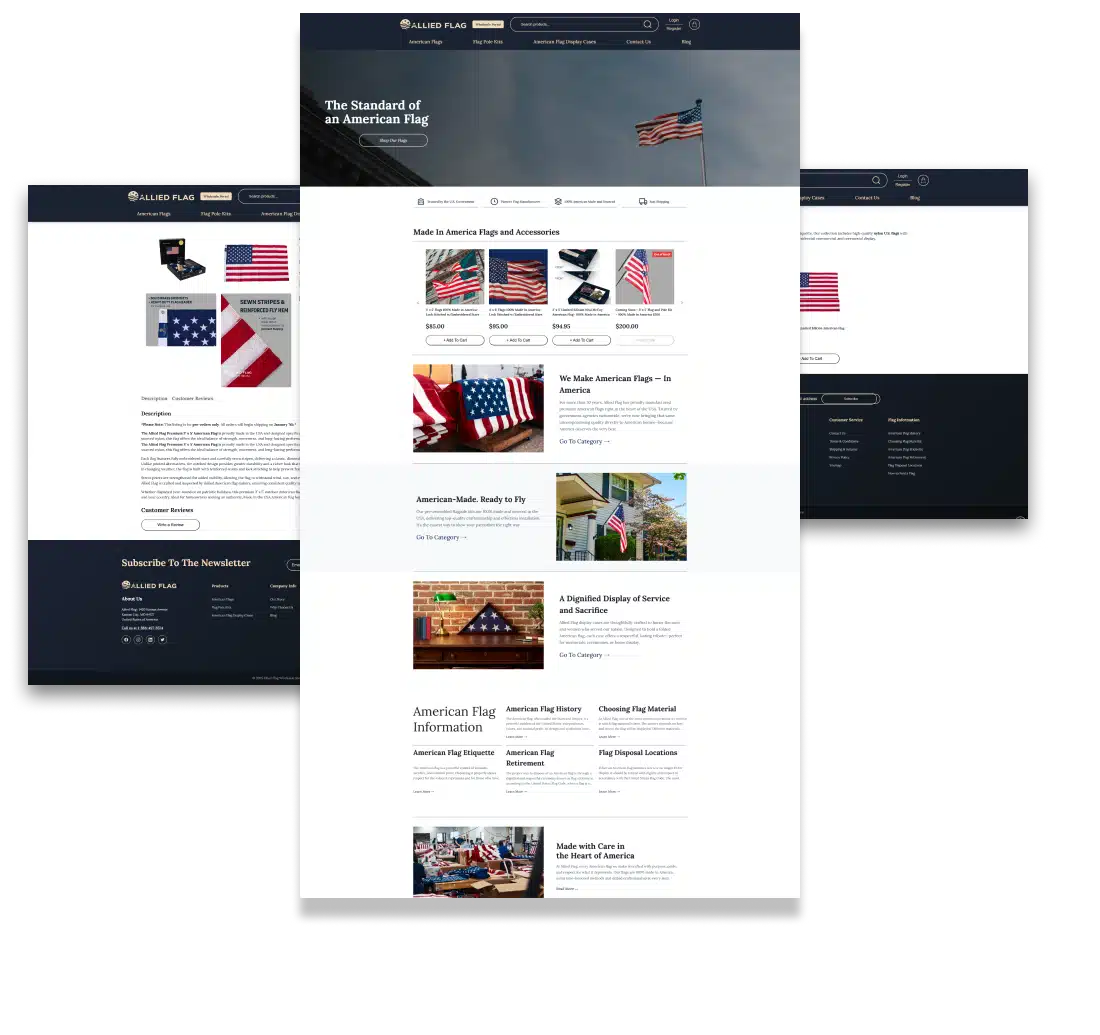
Allied Flag is a flag manufacturer that operates two separate storefronts: a B2C site for consumers and a B2B site for commercial buyers. While both sites were functional and generating sales, they had fallen behind modern design standards. More importantly, the two storefronts looked completely unrelated and lacked tailored messaging, B2C needed content emphasizing premium American-made quality, while B2B required messaging focused on bulk capability and commercial reliability. A B2B buyer landing on the B2C page would have no idea it was owned by the same company. This brand disconnect missed cross-selling opportunities. To compete more effectively in a market they're doing well in, they needed to modernize both sites and create a unified brand presence with audience-specific content.
The Core Challenge
The biggest issue was that both storefronts weren't being positioned as the same brand. Even though they operated as two separate businesses, they failed to create a unified brand presence. When a user landed on the B2C store, they wouldn't know it was owned by the same company, and the same was true for the B2B site. This lack of visual connection led to missed cross-selling opportunities. Both brands needed to showcase their authority through a unified look; without it, they appeared weaker than it actually was which could've led competitors in their space get ahead of them.
Additional Obstacles
They also faced content strategy challenges across both storefronts. The B2C site lacked the educational content needed to attract new consumers and establish authority, despite being flag experts, their existing content didn't showcase that expertise or drive organic search traffic. Meanwhile, the B2B site needed less content and more simplicity, since commercial buyers already know what they need and prefer fast, straightforward access to product information, pricing, and ordering tools over educational or brand-driven content. Both storefronts required different content approaches to serve their distinct audiences effectively.
Custom Templates + Webpages:
Services Completed:

Our Approach
We designed both storefronts to serve their distinct audiences: B2C needed to showcase premium American-made quality, while B2B needed to communicate commercial scale and efficiency.
Unifying the Brand System
They needed instant brand recognition across both storefronts while maintaining each site's distinct purpose.
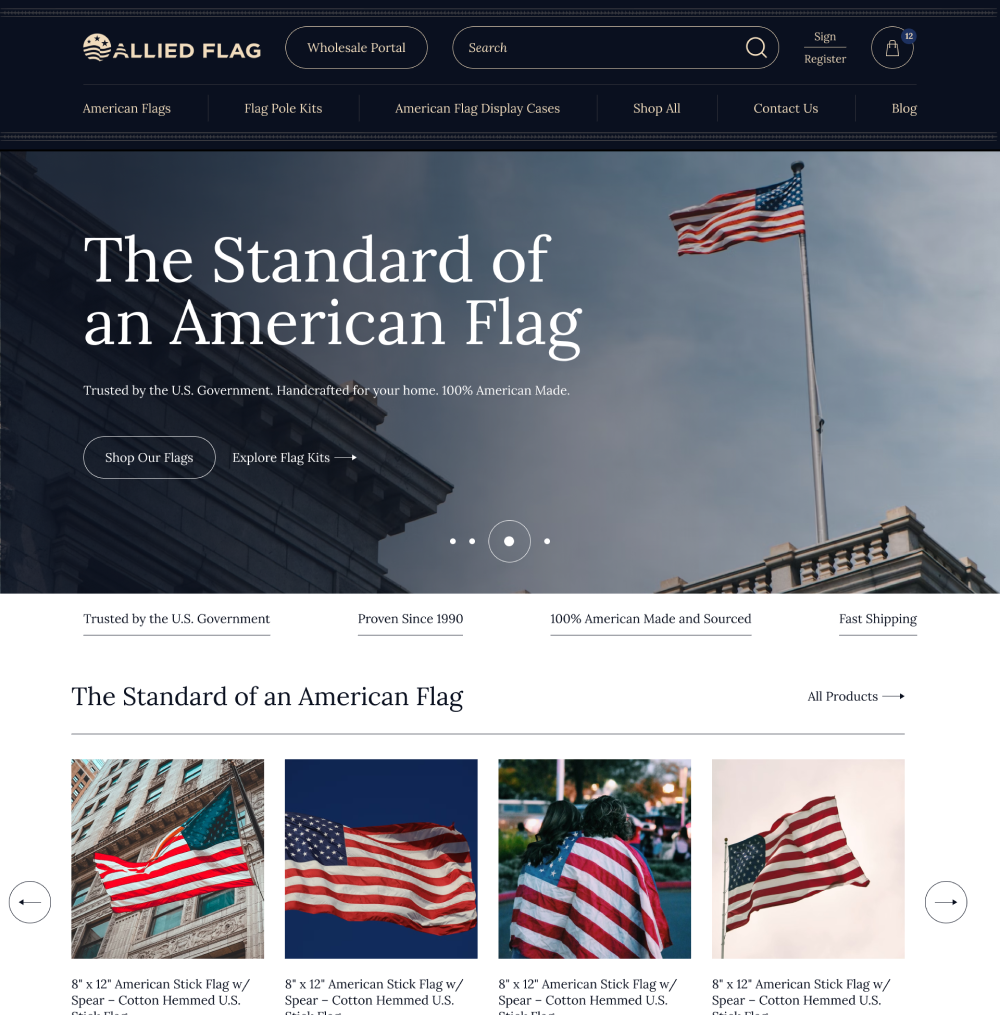
- Created a unified design system with consistent typography, color palette, gold stitching accents, and a whiskey label-inspired header navigation, signature elements that elevated both storefronts with an intentionally crafted brand presence
- Added cross-navigation buttons in the header so B2C visitors can jump to wholesale and B2B buyers can access the consumer store
- Delivered comprehensive brand guidelines (fonts, colors, border spacing and more) to ensure their development team could implement and maintain consistency
B2C: Premium Positioning
Their B2C site needed to match the quality of their premium American-made flags with an aspirational, patriotic experience.
- Simplified navigation to emphasize curated product selection, creating a premium shopping experience over catalog volume
- Integrated American-made messaging at key moments, hero banner, value props, footer imagery, to reinforce patriotic credibility
- Designed clean product pages with image galleries, high-res photography, customer reviews, and shipping details to build trust
B2B: Commercial Capability
Their B2B storefront needed to communicate scale and reliability for wholesale buyers seeking efficient access to thousands of products.
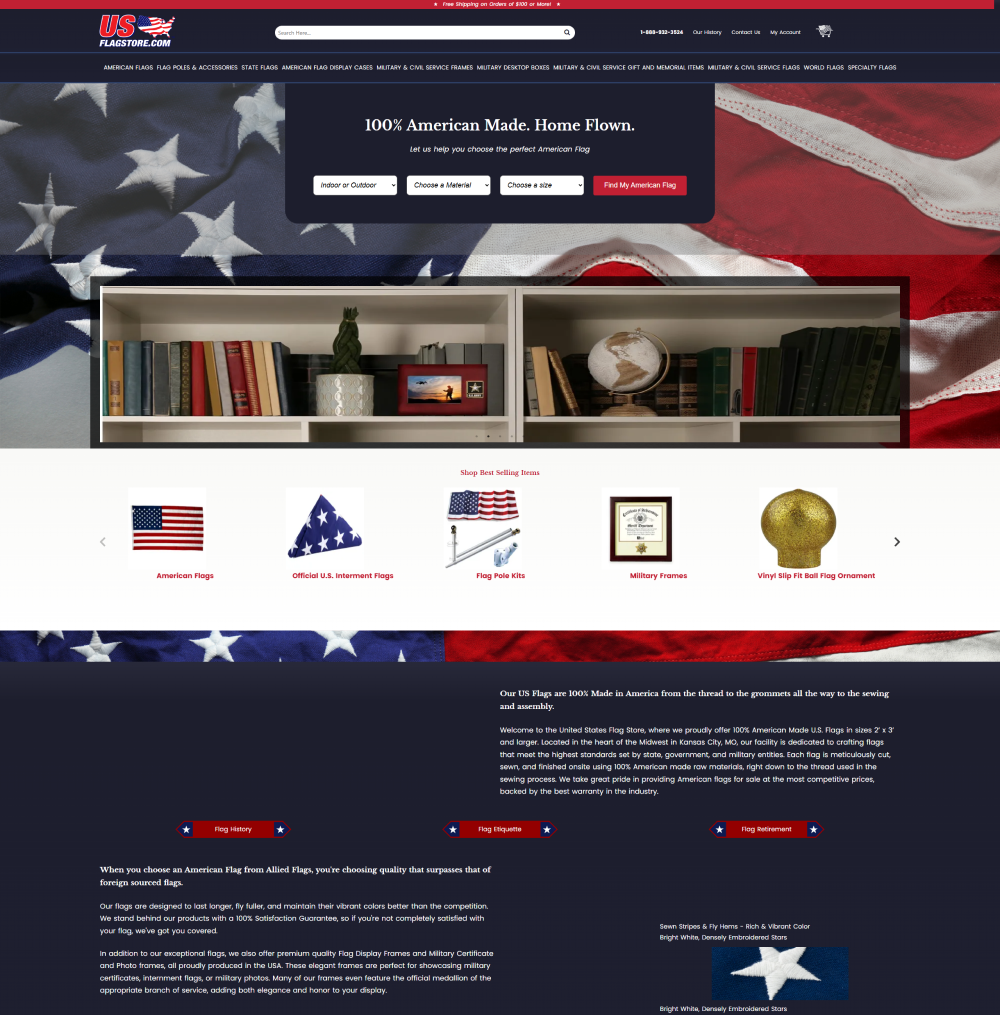
- Expanded navigation to showcase more product categories and the extensiveness of their B2B catalog
- Added "Whole Catalog" link in the header for quick inventory browsing
- Used commercial imagery, dealership lots, office displays, warehouses, showing flags in real business contexts
Content Strategy
B2C needed content to attract new customers, while B2B buyers just wanted fast access to purchase, two completely different needs requiring opposite approaches.
- Designed a custom blog for B2C to drive organic traffic and establish them as flag experts
- Redesigned and repositioned these pages to serve as dedicated landing pages that highlight their importance and reinforce the brand’s authority as a premium flag suplier.
- Kept B2B streamlined with no blog, focusing on efficient product access for repeat buyers
Custom Features & Functionality
- Custom Blog Design
- Custom Informational Landing Page Design
- Custom Side Cart Design
Business Impact
The redesign transformed their digital presence with distinctive design elements and modern page layouts. The whiskey label-inspired header navigation became a signature brand touch across both storefronts, while gold stitching accents and unified typography created an elevated feel. The B2C homepage shifted to premium and patriotic, the B2B homepage showcased catalog breadth and commercial capability, and product pages received clean layouts with high-resolution imagery and strategic trust signals. These changes will position both storefronts as professional, modern operations that match the quality of their actual products.
The unified brand system enables them to operate as one cohesive company instead of two disconnected entities. Customers now recognize both storefronts as the same brand, creating cross-selling opportunities that didn't exist before, B2B buyers can discover premium consumer products, while B2C shoppers can find wholesale options. The premium B2C design showcases the strength of the products while the professional B2B storefront increases credibility with commercial buyers. Trust signals and modern design throughout both sites reduce buyer hesitation and position them as a serious player in both markets.
Their development team now has a complete design system ready to implement and scale. The brand guidelines we delivered, covering typography, colors, spacing, and interaction details, ensure consistency as they expand. This unified brand presence creates a marketing advantage: every customer touchpoint reinforces the same professional identity, making them more memorable and credible in both markets. As they implement these designs and grow their business, the foundation supports expansion without requiring a full redesign.
Ask away, we're here to help!
Allied Materials Brand Unification: Everything You Need to Know About the Alliedflag.com Brand Transformation
How long did the Allied Flag redesign take?
About 3-4 months from start to finish. We started in early August 2024 and delivered comprehensive design comps for both storefronts by late October. The timeline included multiple revision rounds to ensure both the B2C and B2B designs hit the right tone for their distinct audiences.
Why didn't you handle the development too?
Allied Flag has an internal development team, so we focused on what we do best, strategic design. We delivered complete design comps and brand guidelines so their team could implement accurately. This approach gave them full control over the technical build while we ensured the design strategy was sound.
How did you make both sites look unified without making them identical?
We created a shared design system, same typography, colors, and layout structure, but tailored the content, imagery, and messaging for each audience. B2C emphasizes premium American-made quality with patriotic imagery, while B2B focuses on commercial scale with product breadth and efficiency. They feel like the same brand but serve completely different purposes.
What was the biggest challenge with designing two storefronts at once?
Balancing unity with differentiation. The sites needed to look connected so customers recognized the same company, but the B2C and B2B audiences have opposite needs, curation vs. catalog volume, education vs. efficiency. We had to create one visual system flexible enough to support both approaches without diluting either message.
Did you redesign every single page on both sites?
Yes, about 63 pages total across both storefronts. That includes the homepage, category pages, product pages, checkout flows, account pages, and supporting pages. For B2C, we redesigned the flag etiquette, history, and related educational pages to give them dedicated landing pages and highlight their importance, then added a custom blog to further enhance content visibility and engagement. The B2B site received streamlined versions focused on efficiency rather than education.
Can Allied Flag update the designs themselves after launch?
Yes. We provided comprehensive brand guidelines covering fonts, colors, spacing, hover effects, and design patterns. Their team can add new pages, launch promotions, or expand product lines while maintaining consistency. The design system is built to scale without needing us for every update.
Why does B2C get a blog but B2B doesn't?
Different customer acquisition models. B2C needs to attract new consumers through organic search and establish authority, the blog supports SEO and positions Allied Flag as flag experts. B2B has repeat buyers who return for bulk reorders; they don't need education, they need fast access to products. Content would slow them down.
How do you know the designs will work if they're not implemented yet?
We can't guarantee post-launch metrics, but this wasn't a crisis, Allied Flag is a successful brand we've worked with before, proactively investing in improvement. The designs address their strategic goals: unifying brand presence and modernizing both storefronts. The client approved them because they align with where they want to take the business.