Promo distributor and branded merch SEO

Promotional Products SEO for Distributors and Branded Merch Stores

Marketing coordinators, HR teams and event planners search for logo tumblers, embroidered polos and trade show giveaways with a quantity, a budget and an in-hands date already in mind. Most distributor sites answer them with the same supplier copy as every other promo site. MAK Digital's promotional products SEO turns that shared catalog into original, crawlable pages and sends buyers to a quote or virtual proof request.

Since 2012
Building and growing websites
30+
In-house specialists
800+
Projects delivered

MAK Digital at a glance

  • 15

    Years in eCommerce

    Fifteen years of building, migrating, and growing online stores for B2B and B2C brands.

  • 30+

    In-house specialists

    SEO, AI search, paid media, design, and development experts under one roof.

  • USA

    US-led, globally staffed

    A US-based core team you talk to directly, backed by vetted specialists worldwide.

  • 4.9

    Client rating

    Average score across 650+ verified client reviews.

What we do for promo distributors

Promotional products SEO services, from supplier feed to quote form

A promo site sells items it did not design, in decorations it may outsource, at prices that change with every quantity tier. Our work follows that model: we start with the supplier data your catalog is built on and finish with the quote request that tells you who wants 500 pens by the 14th.

  • Supplier feed and duplicate content audit

    We measure how much of your catalog repeats supplier descriptions and images found on other distributor sites, then sort SKUs into rewrite, keep-indexed and noindex groups based on demand and margin.

  • Original copy for priority products

    For the items that matter, we write copy around imprint area, decoration options, recommended uses, minimums and turnaround, using the questions your account reps answer on calls. Our AI product content automation drafts at scale, with a person editing every page that ships.

  • Variant and category architecture

    Color, size and imprint-method variants are consolidated under parent products, and category pages are built by product type, occasion and decoration method so each one targets a different search.

  • Price-break, MOQ and turnaround visibility

    We move quantity pricing, setup charges and production times out of JavaScript configurators and into HTML tables and Offer markup that search engines and AI assistants can read.

  • Decoration method and artwork pages

    Screen printing, embroidery, laser engraving, pad printing, debossing and sublimation pages for the methods you actually offer, plus artwork requirements published as indexable pages instead of PDFs.

  • Seasonal and occasion content

    Corporate gifting, trade show, onboarding kit and employee recognition pages published early enough to be indexed before buyers start comparing suppliers.

  • Quote, proof and company store conversion

    Quote and proof forms that capture quantity, decoration and in-hands date, company store program pages for HR and marketing operations, and analytics that report quote leads as conversions.

The ranking problem

Why promotional products websites are hard to rank

Most promotional products distributors do not write their own catalogs. Product names, descriptions, imprint specs and photography arrive from suppliers through industry databases and data standards such as PromoStandards, and the same records feed a large number of distributor websites. When Google finds an identical description for the same stainless tumbler on many domains, it usually shows one or a few versions and filters the rest. A distributor whose catalog is all supplier copy has very little that search engines treat as its own.

Three more problems pile on top of that.

  • National megasites. A regional distributor will not outrank them on a head term like custom pens, but can compete on decoration, occasion, rush and local searches the big sites cover thinly.
  • Quote-based pricing. Price depends on quantity, number of imprint colors, locations and setup charges, so many sites hide it behind a configurator or a quote button. Buyers comparing suppliers on as-low-as price and minimum order quantity find nothing on the page to compare.
  • Hosted promo website platforms. Many distributors run on industry site builders that load supplier catalogs automatically. They often limit control over templates, URL structure, canonical tags, structured data and which feed items are indexed.

Catalog content

Turning syndicated supplier content into original product and category pages

Picking which SKUs to rewrite first

A promo catalog can hold tens of thousands of supplier items, and rewriting all of them is neither affordable nor useful. We rank items by the signals a distributor already has: products your reps quote most often, reorder history, supplier programs you are invested in, and search demand for the product type plus decoration. Drinkware, tote bags, branded apparel, pens and tech accessories usually come first because buyers search them by name and by method. Our duplicate content guide covers the audit.

What original promo copy contains

Rewritten pages answer the questions a buyer asks before approving a proof: what the imprint area fits, which decoration suits a full-color logo versus a one-color mark, how the item holds up in a dishwasher or a wash cycle, which events it suits, what the minimum is and how long production takes. Real photographs of finished, decorated orders replace supplier blanks wherever you have them.

Handling the long tail of feed SKUs

Items you will never rewrite still need a rule. Some stay indexed because they serve a niche; some are set to noindex so buyers can still find and order them on the site while search engines skip the thin supplier copy; discontinued supplier items get redirected to the closest live parent rather than returning errors after every feed update.

Parent products, variants and faceted navigation

One tumbler offered in many colors and several imprint methods should be one indexable product page, not dozens of near-duplicates. We consolidate color and size variants under a parent URL, control filter combinations for color, price range, decoration and production time, and keep category pages for product type (drinkware), occasion (onboarding kits) and method (embroidered jackets) indexable. Our post on faceted navigation SEO covers the technical rules.

Commercial details

Making MOQ, price breaks and turnaround visible to search engines

Promo buyers filter suppliers on four facts: minimum order quantity, price at their quantity, setup or decoration charges and whether the order arrives by the in-hands date. If those facts live only inside a JavaScript configurator, Google and AI assistants cannot read them, and the buyer leaves to find a site that states them.

Crawlable price-break tables

We render the quantity tiers as a plain HTML table in the page source, with the minimum, each break point, the imprint method the price assumes and any setup charge listed in text.

As-low-as pricing and Offer markup

Promo pricing is commonly advertised as an as-low-as figure at the highest tier. We mark that up with Product and Offer schema and, where the platform supports it, a price specification with an eligible quantity, so the low price is tied to the tier that earns it and a buyer ordering at the minimum is not shown the top-tier price as if it applied to them. The page text states the same tiers, so markup and visible content agree.

Rush and in-hands date content

Searches like rush promotional products, same-week branded shirts and next-day pens come from buyers with a fixed event date. Pages that state standard and rush production times by product line, explain how proof approval affects the schedule and list ship-by cutoffs answer those buyers directly, which a generic contact page cannot. We only publish turnaround times your suppliers and decoration partners can actually meet.

Pre-order searches

Decoration method and artwork pages that capture searches right before an order

Buyers who search embroidered beanies, laser engraved water bottles or full-color sublimated mouse pads already know what they want; they are choosing a supplier. Decoration method pages answer that search directly, and they are among the few pages a promotional products distributor can make entirely original.

One page per method you offer

Screen printing, embroidery, laser engraving, pad printing, debossing, heat transfer, DTG and dye sublimation each have their own search patterns and buyer questions: how many colors a screen print can carry, how stitch count affects an embroidered logo, which materials engrave cleanly, when PMS color matching is possible. We only build pages for methods you or your decorators actually provide.

Artwork requirements as HTML, not PDFs

Art departments get the same questions daily: vector versus raster files, minimum line weights, how to send Pantone references, what a virtual proof shows. Publishing those requirements as indexable pages, with a clear path to upload artwork, answers searches like what file format for screen printing and can cut down the back-and-forth on proofs.

Compliance pages buyers ask for

Procurement buyers often ask for safety and origin documentation. Where it applies, pages can explain how you handle CPSIA requirements for items intended for children, California Proposition 65 warnings, and how Made in USA claims are checked against FTC standards. We write these pages to describe your process; we do not give legal advice, and claims stay limited to what your suppliers document.


Timing

Occasion and seasonal content: corporate gifting, trade shows and onboarding

Promotional products demand follows the corporate calendar. Year-end client and employee gifts, spring and fall trade show seasons, summer events, back-to-school programs and hiring waves each trigger a separate set of searches, and each has a production lead time that pushes the real decision weeks ahead of the event.

Publishing ahead of production lead times

A holiday gifting page that goes live when buyers are already placing orders is too late to be crawled, indexed and trusted. We plan occasion pages and updates against the buying window rather than the event date, and refresh the same seasonal URLs each year instead of creating new ones, so a year-end gifting page keeps the links and history it has built.

Occasion landing pages

Searches such as employee appreciation gifts, new hire welcome kits, client thank-you gifts and trade show giveaways come from the people who hold the budget. Exhibitor pages also need ship-to-venue instructions and order cutoffs. Each occasion page groups suitable products, explains kitting and individual mailing options if you offer fulfillment, and links to the matching quote form.

Conversion

Quote-led B2B conversion paths and company store programs

Most promotional products revenue starts with a quote or a proof request rather than a cart checkout, and the best accounts become repeat orders or company store programs.

Quote and proof forms that qualify the order

The form should ask for product, quantity, decoration method, imprint colors, artwork upload and in-hands date. Those fields let reps price the job in one reply. We connect form submissions, artwork uploads, sample requests and calls from rush-order pages to analytics as conversions, so content decisions rest on quote volume instead of traffic alone.

Company store program pages

The stores themselves are usually private or password-protected, and should stay out of the index. The program is what buyers search: company store, employee web store, branded merchandise portal, onboarding swag program. A public landing page that explains ordering, budgets or points, inventory and fulfillment captures those HR and marketing operations searches. Our B2B SEO services cover customer groups, quote carts and gated catalogs in more depth.

Regional distributors and local search

Distributors that win accounts near their office or decoration shop also need a complete Google Business Profile and service-area pages for promotional products near me searches, which our local SEO work covers.

Paid and organic Shopping

Which promo items suit Google Shopping feeds

Merchant Center expects the price and availability in the feed to match what the landing page shows. Promotional products with tiered, decoration-dependent pricing often cannot meet that cleanly, so feed selection matters more than feed size. Our Google Shopping management and PPC teams work from the same product data as the SEO plan.

Google Shopping suitability by promotional product type
Item typeFeed fitWhyBetter organic route
Blank apparel and blank hard goodsGoodOne clear price per unit and a buyable pageCategory pages by product type and brand
Fixed configurations (set quantity, one decoration, one price)Good with careFeed price can match the landing page exactlyProduct pages with the configuration in the title
Decorated items with quantity tiers and setup chargesWeakNo single honest price; mismatches risk disapprovalsPrice-break tables, as-low-as Offer markup, quote forms
Curated gift sets and onboarding kitsMixedFixed kits can be fed; custom-built kits cannotOccasion landing pages with kit examples
Company store and program servicesNot suitableA service, not a purchasable productProgram landing pages and B2B content

Where promo SEO goes wrong

Four decisions that shape a promotional products SEO program

These choices come up on almost every promo distributor site, and each one changes what Google can index and what buyers can compare.

  • Staying on a hosted promo platform or migrating

    Industry site builders keep supplier catalogs updated, but if they block canonical control, structured data or template changes, rankings hit a ceiling. When a move to BigCommerce, Shopify, Magento or WooCommerce makes sense, our data and platform migration team maps every product, category and decoration URL to a redirect, starting with a migration audit.

  • Showing prices or quote-only

    Quote-only pages protect margin but give buyers nothing to compare. Publishing tier tables with as-low-as prices and a clear note that the final quote depends on decoration usually serves both search and sales.

  • Supplier photos or your own

    Supplier blanks appear on every competing site. Photos of your finished decorated orders, shared with the client's permission, are original images that support both product pages and image search for logo products.

  • Megasite head terms or niche depth

    Chasing custom pens against national promo retailers rarely pays. Depth on a decoration method, an occasion, an industry you serve (such as healthcare, construction or schools) or a region builds rankings a smaller distributor can hold.

Standards

What a search-ready promo distributor site includes

Our audit of a promotional products site checks each of these before any new content is planned.

  • Priority products carry original descriptions and decorated-order photos, not only supplier copy and blanks
  • Color, size and imprint variants resolve to one canonical parent product
  • Minimum order quantity, price breaks and setup charges appear in HTML on the page
  • Product and Offer schema reflect quantity-based pricing without overstating the lowest price
  • Each decoration method you offer has its own indexable page linked to suitable categories
  • Artwork requirements and proof steps are published as web pages, not only PDFs
  • Occasion and seasonal pages are live and indexed before the buying window opens
  • Quote, proof and sample requests capture quantity and in-hands date and are tracked as conversions
  • Private company stores are kept out of the index while the public program page ranks

How a promotional products SEO engagement runs

The work starts with the catalog data because that is where most promo sites lose visibility, then moves to the pages and forms that turn searches into quotes.

  • Catalog, feed and platform audit

    We crawl the site, compare product copy against supplier records, count variant and filter URLs, and note what your platform allows you to change.

  • Keyword and demand mapping

    Product, decoration, occasion, rush and local searches are mapped to existing or new pages, with megasite-dominated head terms flagged so effort goes where a distributor can compete. See our keyword research service.

  • Technical fixes for variants, pricing and schema

    Canonicals, faceted navigation rules, crawlable price-break tables and Product and Offer markup are put in place, with feed-driven URL changes redirected.

  • Priority rewrites and new landing pages

    Top products are rewritten, and decoration method, artwork, occasion and company store pages are published in seasonal order.

  • Conversion tracking and quarterly refresh

    Quote, proof and sample requests are tracked by landing page, and seasonal pages are refreshed ahead of each gifting and trade show window.

What Clients Say About MAK Digital

Reviews from the businesses whose websites and search programs we run.

  • Anthony DiCicco

    ProDryers

    “MAK is literally my go-to developer for Volusion and BigCommerce. I have used Mary many times and will continue to do so. I have not found a more reliable and knowledgeable person to handle all of our technical issues with both platforms. I made the mistake of going with a company that I thought was bigger and better. I ended up having to hire MAK to fix all of their mistakes that would have cost me hundreds of thousands in lost sales. It's important to have a full understanding of the database structures and business rules of each platform. MAK really understands the fine details behind these platforms. MAK has truly earned my trust for life.”

  • Jason

    Phastek, phastekperformance.com

    “Trust is essential when choosing a team to work with, and this team exceeded our expectations. Their transparency, professionalism, and unwavering commitment to our goals fostered a partnership built on trust. Together, we achieved incredible results, including a significant increase in revenue and a loyal customer base. Their expertise and support continue to propel our business forward.”

  • Arman

    Glowback, glowbackledstore.com

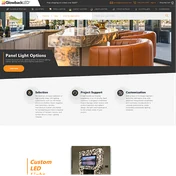
    “Launching and managing an e-commerce store can be daunting, but this team made it simple and stress-free. Their comprehensive approach, from website design to marketing strategies, ensured a seamless and engaging customer experience. Our store's performance surpassed our wildest expectations, thanks to their expertise and dedication. Working with them was truly a game-changer for our business.”

Find out how much of your promo catalog Google treats as yours

Our free SEO audit checks duplicate supplier content, variant URLs, crawlable pricing and quote tracking on your promotional products site, and lists what to fix first.

Promotional Products SEO FAQs

Questions promo distributors, decorators and swag companies ask about search.

Why do promotional products websites struggle with duplicate content?

Suppliers distribute the same product names, descriptions and images to every distributor through industry databases and data feeds, so one item can appear word for word on hundreds of sites. Google shows only a few versions. The fix is to rewrite the products that drive quotes, give the rest clear index or noindex rules, and add content suppliers cannot provide, such as decorated-order photos, decoration guidance and turnaround details.

Should our product pages show pricing or only offer quote requests?

In most cases, show a crawlable price-break table with the minimum, quantity tiers and setup charges, and keep the quote button for custom work. Buyers compare on as-low-as price and MOQ, and pages without any pricing give both them and search engines less to work with. If supplier agreements restrict published pricing, list minimums, decoration options and turnaround in text instead.

How far ahead should we publish corporate gifting and trade show content?

Plan it against the buying window, not the event. Corporate buyers order year-end gifts and show giveaways weeks ahead because of proofing and production time, and new pages need time to be crawled and indexed. Refreshing the same seasonal URLs each year is better than launching new ones, though timing alone cannot promise a ranking.

Do decoration method pages help with rankings?

Yes, when you actually offer the method. Searches that combine a product and a method, such as embroidered fleece jackets or laser engraved tumblers, are common and specific, and a method page is original content no supplier feed provides. Each page should explain what the method suits, its color and artwork limits, and link to suitable products.

Can decorated promotional items run in Google Shopping?

Selectively. Blank items and fixed configurations with one clear price fit Merchant Center well. Items whose price depends on quantity tiers, imprint colors and setup charges are harder, because the feed price has to match the landing page, and mismatches can lead to disapprovals. Feed selection should be decided item by item, starting with blanks and fixed kits.

How can a regional distributor compete with national promo megasites?

By competing where the large sites are thin: local searches and a strong Google Business Profile, original photos of finished work, documented turnaround and rush options, decoration method pages, and niche categories for the industries and occasions you know well. Head terms like custom pens are rarely worth the effort for a regional distributor.

We use a promo-industry hosted website platform. Can we still do SEO?

Usually, within limits. Most hosted promo builders let you edit category text, add landing pages and set titles, but some restrict canonicals, structured data, templates or which feed items are indexed. We first find out what your platform allows; if those limits block the work that matters, a migration audit shows what moving the catalog, decoration pages and quote forms to an open platform would involve.

How does AI search change promotional products SEO?

Buyers now ask Google AI Overviews, ChatGPT and similar assistants questions like which supplier can engrave tumblers before a given date. Assistants answer from pages that state facts plainly, so we put MOQ, price tiers, decoration methods, turnaround and artwork rules in readable HTML with matching schema and question-led FAQs. Supplier copy shared across hundreds of sites gives an assistant no reason to cite you. Our generative engine optimization work, included in SEO plans from $2,000/month, builds on that foundation.

SEO Resources

From the eCommerce Experts

Read Our Blog

Start Your Project With Us

Share some details, and our team will follow up.

Please write at least 20 characters.

Click to upload or drag and dropUp to 5 files, 10 MB each

    Get the MAK Digital Newsletter

    eCommerce design, development, SEO, and marketing insights, a few times a month. No spam, unsubscribe any time.

    By subscribing you agree to our privacy policy.