BigCommerce URL Structure: Why Flat URLs Are an SEO Advantage

URL structure is one of those eCommerce SEO decisions that feels small until a catalog grows, products move between categories, and the same item starts appearing through multiple paths. A product URL such as /blue-running-shoe/ gives search engines, merchandisers, and customers one clean address to understand. A nested URL such as /collections/mens-shoes/products/blue-running-shoe/ carries more context in the path, but it can also create more complexity when the product belongs in several collections or changes merchandising position.
That is where BigCommerce SEO often has a practical technical advantage: merchants can work with cleaner, flatter product URLs instead of being forced to expose every product through a category or collection path. Flat URLs do not magically improve rankings on their own. Their value is indirect: they can make canonical product pages easier to manage, reduce avoidable duplicate-path confusion, keep product URLs stable over time, and give teams more control over concise, keyword-relevant slugs.
This article compares BigCommerce and Shopify only where URL structure flexibility matters. The larger point is not that shorter URLs replace strong SEO execution, but that they support it when paired with disciplined internal linking, canonicalization, crawlable navigation, and well-optimized product pages.
Why BigCommerce’s Flatter URL Structure Matters for SEO
The useful distinction is control: a flatter BigCommerce URL structure lets the store choose a durable product address instead of making the address depend on where the product is merchandised today. For example, /stainless-water-bottle/ keeps the product’s primary URL focused on the item, while /collections/camping/products/stainless-water-bottle/ ties that address to one selling context. The first pattern is easier to preserve if the same bottle later appears under “camping,” “fitness,” “gifts,” and “sale.”
That matters because eCommerce SEO depends on consistency as much as keyword relevance. A clean product URL gives search engines and site teams a clearer candidate for the canonical page, gives internal links one preferred destination, and reduces the chance that category paths create competing versions of the same product. It does not mean the store should flatten its navigation or remove category relationships; it means the product can keep one stable address while categories, breadcrumbs, filters, and related-product links provide the surrounding context.
The practical takeaway is not “shorter URLs rank higher.” URL wording is only one small signal in a much larger system. The stronger BigCommerce SEO advantage is operational: fewer unnecessary path variations, cleaner internal linking targets, easier redirects when merchandising changes, and less ambiguity around which product URL should earn links, indexation, and long-term authority.
Flat URLs vs. Shallow Site Architecture: The Important Distinction
A flat URL is an address convention, not a navigation model. In plain terms, /red-running-shoe/ is a flat product URL because the product slug sits close to the domain, while /mens/shoes/running/red-running-shoe/ embeds a category path into the address. The second example shows a visible URL hierarchy; the first keeps the product address independent from that hierarchy.
That distinction matters because URL depth and click depth are not the same thing. A product can use /red-running-shoe/ and still belong logically under Men’s Shoes, Running Shoes, New Arrivals, and Sale. The site architecture is communicated through top navigation, category pages, breadcrumbs, internal links, faceted navigation rules, and XML sitemaps. Those signals help users and crawlers understand where the product fits without requiring every folder level to appear in the product URL.
Flat URL architecture also does not mean every page should be one click from the homepage. Shallow site architecture is about reducing unnecessary click depth for important pages; flat URLs are about keeping addresses clean and stable. A strong setup might link Home → Men → Shoes → Running Shoes → Red Running Shoe, while the product itself remains available at one canonical URL: /red-running-shoe/. A weak setup would create several product URLs for the same item just because it appears in multiple categories.
The takeaway for BigCommerce SEO is simple: keep category relationships strong in the linking structure, but avoid making the product’s permanent address depend on any single category path.
BigCommerce vs. Shopify: Where URL Structure Differs
The platform difference shows up when a product is listed in more than one merchandising context. In a BigCommerce vs Shopify URL comparison, the key issue is not whether categories or collections exist; it is whether the platform forces those labels into the product address or lets the store keep a cleaner primary URL.
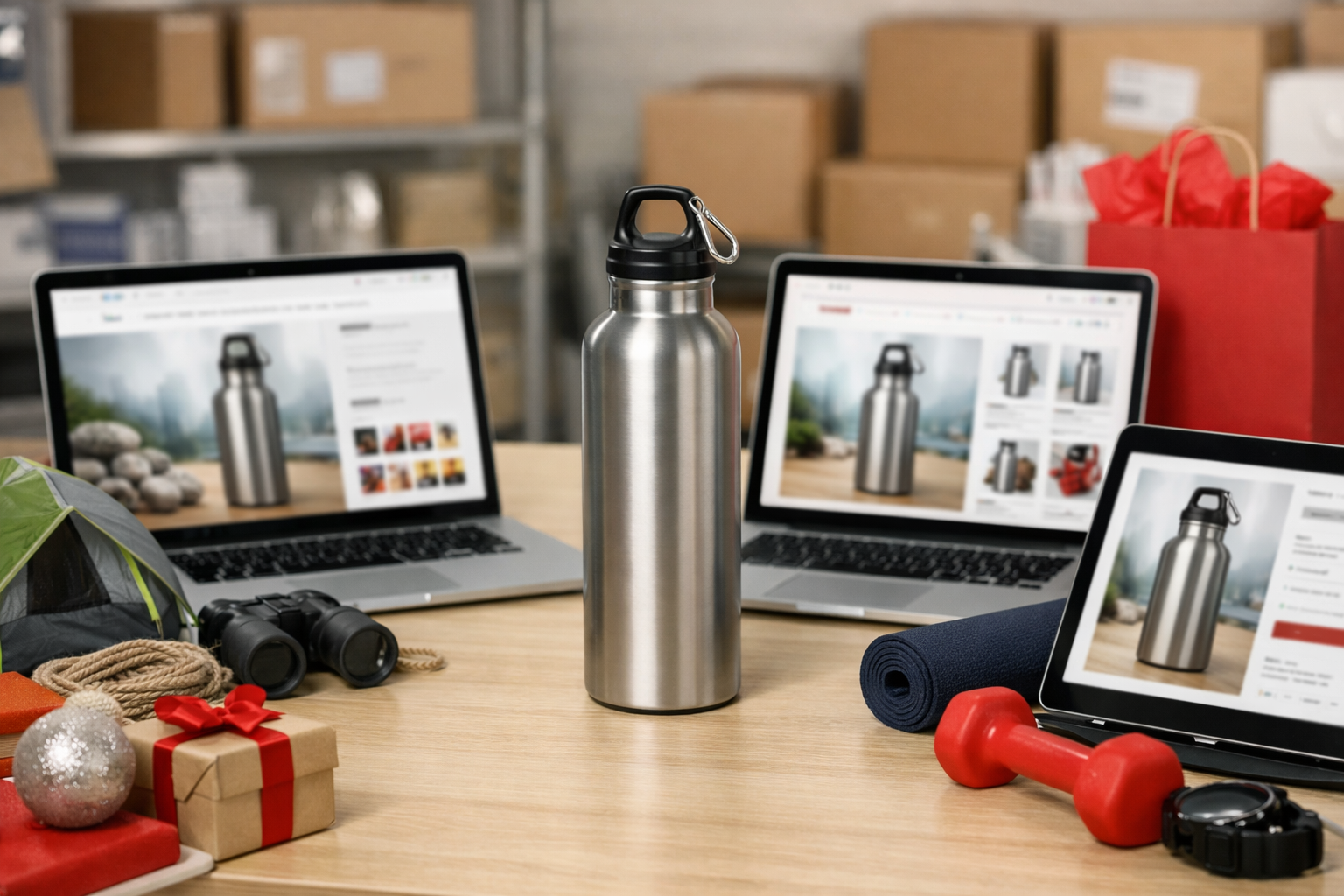
Shopify commonly uses reserved path segments such as /products/ for product pages and /collections/ for collection pages. A product may have a direct URL such as /products/leather-duffel-bag, while also being reachable from a collection-style path such as /collections/travel-bags/products/leather-duffel-bag. That product and collection URL structure is workable when canonical tags and internal links are handled cleanly, but it introduces an extra path pattern that SEO teams need to manage consistently.
BigCommerce generally gives merchants more room to define product and category URLs around the page itself. A store can use a product URL such as /leather-duffel-bag/ and a category URL such as /travel-bags/ without requiring the product address to inherit the category path. The practical tradeoff is clear: the category can still organize discovery, while the product keeps a stable address that does not change just because it appears under Travel Bags, Gifts, Sale, or New Arrivals.
This is not a broad verdict on either platform. Shopify can perform well in search when canonicalization, internal linking, templates, and content are implemented carefully. The narrower point is that BigCommerce offers a structural advantage in scenarios where cleaner product URLs, fewer visible path variants, and more direct URL control make SEO maintenance easier at scale.
How Flatter URLs Can Improve Crawl Clarity and Indexation
Crawl clarity improves when the store presents one obvious product address instead of several competing paths for the same page. If the preferred product URL is /trail-camera/, an SEO team can align internal links, canonical tags, and XML sitemap entries around that single destination. If crawlers also encounter /hunting/trail-camera/, /sale/trail-camera/, and parameter versions such as /trail-camera/?color=black, the site has created more URL discovery work before the primary page is even evaluated.

An XML sitemap is the store’s submitted list of important URLs; it should reinforce the canonical product set, not expose every merchandising variation. A flatter BigCommerce pattern makes that cleaner because the sitemap can list stable product URLs while categories, filters, and promotions remain discovery paths rather than alternate product addresses. The practical benefit is not that a short URL receives automatic ranking preference, but that the signals around indexation are easier to keep consistent.
This matters more as catalogs grow. Crawl efficiency becomes a real operational concern when search engines and crawl tools spend time on low-value variations created by filters, sorting parameters, tracking tags, pagination, or category-based duplicates. In that environment, a clean primary URL pattern helps teams separate pages that should be indexed from paths that only exist to help users browse.
Flat URLs do not solve crawlability by themselves. Internal links still determine how search engines find important pages; robots directives can block or discourage crawling and indexing; faceted navigation can generate excessive combinations; slow pages can reduce practical crawl throughput; and deep click paths can bury products even when their URLs look simple. The BigCommerce SEO takeaway is to treat flat URLs as a cleaner foundation for indexation, then support them with disciplined linking, canonicalization, sitemap hygiene, and controlled navigation.
Why Flat Product URLs Reduce Duplicate-Path Risk
Duplicate-path problems usually begin in merchandising, not in the product template. A jacket might belong in /sale/waterproof-shell/, /brand/acme/waterproof-shell/, and /mens-jackets/waterproof-shell/. If each path loads the same product page, the store has created several addresses for one item. That is where duplicate content risk appears: not because the product description is bad, but because multiple URLs can compete to represent the same page.
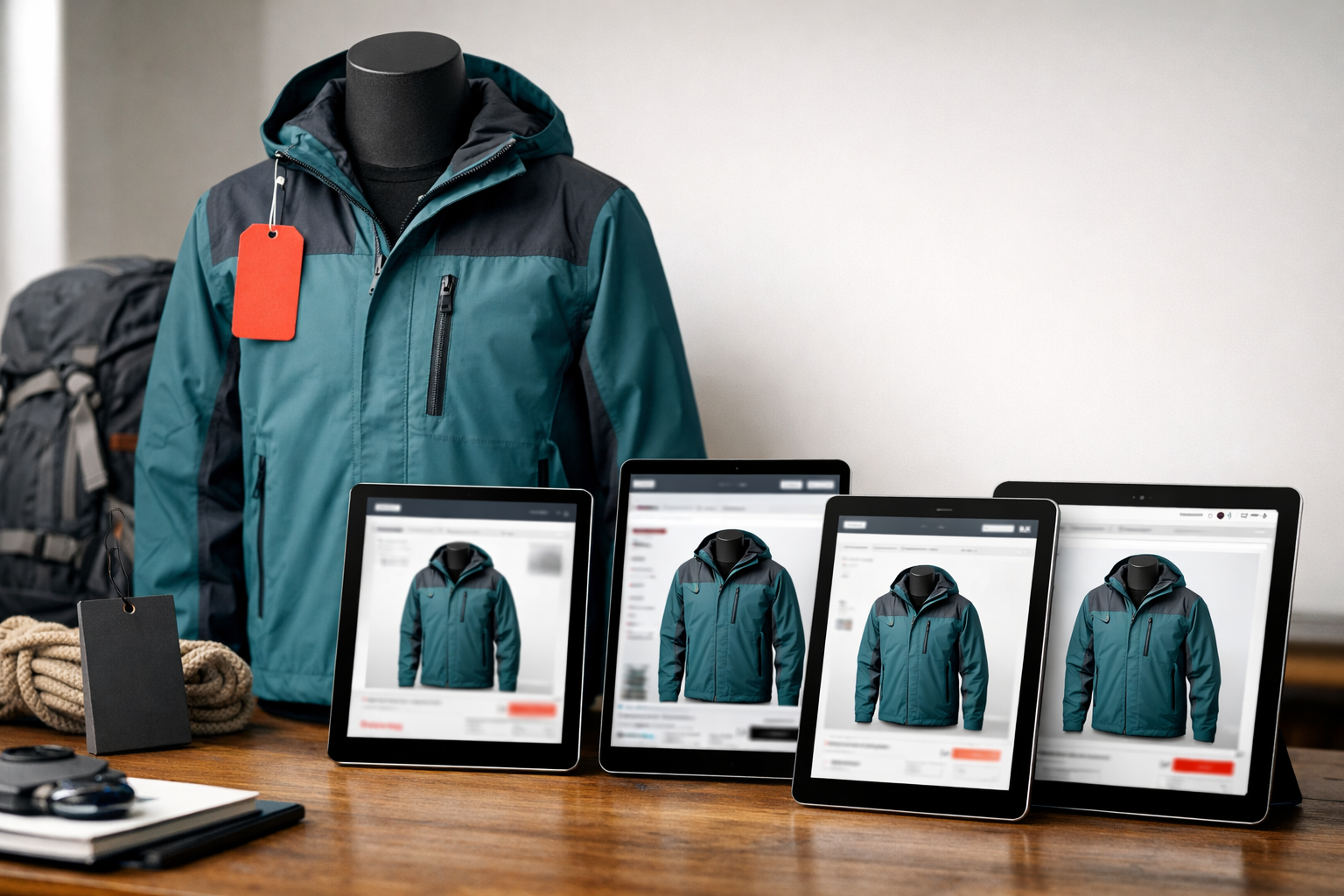
A canonical URL is the preferred address for a page. Canonical tags point search engines toward that preferred version, such as telling crawlers that all jacket variations should consolidate to /waterproof-shell/. They are useful for signal consolidation, but they are not a replacement for clean URL planning. A strong setup has internal links, sitemap entries, breadcrumbs, and canonicals all reinforcing the same product URL. A weak setup links to category-based versions while the canonical tag quietly points somewhere else.
That mismatch matters because canonical tags are signals, not absolute commands. If a site generates inconsistent canonicals, self-referencing tags on duplicate paths, or category URLs that keep attracting internal links, search engines have to interpret a messier set of signals. A flat product URL reduces the number of alternate paths that need canonical cleanup in the first place.
Redirects are the stronger tool when an old product address should no longer exist. If a category move changes /clearance/waterproof-shell/ to /outerwear/waterproof-shell/, a redirect can preserve access and pass users to the current location. But stores that frequently reassign products to seasonal, sale, brand, and campaign categories should avoid making those temporary labels part of the permanent product address. A stable URL like /waterproof-shell/ lets merchandising change without forcing SEO teams to manage a trail of avoidable redirects.
Internal Linking Can Show Hierarchy Without Forcing It Into the URL
Merchandising context can live in the store’s links instead of the product’s permanent address. A BigCommerce store can keep /waterproof-shell/ as the canonical product URL while still making it clearly belong to “Men’s Jackets,” “Rain Gear,” “Hiking,” and “Sale” through the pages and modules that link to it.
Navigation links define the main shopping routes: header menus, category menus, and sidebar filters show which product groups matter most. Breadcrumbs add a page-level trail, such as Home > Men > Jackets > Waterproof Shell, without requiring the URL to become /men/jackets/waterproof-shell/. The stronger signal is that the breadcrumb and category links point to the same clean product URL rather than to alternate category paths.
Collection and category pages create topical clusters by linking from a focused landing page to relevant products. A strong category page might link with natural anchors such as “waterproof hiking shell” or “men’s packable rain jacket.” A weak setup repeats exact-match anchors unnaturally or links to different URL versions of the same product from different categories.
Related product modules, buying guides, blog posts, and HTML sitemaps reinforce the same relationships from different angles. Related products connect similar items, editorial links explain use cases, and an HTML sitemap gives users and crawlers a plain linked inventory of important pages. For BigCommerce SEO, the practical takeaway is that site architecture should be expressed through consistent internal linking and content context, not forced into every product URL through category paths.
What Flat URLs Mean for Product Page Optimization
At the product level, the payoff is less about path length and more about preserving one marketable asset: the page address. A slug such as /mens-waterproof-hiking-jacket/ gives the product page room to describe the item clearly without attaching it to a temporary merchandising path like /sale/winter-clearance/mens-waterproof-hiking-jacket/.
That stability matters when products move. If the jacket shifts from “New Arrivals” to “Outerwear” to “Sale,” a flat URL can stay unchanged while the store updates the surrounding navigation and category placement. BigCommerce product URLs are useful here because the product address can remain focused on the item itself, rather than changing every time the merchandising strategy changes.
Stable product URLs also simplify the work around product page optimization. Teams can share one preferred URL in campaigns, buying guides, email, marketplace references, and support conversations. Analytics reporting becomes cleaner because traffic, conversions, assisted revenue, and landing page performance are easier to read when activity is not split across several category-based versions of the same product.
The same principle applies to links. A product that earns internal links from categories and external links from reviews, influencers, or comparison articles benefits most when those links point to one durable address. A flat URL does not create authority by itself, but it helps avoid scattering signals across alternate paths that all represent the same item.
The practical BigCommerce SEO takeaway is disciplined focus: use the URL to support clarity, not to carry the whole optimization burden. Titles, product copy, structured data, reviews, images, availability messaging, and page performance still do the heavier work; the flat URL simply gives those elements a cleaner, more stable destination to reinforce.
Can Flat URLs Improve Search Rankings? The Qualified Answer
The ranking question should be framed as signal quality, not URL length. A flat product URL can support stronger search rankings when it helps the store present one consistent, crawlable, internally linked, canonical version of a product page. The advantage is indirect: fewer competing paths, cleaner sitemap entries, steadier internal links, and a product address that does not change every time merchandising changes.
A strong signal set looks like this: /ceramic-grill-cover/ is the URL in the XML sitemap, the canonical tag points to that same URL, category pages link to that same URL, and external campaigns use that same URL. A weaker signal set looks like this: /bbq-accessories/ceramic-grill-cover/, /sale/ceramic-grill-cover/, and /brand-name/ceramic-grill-cover/ all load the same product while links and reporting are split across them. The flat version is not magic, but it gives the rest of the SEO system a cleaner target.
That is why URL changes should not be made just because a shorter address looks neater. A URL change is a migration event: the old address has to hand users and search engines to the new one, and that transition can create temporary volatility if it is rushed. A 301 redirect is the usual permanent handoff from an old URL to a new URL; it differs from a temporary redirect because it tells crawlers the move is intended to last. The sitemap should be updated to list the new canonical URLs, canonical tags should match the new preferred addresses, and analytics plus ranking data should be monitored after launch.
The strongest reasons to change URLs are structural: a replatforming project, cleanup of duplicate product paths, a major taxonomy rebuild, or consolidation of legacy URLs that no longer match the store’s architecture. The weakest reason is cosmetic shortening when the existing URL is already crawlable, canonical, stable, and useful to customers. In a BigCommerce SEO audit, the decision should come down to whether the change reduces confusion or merely creates work.
The practical recommendation is straightforward: use clean flat URLs for new BigCommerce builds and for major migrations where the URL model is already being rebuilt. Treat flat structure as one of the BigCommerce SEO advantages, but keep it in proportion. Search engines still evaluate the page, the links pointing to it, the content quality, the technical performance, and the overall shopping experience. Flat URLs help those signals align; they do not replace them.
The Takeaway: Flat URLs Are a Practical SEO Advantage, Not a Shortcut
For merchants planning a URL model, the practical standard is durability. A strong setup treats the product URL as the permanent address, such as /espresso-tamper/, while categories, breadcrumbs, filters, and buying guides explain where that product belongs. A weaker setup lets every campaign or category create a different path to the same item, then depends on cleanup signals to resolve the confusion later.
That is the real BigCommerce SEO advantage: less avoidable complexity. Flat product URLs can make canonical targets easier to maintain, reduce duplicate-path risk, keep product links stable when merchandising changes, and simplify day-to-day optimization work. They also make reporting cleaner because teams are less likely to split performance data across several URLs for the same product.
The tradeoff is discipline. A flat URL structure should not become a flat site architecture. Category pages still need clear purpose, navigation still needs hierarchy, and important products still need internal links from relevant pages. Product page optimization still depends on titles, copy, images, reviews, structured data, speed, and conversion quality.
The takeaway: preserve or implement flat product URLs when they improve clarity and can be supported with redirects, internal links, and canonical best practices. URL structure can strengthen online store SEO, but it works best as part of a complete architecture, not as a shortcut around it.