

How to Write Product Descriptions for Firearms That Rank and Convert
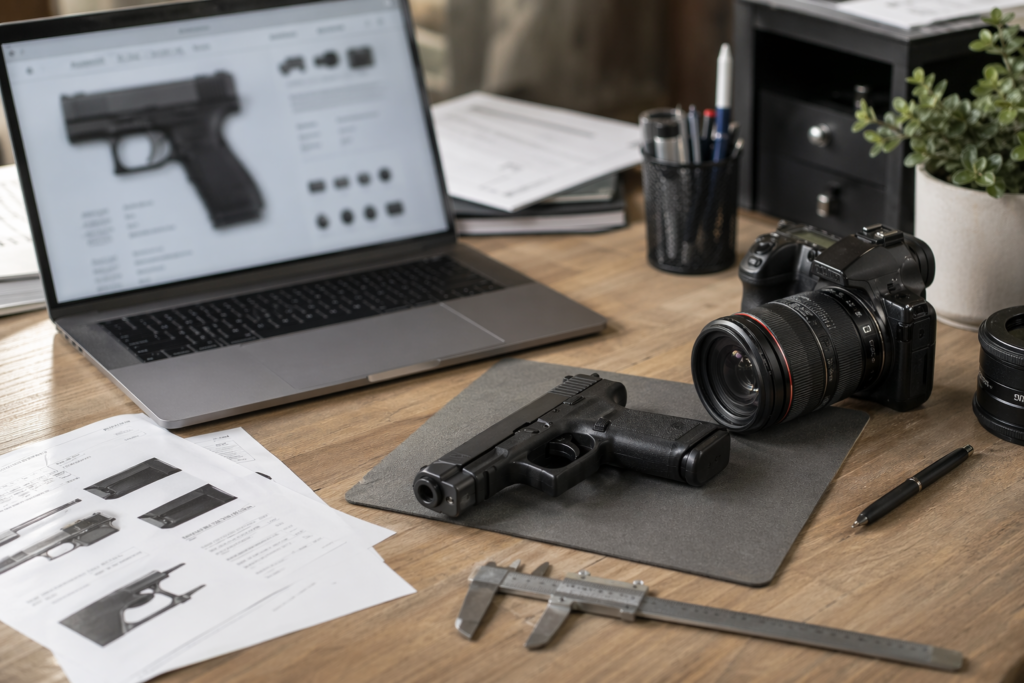
A firearm product page fails fast when it only does one job. A pasted manufacturer blurb might list the model name and a few specs, but it rarely matches the full search intent behind queries such as barrel length, optic-ready configuration, magazine capacity, finish, or action type. It also does little to answer the buyer’s real question: Is this the exact firearm I want from a seller I trust? To rank, the page needs original copy that helps search engines understand the product and its distinguishing details. To convert, it needs accurate, specific language that gives qualified shoppers enough confidence to keep moving toward checkout, transfer, or dealer contact. That is the standard for effective firearms product descriptions.
The fix is not keyword stuffing, and it is not copying factory text word for word. Strong firearm PDP copy combines verified specs with plain-English buying context: what the configuration is, who it suits, and which details actually matter before purchase. That improves eCommerce SEO because the page contains unique, relevant signals, and it improves buyer confidence because the listing reads like a credible retail page, not a duplicate catalog entry. These principles hold across platforms. MAK Digital Design works across BigCommerce, Shopify, Volusion, Magento, and WordPress, which underscores a simple point: this is a copy problem first, not an online store SEO platform problem.
Start With Search Intent and Verifiable Product Facts
Qualified buyers do not search for a “great carry pistol.” They search for exact, narrowing phrases such as a manufacturer, model name, caliber, barrel length, capacity, or optic-ready configuration. Known-model shoppers use precise queries like “manufacturer model name 9mm 15-round,” while comparison shoppers search attribute clusters such as “striker-fired 9mm optic-ready polymer frame” or “bolt-action.308 threaded barrel.” Those phrases come directly from the product record. If your listing omits finish, frame material, action type, compatibility, or included accessories, it loses relevance for both search rankings and buyer intent.
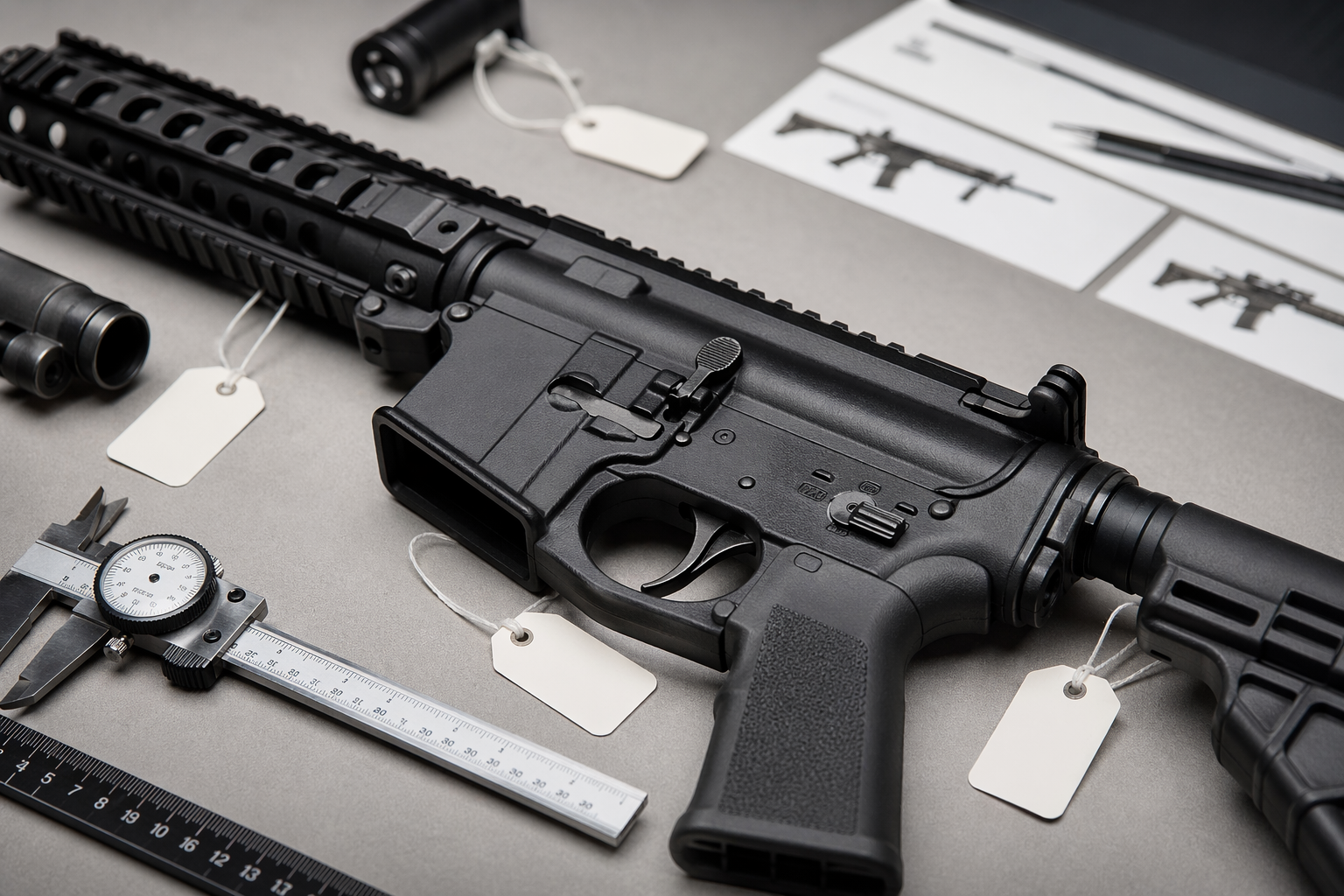
A practical formula for firearms product descriptions is simple: manufacturer + exact model name + caliber + barrel length + capacity + action type + finish + frame material + optic-ready status + compatibility + included accessories. That structure gives search engines the terms qualified shoppers use, and it gives buyers the details they need to confirm they found the right SKU at the right stage of the buying journey.
Verify before you write
- Pull the manufacturer page first. Use it to confirm the official naming convention, factory specs, and what ships in the box.
- Cross-check the distributor feed, owner’s manual, product packaging, and internal inventory data. Variant errors often show up in capacity, sight configuration, thread pattern, or magazine count.
- Translate verified specs into buyer language. Write the exact product first, then the modifiers that narrow intent: “optic-ready,” “FDE finish,” “aluminum frame,” “fits Glock-pattern magazines,” or “includes two magazines and hard case.”
Accuracy is the foundation of firearm product page optimization. A wrong barrel length or an incorrect optic-ready claim does more than weaken copy. It breaks trust. A shopper looking for a 4.25 inch slide or a specific magazine capacity will leave as soon as the photos, manual, or box contradict the listing. If they buy anyway, the mismatch creates returns and support friction. Exact specs first, persuasive language second. That order is what makes the page commercially credible.
Use a Repeatable Description Structure That Is Easy to Scan
If you want a reliable process for how to write firearms product descriptions, stop improvising. A strong listing uses the same sequence every time: a 2 to 3 sentence summary, a short feature-benefit body, and a clean spec section. That format makes firearms product descriptions easier to scan, easier to index, and easier to trust.
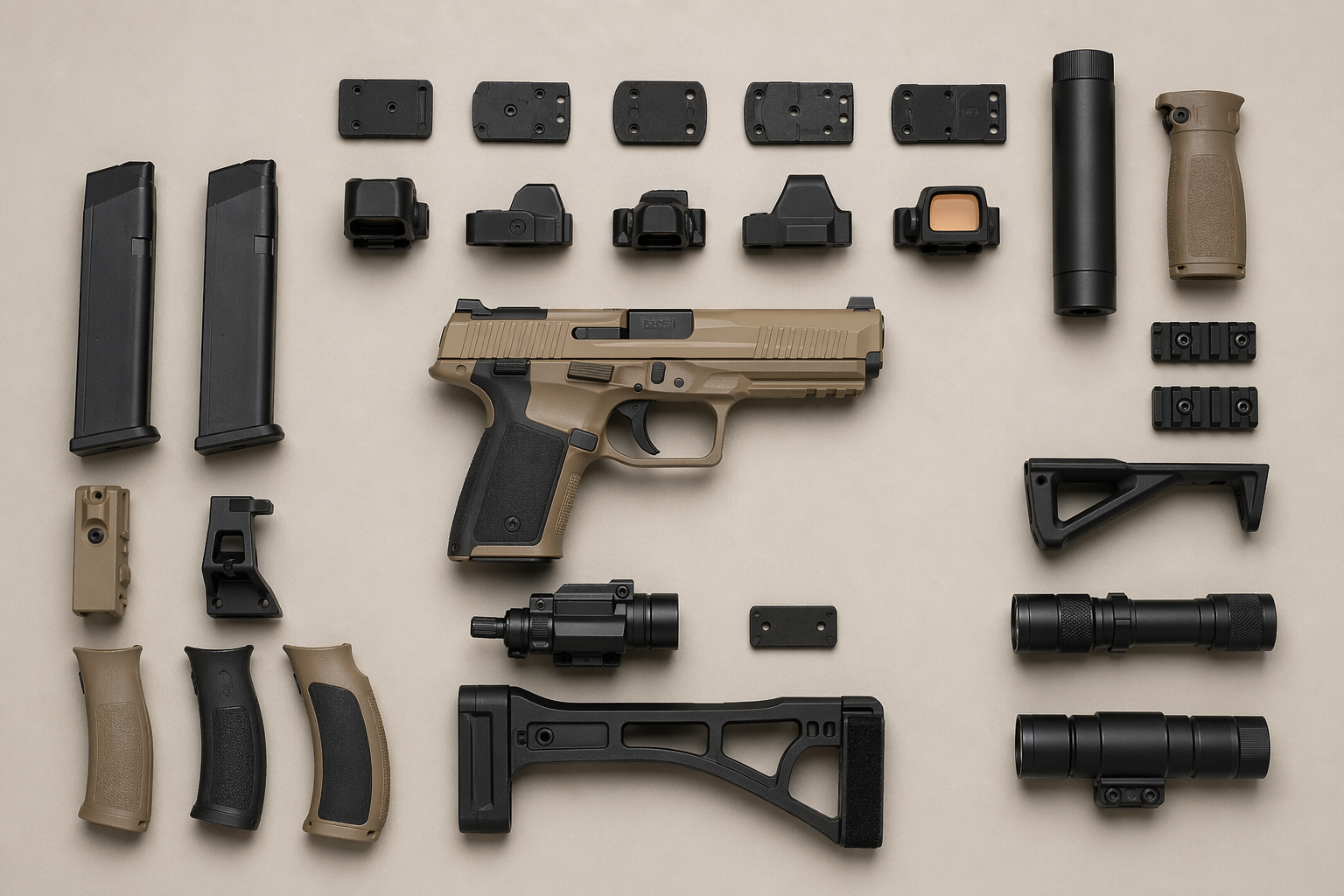
The opening summary carries the primary term naturally. Start with the exact product name, then add the attributes that match buyer intent: firearm type, caliber, barrel length, finish, capacity, platform, or fitment. Keep this section tight. One short paragraph should tell the shopper what the item is, who it fits, and what makes this configuration worth attention.
The body is where you earn the click to cart. Do not paste manufacturer language or stack raw specs into a wall of text. Turn each feature into a buying reason. A free-float handguard protects accuracy by removing barrel pressure. An optics-ready slide supports direct mounting. A threaded muzzle with the stated pitch clarifies device compatibility where legal. Two or three short paragraphs outperform one dense block because each paragraph isolates one claim, one proof point, and one buyer takeaway.
The spec section closes the gap between interest and decision. This is where bullet points outperform prose. Buyers looking for action type, twist rate, overall length, receiver material, sight configuration, thread pitch, included magazines, or rail interface should not have to hunt through a paragraph. State exact numbers, exact included items, and exact compatibility notes. If legality or fitment depends on state rules or platform standards, say that plainly instead of making universal claims. That discipline is the foundation of credible firearm product description writing.
Weak copy versus strong copy
Weak: “This rifle is high quality, reliable, and great for many shooters.”
Strong: “16 inch 5.56 NATO semi-automatic rifle with a free-float M-LOK handguard, 1:8 twist barrel, black anodized finish, optics-ready top rail, and one 30-round magazine included.”
The strong version wins because it replaces empty adjectives with searchable details. It also gives a qualified buyer enough information to decide whether the page matches the exact configuration they want.
Reusable template
- Open: “The ___ is a ___ in ___ with a ___ inch barrel, ___ finish, and ___ capacity. Built on the ___ platform, it suits ___ use.”
- Explain: Write 2 to 4 short paragraphs. Each paragraph pairs one feature with one outcome: “The ___ allows ___.” “The ___ cut supports ___.” “The ___ trigger delivers ___.”
- List: Finish with a spec list.
Use close variants naturally: exact product name in the summary, category language in the body, and precise labels in the spec list. One repeatable structure will beat bloated copy every time.
Turn Features Into Buyer Outcomes Without Sounding Salesy
Raw specs do not sell. They reduce uncertainty. The strongest firearms product descriptions take a feature, explain what it changes in actual use, and identify who benefits. That is feature-benefit translation in practice.
Weak copy says, “optic-ready slide for enhanced performance.” Strong copy says, “optic-ready slide with the mounting footprint listed, so buyers can verify whether their current red dot mounts directly or requires a plate.” The first line is hype. The second resolves a real buying decision: compatibility, setup time, and added cost.
The same rule works for other specs. “4.25-inch barrel” is incomplete. “4.25-inch barrel balances faster handling with more sight radius than a shorter carry model” tells the shopper what the number means. “Polymer frame” becomes “lighter for daily carry, with less weight on the belt than an all-steel frame.” “Steel frame” becomes “heavier in hand, which helps control during longer range sessions but adds carry weight.” Each version stays factual and gives the buyer a use case.
Use a repeatable translation formula
- Name the exact feature: barrel length, frame material, optic cut, thread pattern, rail type, magazine capacity.
- Explain the practical effect: handling, carry comfort, mounting options, maintenance, or setup requirements.
- Qualify the fit: range use, concealed carry, duty setup, hunting, or a suppressor-ready build.
- Clarify what the buyer must verify: included plates, thread protector, sight height, magazine count, or mounting standard.
Write to remove customer objections before they click away
Most customer objections are predictable. Will my optic fit? Are sights, plates, or magazines included? Is this configuration better for carry or range use? Does the rail accept common lights? Does the threaded barrel ship with the protector? Good copy answers those questions inside the description instead of forcing the shopper to hunt through images or leave the page.
That is where firearms product descriptions earn trust. Do not inflate. Do not promise “ultimate accuracy” or “tactical excellence.” State the configuration, explain the outcome, and note what the buyer still needs to confirm. Clear, specific language qualifies the right shopper and filters out the wrong one before checkout friction starts.
Write Unique Copy for Similar Models Without Repeating Yourself
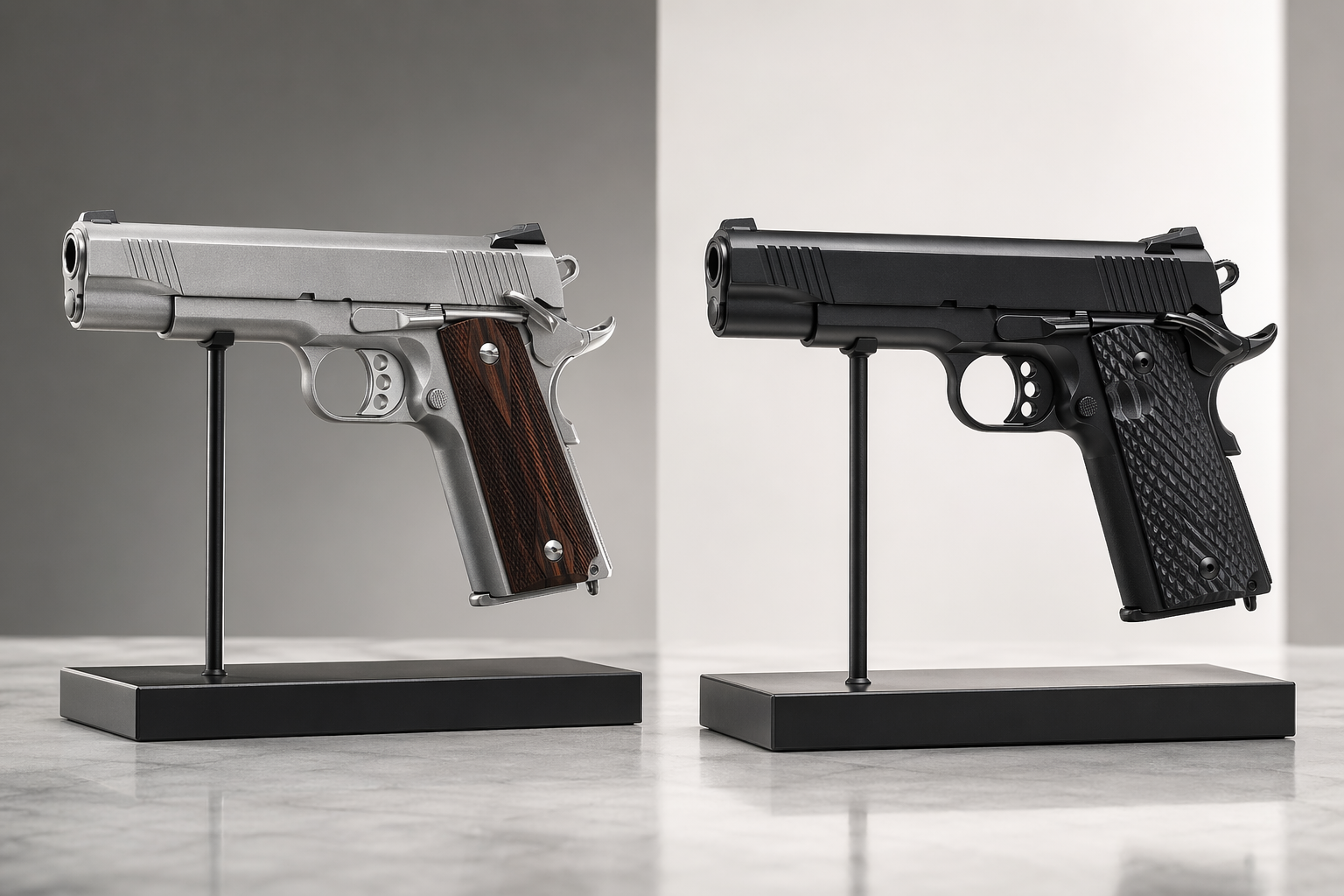
Most duplicate firearm listings fail for the same reason: they describe the platform and ignore the SKU. If five variants share the same action, caliber, and frame, the copy has to focus on what actually changed, such as a 3.1 inch versus 4.25 inch barrel, 10 round versus 15 round capacity, black nitride versus FDE finish, fiber optic versus tritium sights, or an optic-ready slide cut versus a standard top end. Those details drive both search intent and purchase decisions. Rewriting manufacturer text is usually mandatory because factory descriptions often summarize the product family, while strong firearms product descriptions explain the exact configuration the buyer will receive.
Use a repeatable variant formula
- Lead with the full model name and the one or two differentiators that define this SKU.
- Specify the buyer-relevant specs: barrel length, capacity, finish, sights, threaded or non-threaded muzzle, optic cut, and included magazines.
- Clarify package contents, especially extra mags, adapter plates, manual safeties, or compliant state configurations.
- Translate the spec into a buying outcome without exaggeration: easier concealment, longer sight radius, direct-mount optic compatibility, or simpler range readiness.
Weak: “This pistol offers reliability and performance in a sleek package.” Strong: “This SKU pairs a 4.25 inch barrel with an optic-ready slide, suppressor-height sights, and three 17 round magazines.” The second version gives Google distinct terms to index and gives shoppers a reason to stop comparing tabs. That is what effective SEO product descriptions for firearms do.
Keep the base, rewrite the delta
For similar models, keep one short platform sentence and rewrite everything tied to the variant. Example: “Built on the same striker-fired system as the standard model, this version adds a threaded barrel, suppressor-height sights, and two 20 round magazines.” If the only difference is finish, say that plainly and do not invent performance claims. Accurate firearm product page copy wins trust because it tells buyers exactly what changed, exactly what is included, and exactly why this SKU is the right one.
Better Product Copy Starts With Better Structure and Better Facts
Clear ecommerce content follows a repeatable framework. MAK Digital Design presents its case studies with defined sections for client background, challenges, solutions, and custom features, reflecting a structured approach to ecommerce communication. Firearm product pages need the same discipline. A buyer should see the exact model, core specifications, compatibility, included accessories, and the reason this SKU is different from similar options without hunting through a wall of text.
- Verify every claim against manufacturer data before you write. Caliber, barrel length, capacity, twist rate, finish, optic footprint, thread pattern, and compliance details are not filler. They are the facts buyers use to qualify a purchase.
- Organize the description in a fixed order: what it is, who it fits, the key specs, then the purchase-critical details that reduce hesitation.
- Differentiate with buyer-facing context. Do not repeat the spec sheet. Explain what matters, such as suppressor readiness, carry suitability, or platform compatibility.
That is how strong firearms product descriptions do two jobs at once. Search engines get specific, relevant language. Shoppers get fast answers and cleaner comparison points. Apply the same structure across the catalog, and your pages become easier to rank, easier to scan, and more credible at the moment a qualified buyer is ready to buy.