
How Firearms Retailers Can Use Email Marketing to Drive Repeat Sales
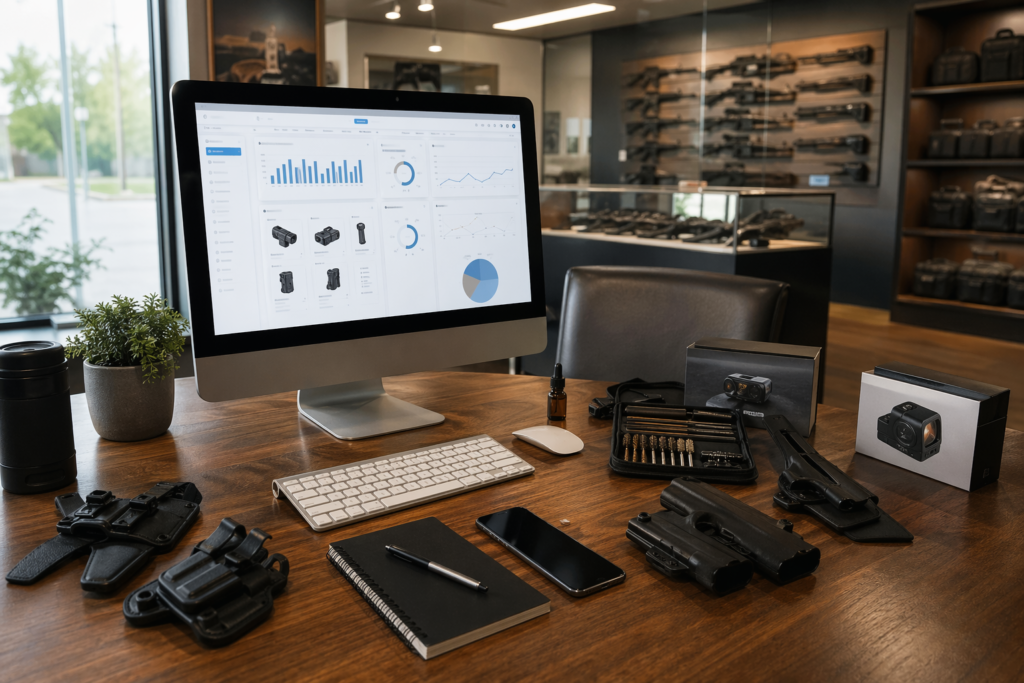
The first firearm sale rarely ends the relationship. It usually starts a buying sequence: cleaning kits, lubricant, cases, optics accessories, spare magazines, range gear, training classes, and season-specific items tied to hunting, storage, or travel. Those follow-on purchases are where repeat sales often come from, but only if the retailer stays relevant after the initial transaction.
Email marketing for firearms retailers works best as a retention system, not a broadcast channel. An owned email list gives you a practical way to reach prior buyers across a longer consideration cycle without relying on constant paid acquisition. The objective is straightforward: increase second and third purchases through permission-based messages that reflect what the customer already bought, what they are likely to need next, and what you can communicate responsibly. That means timely post-purchase follow-up, segmented offers, lifecycle automations, and compliant customer communication, not generic blasts to the entire list.
Results vary by product mix, local rules, list quality, and execution. A retailer focused on training and accessories will not send the same cadence as one built around hunting seasons or in-store services. The playbook in this article stays focused on what drives repeat sales in practice: relevant segmentation, useful follow-up, and metrics that show whether your email program is producing real customer value.
Start with a compliant, permission-based list and clear communication rules
Repeat-sale email only works if the list is clean, documented, and clearly permissioned. For firearms retailer email marketing, that starts with direct opt-ins from your own checkout, account creation, warranty, or in-store capture flows, not purchased lists or vague “marketing partner” consent. Store the source, timestamp, form version, and any audience qualifiers you collected. That recordkeeping protects the business when a complaint, audit, or provider review forces you to prove how an address entered your system.
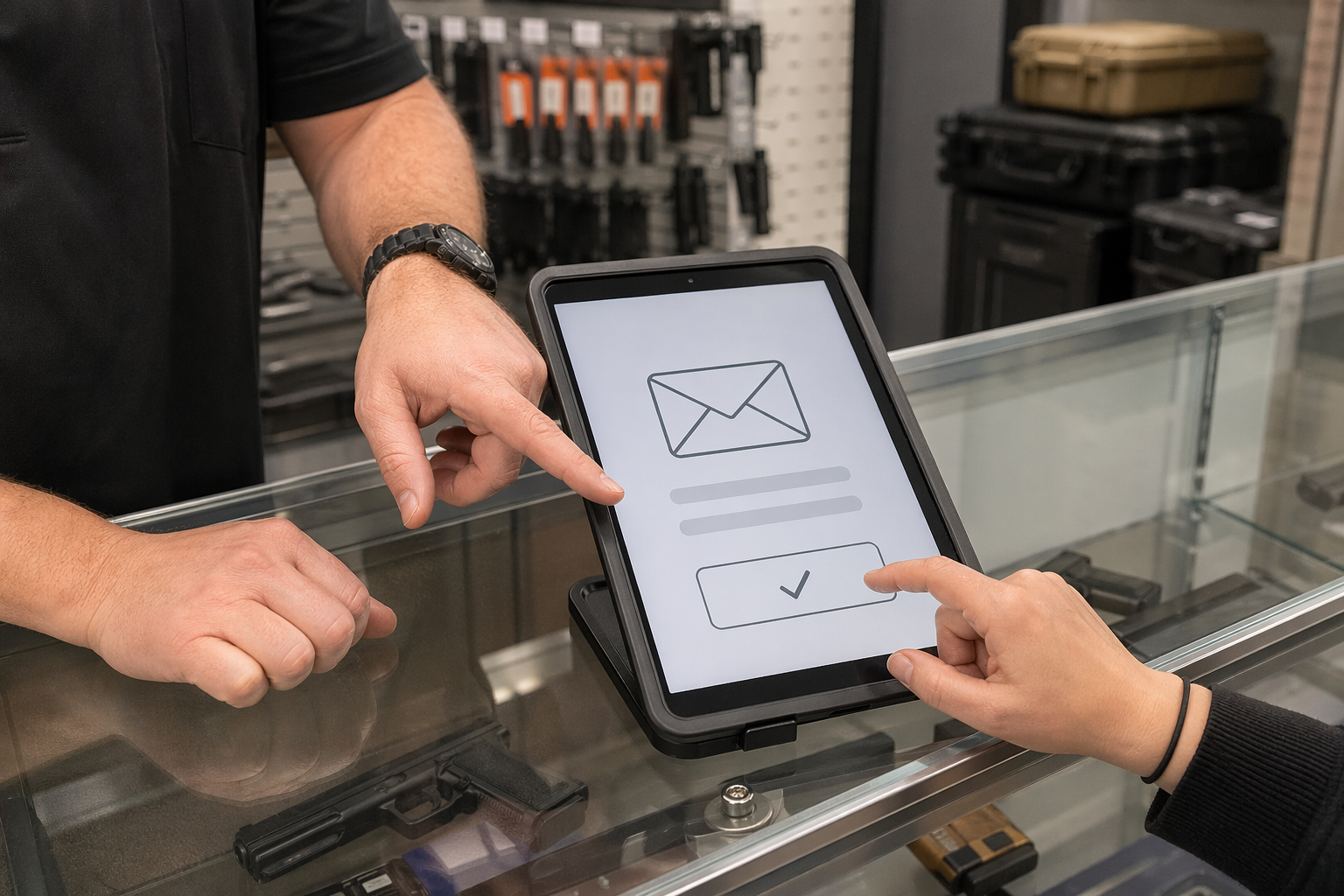
- Qualify contacts before you segment them. Keep first-party data fields that affect who should receive what: purchase history, product-category interest, state, age gate status, engagement status, and suppression status. If a customer lives in a state with tighter rules or has not met your age-screening requirements, exclude them from the relevant promotion instead of trying to fix it after send.
- Honor communication choices fast. Every promotional email needs a working unsubscribe path, and opt-outs should move to suppression immediately. Apply the same discipline to hard bounces, role accounts, and long-term inactive contacts. Good list hygiene improves deliverability; bad list hygiene drives spam complaints and blocks future campaigns from reaching loyal buyers.
- Check provider rules before launch. Your ESP, ecommerce platform, payment stack, and local compliance environment can all limit firearms-related messaging, specific product promotions, or audience targeting. Review those policies before building automations so your retention program runs on first-party data you can keep using, not tactics a vendor can shut off overnight.
Segment by purchase history, lifecycle stage, and legal relevance
Generic blasts waste the one advantage a retailer already owns: customer history. In email marketing for firearms retailers, the fastest path to repeat revenue is a small set of segments tied to what the customer bought, how recently they bought, and what they can realistically buy next. That keeps a new handgun buyer from getting the same message as a training-only customer or a lapsed optics shopper, and supports personalized post-purchase follow-up that improves repeat sales.
Build segments that change the offer, not just the audience
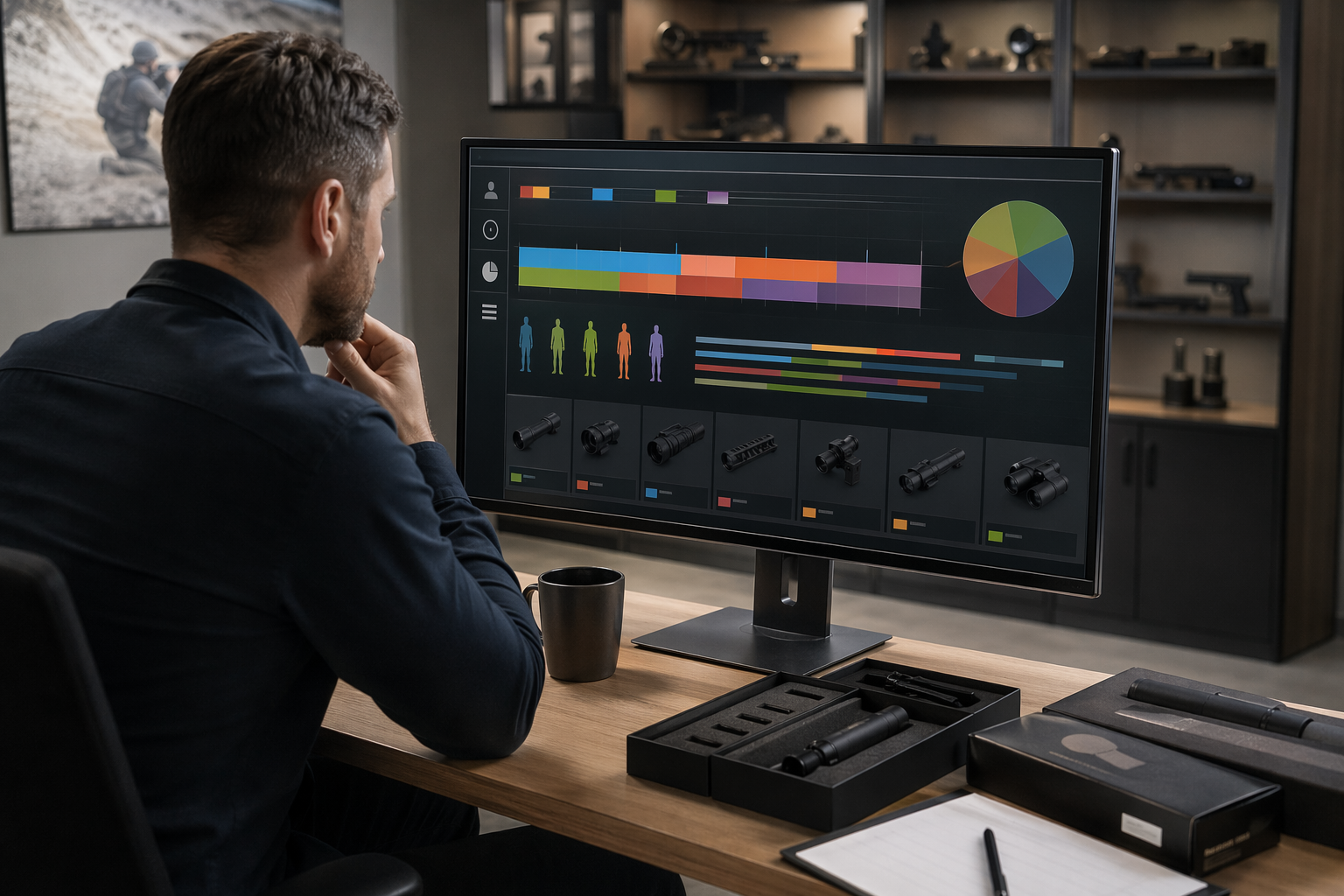
Keep the logic lean. A useful retention email marketing for firearms retailers program can run on six fields: last purchase date, order count, total spend, last category bought, engagement status, and location. That is enough to separate recency, frequency, and monetary value without turning the list into a maintenance project.
Use suppression as aggressively as promotion
Relevance is also about who should not receive an email. Suppress restricted-product promotions for customers in locations where the offer may not apply, suppress incompatible accessory pitches, and suppress low-engagement subscribers until they re-engage. That protects deliverability, reduces customer friction, and helps the store avoid sending the wrong offer to the wrong customer.
Track repeat purchase rate, revenue per recipient, click rate by segment, and unsubscribe rate after each cross-sell campaign. Those numbers show whether the segment is tight enough, the offer fits the last purchase, and the timing actually supports another sale.
Build the core automations that create second and third purchases
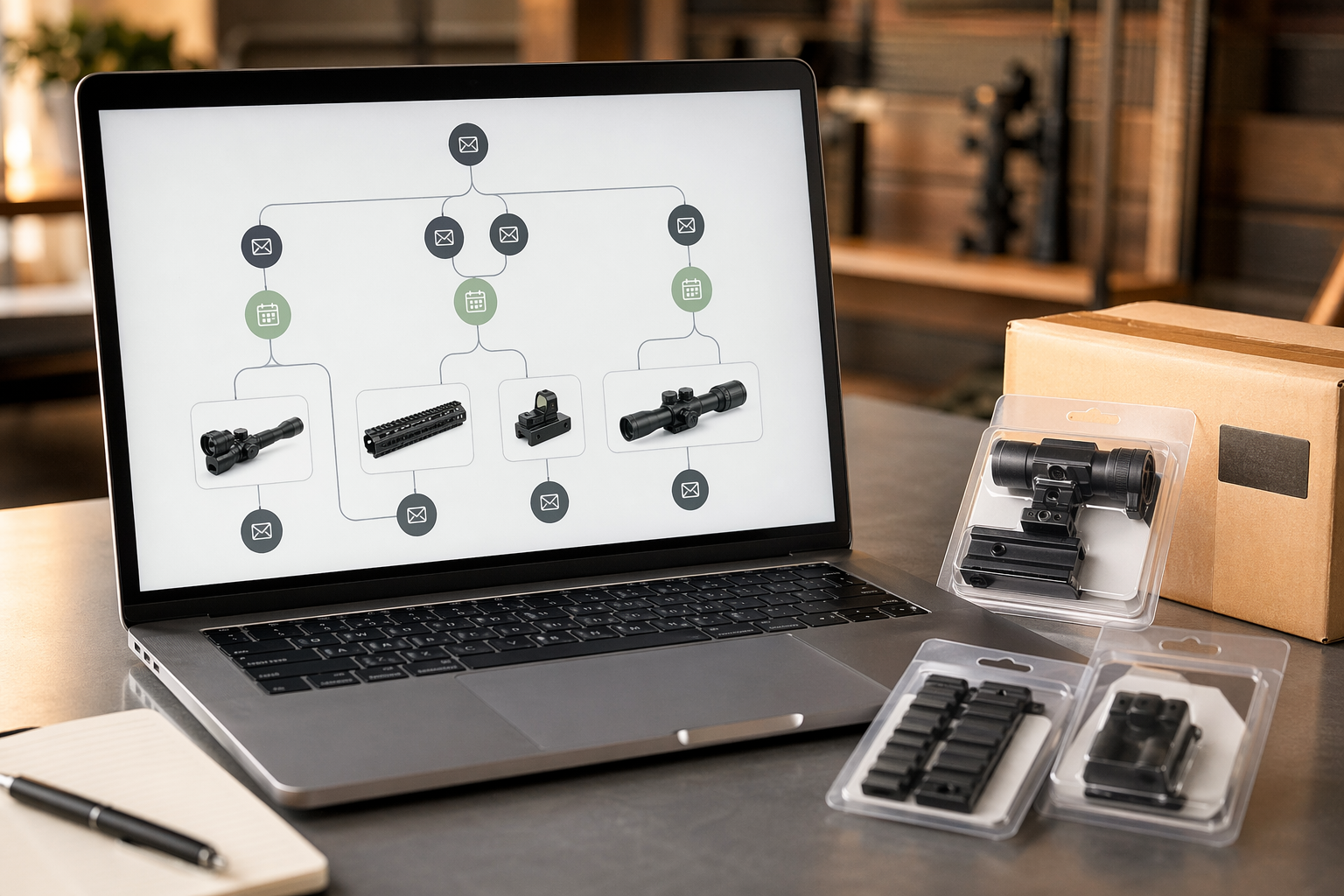
The best email campaigns for firearms retailers are triggered by behavior, not calendar dates. Five flows drive most second and third orders: a welcome series, first-purchase follow-up, education-led cross-sell, replenishment reminders, and browse or cart recovery for allowable items. In email marketing for firearms retailers, these automations win because they reach customers when intent is highest and the next need is obvious.
Welcome new subscribers fast
A strong welcome series should start immediately after signup. Send email one at once: brand positioning, what categories you carry, and what subscribers will receive. Send email two after 2 days: a preference capture prompt by interest, such as handguns, optics, range gear, safe storage, or training. Send email three after 5 to 7 days: a value-first guide tied to those interests, plus a first accessory or training offer. The goal is not a blanket discount. The goal is to turn an anonymous subscriber into a segmented shopper you can market to with precision.
Turn the first order into the second
Post-purchase follow-up should begin as soon as the first order is delivered. At 2 to 3 days, send setup, care, or usage guidance. At 10 to 14 days, send products that complete the original purchase: safe storage, cases, slings, optics accessories, batteries, cleaning kits, or range gear. At 21 to 30 days, send a stronger cross-sell tied to actual ownership, such as a class, a maintenance bundle, or compatible carry equipment. This flow works because it solves the next problem the buyer now has, instead of pushing unrelated inventory.
Lead with education before the upsell
Education-led cross-sell emails convert better than constant promotions because they earn relevance. Trigger them from product tags or category history. A buyer of an optic should get mounting and zeroing content before a mount, tool, or lens-care offer. A new safe owner should get organization and humidity-control guidance before an accessory replenishment message. The content creates trust; the offer captures the next order.
Use replenishment and recovery carefully
Replenishment reminders only belong on lawful, repeatable items with a real usage cycle, such as cleaning supplies, lubricants, patches, targets, batteries, or other maintenance products. Set the delay to the product, usually 30, 60, or 90 days, and label the message around upkeep, not urgency. Browse and cart recovery should go only to known subscribers and only for accessories or other items your ESP, ecommerce platform, and internal policies allow. A 1 to 4 hour browse reminder and a 4 to 24 hour cart reminder are enough.
Bring customers back with service and training
Service and training reminders re-activate customers who are not ready for another product yet. Send them 60 to 180 days after purchase based on product type and seasonality. Promote range classes, safe-storage refreshers, optic setup sessions, or gunsmith services where relevant. Track time to second order, placed-order rate by flow, revenue per recipient, unsubscribe rate, and repeat purchase rate. Those numbers tell you which automation is creating durable customer value, not just clicks.
Use a steady campaign cadence instead of random blasts
Random blasts train customers to ignore you. Start most existing customers at one campaign per week. Move recent buyers, loyalty members, and subscribers who clicked in the last 30 days to two emails per week only when the message is category-relevant. Cut cold segments back to twice a month, then pause and run a re-engagement sequence if inactivity continues. That engagement-based send cadence supports stronger customer retention strategies and drives repeat purchases without exhausting the list.
Build a simple retention calendar
- Anchor recurring post-purchase emails. Send maintenance reminders 14 to 30 days after a firearm, optic, or range-gear order, paired with cleaning supplies, targets, eye and ear protection, or training classes. The offer works because it matches the customer’s next practical need.
- Layer seasonal campaigns around use cases customers already plan for. Spring should push training and range-season bundles. Late summer should shift to hunting-season gear. Q4 should focus on giftable accessories, not broad holiday discounts. Loyalty and VIP drops belong here too, because early access rewards customers who already buy.
- Trigger restock and new-arrival messages from behavior, not guesswork. If a customer bought holsters, optics, safes, or hunting accessories, send alerts only for those categories. Keep consent, product eligibility, and platform-policy checks inside the workflow so messages stay operationally sound.
- Watch fatigue signals every send. Track click rate by segment, repeat-purchase rate, revenue per recipient, unsubscribes, and spam complaints. If subject lines hold opens but clicks slip, fix the offer. If unsubscribes jump after a frequency increase, reduce the send cadence immediately.
Turn email into a repeat-sales system
Email marketing for firearms retailers drives repeat purchases when it runs as an operating system, not a string of promotions. More sends do not fix weak retention. Clean consent practices protect deliverability, segmentation keeps messages relevant, automations capture buying intent at the right moment, and a steady campaign cadence keeps the store top of mind without training customers to ignore you.
- Collect permission cleanly at checkout, in account creation, and through post-purchase flows. Make consent explicit, store it, and keep list hygiene tight so engagement stays stronger over time.
- Segment by purchase history and behavior. Separate first-time buyers, ammunition customers, accessory buyers, lapsed customers, and high-value repeat buyers so each group sees offers that match actual demand.
- Automate the core lifecycle messages first: welcome, browse or cart abandonment where platform rules allow, post-purchase cross-sell, replenishment reminders, and win-back sequences.
- Measure repeat purchase rate, revenue per recipient, click rate by segment, unsubscribe rate, and spam complaints. Those numbers show relevance, fatigue, and customer value clearly.
Start simple: one compliant signup path, three useful segments, two automations, and a consistent campaign schedule. Then improve based on behavior, not guesswork. Retailers who prioritize relevance and trust build repeat sales steadily. Retailers who chase one-off blasts train their list to tune out.