

The State of eCommerce in 2026: Trends Every Store Owner Should Know

Online retail in 2026 is not defined by novelty. It is defined by pressure. Shoppers still expect speed, relevance, flexible payment and delivery options, and a checkout that never makes them think twice. At the same time, store owners are dealing with tighter margins, higher acquisition costs, more fragmented traffic sources, and platform decisions that affect operations as much as design. That combination makes this year feel different. Growth is still available, but it no longer comes from doing the basics slightly better.
The eCommerce trends 2026 that matter most are the ones that change day to day execution. AI is moving from experimentation into merchandising, support, and content workflows. Search and discovery are shifting as marketplaces, social platforms, and generative tools compete for product intent. Retention is getting harder, which puts more weight on first party data, lifecycle marketing, and customer experience after the first order. And platform choice is becoming a financial decision, with checkout flexibility, integration depth, and operational efficiency carrying real profit consequences. This guide focuses on those shifts, why they matter, and what store owners should do before they turn into missed revenue or avoidable cost.
What the State of eCommerce in 2026 Really Looks Like
The state of eCommerce in 2026 is not a story of easy expansion. Online demand still matters, but growth now comes with tighter margins, higher customer expectations, and more operational load across merchandising, fulfillment, search visibility, and retention. Store owners are not choosing between growth and efficiency anymore. They need both, and the merchants who get both usually do it through better execution, not louder branding.
A reliable market signal is the kind of work merchants keep prioritizing across major platforms. MAK Digital Design documents projects on BigCommerce, Shopify, Volusion, Magento, and WordPress, and those case studies are structured around client background, challenges, solution, and custom features. That mix is practical, not theoretical. It shows that eCommerce performance is built through problem solving, implementation, and experience improvements that remove friction.
This is the lens for the eCommerce trends 2026 that matter. The big shifts are the ones that change revenue quality, gross margin, and customer experience: acquisition economics, AI-assisted discovery, marketplace pressure, omnichannel expectations, fulfillment discipline, and platform flexibility. Some of these are already standard operating reality. Others are still proving their value. This briefing stays with the changes store owners can act on now, because in 2026, disciplined execution is the advantage.
AI Is Reshaping Product Discovery, But It Rewards Stores With Strong Data
AI is shifting product discovery from rigid keyword matching to assisted decision-making. On-site search can interpret natural-language questions, recommendation systems can surface substitutes and add-ons, and support tools can answer sizing, compatibility, shipping, and policy questions fast enough to keep shoppers moving. The business payoff is direct: better discovery, faster decisions, and a stronger chance to improve conversion rate. Stores that use AI-powered shopping well reduce the gap between what a shopper means and what the catalog returns.
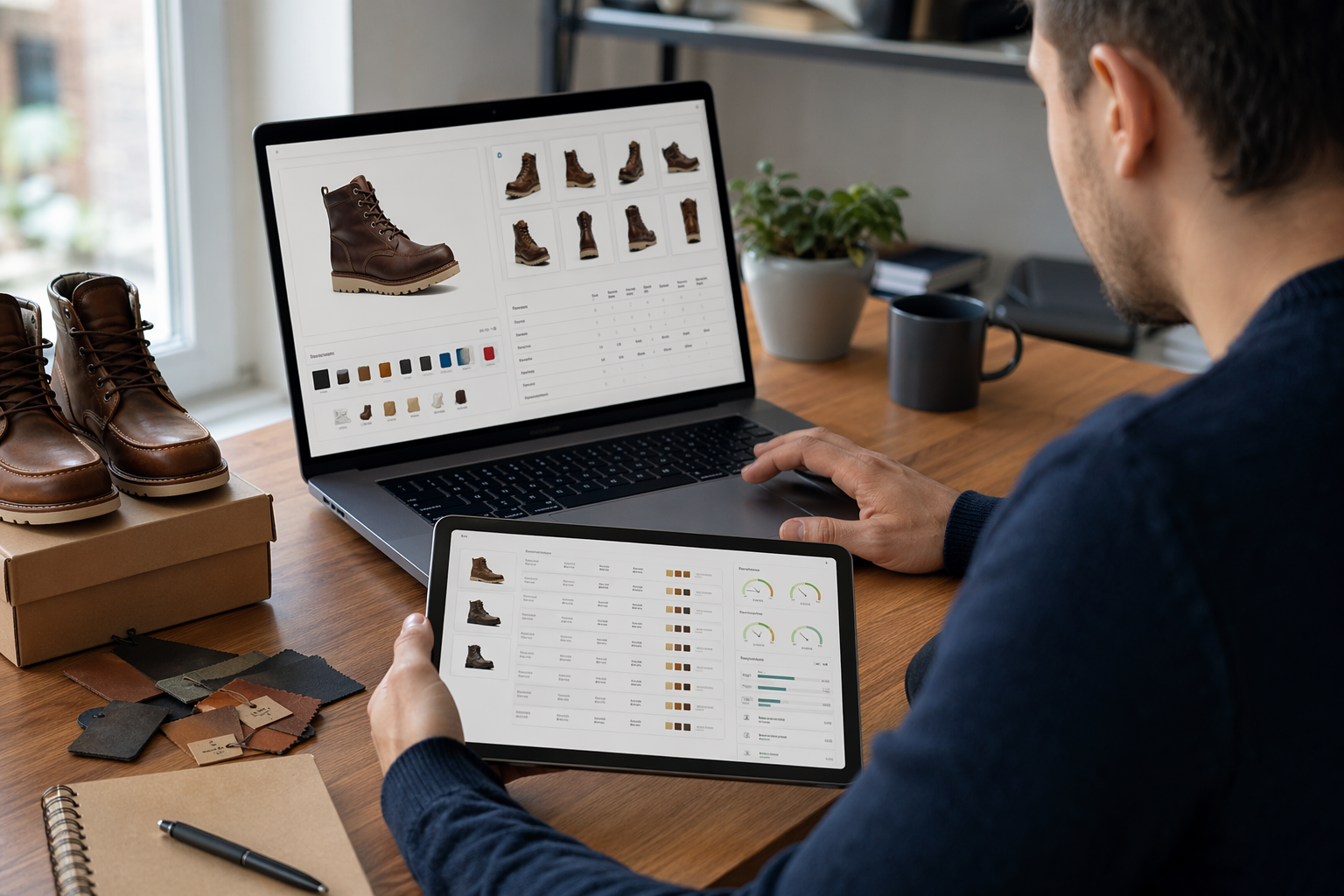
It scales good merchandising and punishes bad inputs
AI does not replace merchandising. It scales it. That creates real upside in personalization, product ranking, support automation, and content workflows such as drafting product copy, FAQs, and campaign variations. It also exposes weak operations. If titles, attributes, variant logic, pricing, and stock status are inconsistent, the same systems recommend the wrong item, answer questions with outdated details, or generate thin content that weakens trust. The limit is not the model. The limit is catalog quality.
For store owners, this is one of the most practical eCommerce trends 2026: treat product data as revenue infrastructure. Clean up taxonomy, standardize attributes, sync inventory reliably, and set review rules for margin-sensitive recommendations and generated content. AI-powered shopping works best when the store already knows exactly what it sells, what it costs, and what is actually available to ship.
Search Visibility Depends More Than Ever on Product Content Quality
One of the clearest eCommerce trends 2026 is that search has not become less important. It has become less forgiving. Discovery now happens across traditional search, marketplace search, and AI-influenced interfaces, but those systems still need trustworthy pages to surface and cite. Thin product listings built from manufacturer copy are easy to ignore because they add no unique value. Stores that invest in useful product content attract better organic traffic, not just more impressions. That is why eCommerce SEO still matters: strong visibility now depends on pages that help a shopper decide, not pages that merely exist.
Product pages win when they answer buying questions completely
Product page optimization carries more weight because ranking signals and conversion signals increasingly overlap. A product page that clearly explains specifications, compatibility, sizing, materials, use cases, shipping expectations, returns, and real customer feedback does two jobs at once: it gives search systems more context, and it gives shoppers fewer reasons to leave. The friction is obvious. Many stores still rely on duplicate descriptions, minimal imagery, and generic feature lists, which makes every SKU look interchangeable. Useful, differentiated product pages create separation. They also improve traffic quality because visitors arriving on those pages already see evidence that the product fits their intent.
Category structure now shapes both discoverability and sales
Strong product content fails if the store architecture is unclear. Search engines and shoppers both need a logical path from category to subcategory to product, with pages organized around how people actually shop. That makes online store SEO more strategic than technical. If a category page helps visitors compare options and narrow a decision, it earns visibility for commercial queries. If the product page then closes the gap with proof, reviews, and trust signals, the visit converts. In 2026, the line between eCommerce SEO and merchandising is thin. Clear category architecture and better product information are no longer separate projects. They are the same growth lever.
Site Speed and Checkout Experience Still Separate Winners From Losers
Speed is still a revenue issue, not a developer vanity metric. On mobile, a long page load time kills intent before price, assortment, or creative can do their job. Shoppers in 2026 expect product grids to render quickly, images to stabilize without layout jumps, and key actions to respond on the first tap. If search traffic lands on a page that feels sluggish, bounce rate climbs and paid traffic gets more expensive. If returning customers hit lag on product detail pages, conversion rate drops because the store feels unreliable.
That is why site speed and Core Web Vitals still matter. They influence organic visibility because search engines favor pages that deliver a usable experience, but the bigger business impact is what happens after the click. A fast store holds attention longer, gets more products into consideration, and improves revenue efficiency by converting more of the traffic you already paid for. Many merchants still treat performance work as back-burner maintenance. In practice, it is one of the few levers that improves search, engagement, and conversion at the same time.
Checkout friction is still an expensive own goal
Stores also continue to lose sales on basics that shoppers now see as non-negotiable. Mobile checkout has to support autofill, digital wallets, clear error handling, and a short path from cart to confirmation. Every extra field, forced account step, slow address lookup, or confusing promo-code box creates hesitation at the exact moment purchase intent is highest. That friction shows up as abandonment, lower completed order volume, and weaker return on acquisition spend.

The practical takeaway is simple: audit the full mobile journey, not just homepage speed. If page load time is slow or checkout adds unnecessary steps, fixing those issues usually delivers a faster payoff than another campaign or design refresh.
Retention and Profitability Matter More Than Raw Revenue Growth
One of the clearest eCommerce trends 2026 is the shift away from headline revenue as the main scorecard. Stores can grow sales and still weaken the business if new customers are expensive to acquire, discounting erodes contribution margin, and one-time buyers never return. That is why profitability has moved to the center of planning. Operators are watching repeat purchase rate, payback period, gross margin after promotions, and customer lifetime value more closely than topline growth. The practical move is simple: treat acquisition as an investment that must earn back quickly, not as proof of momentum.
Customer retention matters because the second and third order usually carry better economics than the first. The friction is that retention is harder to fake. It depends on product quality, replenishment cycles, merchandising, service, and post-purchase communication, not just bigger ad budgets. In volatile demand periods, a store with a dependable repeat buyer base has more room to protect margin instead of chasing volume with constant discounts. The strategic priority in 2026 is building reasons to come back, then measuring whether those reasons actually change order frequency and lifetime value.
Privacy changes reinforce the same shift. As third-party tracking becomes less reliable, first-party data has become a core operating asset. Email engagement, SMS opt-ins, account behavior, purchase history, and declared preferences give merchants a clearer view of who buys, what they buy, and when to reach them without renting access from ad platforms. The stores that win are not collecting more data for its own sake. They are using first-party data to segment intelligently, improve marketing efficiency, and reduce dependence on paid channels that become less predictable as attribution gets weaker.
B2B Buyers Now Expect Consumer-Grade Commerce Experiences
B2B buyers no longer tolerate email-only ordering for routine purchases. They expect to log in, search by SKU or part number, see stock status, access past orders, build a reorder in minutes, and track shipments without waiting on a rep. They also expect transparent pricing where it fits the model: public list pricing for discovery, customer-specific pricing after login, and approval steps only when order size or account rules require them. That is the clearest form of convergence in 2026: B2B buying still has more friction than retail, but the interface can no longer feel slower than B2C.

Better buying experiences still depend on harder operations
Strong B2B storefronts now borrow directly from consumer UX, but the feature mix is different. Better search has to handle exact part numbers, synonyms, and attribute filters. Richer product pages need spec sheets, compatibility details, minimum order quantities, pack sizes, lead times, and tier pricing because thin content breaks both discovery and conversion. Seamless omnichannel commerce also has a higher bar in B2B: a buyer might start with a sales rep, continue in the portal, and finish on mobile with the same cart, terms, and account context. The practical implication for store owners is simple: catalog management and merchant operations have to support account-based workflows, not fight them.
That operational layer is why B2B commerce is not just a theme update. In MAK Digital Design case studies across BigCommerce, Shopify, Volusion, Magento, and WordPress, the work is consistently broken into challenges, solution, and custom features. That pattern reflects the real job in B2B: self-service succeeds only when pricing logic, permissions, account structure, and workflow design are built as carefully as the storefront.
Platform Choice in 2026 Is About Flexibility, Efficiency, and Fit
The state of eCommerce in 2026 makes one platform lesson clear: the best choice is the one that matches how your business actually runs. A polished demo matters far less than catalog complexity, content demands, selling channels, promotion volume, and the skill level of the team maintaining the store. The friction is that feature-rich platforms often look stronger in evaluation meetings, then create expensive workarounds once merchandising, search, checkout rules, and integrations pile up. The right decision is the platform that removes routine effort while leaving room to adapt.
The strongest proof comes from implementation work, not vendor positioning. MAK Digital’s case study library spans BigCommerce, Shopify, Volusion, Magento, and WordPress, and those projects are structured around client background, challenges, solution, and custom features. That framing matters. Successful platform decisions are tied to business model, operational pain points, and extension requirements, not generic feature checklists. If your shortlist cannot explain why a platform fits your workflows, integration needs, and customization requirements, you are still comparing marketing pages, not platforms.
Use a three-part screen. Flexibility asks whether the platform can support the integrations, custom logic, and future changes your store will need. Efficiency asks how much day-to-day work your team can handle without developer dependence. Fit asks whether the platform supports your revenue model without forcing custom development for core functions. A simple direct-to-consumer catalog may favor speed and ease of administration. A business with complex product data, account pricing, or heavier integration demands may value control more. Emerging add-ons, including AI layers and composable services, can extend a solid platform choice. They should solve a defined bottleneck, not compensate for a bad foundation.
What Store Owners Should Do Next
The stores that win in 2026 will not be the ones chasing every new feature. They will be the ones combining strong merchandising, fast UX, credible content, retention discipline, and selective AI adoption. The catch is execution: AI layered onto weak product data, thin category pages, or a clumsy checkout only scales the problem. Treat this year as an operating reset. Fix the parts of the customer journey that already control revenue, then expand.
- Audit your funnel from first visit to second purchase. Look for specific leaks: weak product pages, poor site search, mobile friction, slow checkout, thin post purchase communication, and missing B2B self service where business buyers expect it.
- Prioritize the two improvements with the highest commercial upside. For most merchants, better content quality and cleaner UX will outperform another app install.
- Apply AI where it removes workload or sharpens relevance, not where it adds noise. Use it to support merchandising, service, and operations, then review outputs hard.
- Align your platform, apps, and workflows with your business model so growth does not depend on workarounds.
The clearest takeaway from eCommerce trends 2026 is simple: fundamentals still win, but adaptable operators win faster.