

 1-888-553-8776
 Eashan Mehta
Online shopping is evolving again. This time, it’s not about faster checkout or better recommendations. It’s about AI agents that are now making purchases on behalf of customers, and the infrastructure to make it happen is live.
This is agentic commerce. Instead of browsing product pages and comparing options themselves, customers are delegating entire shopping tasks to AI. “Find the best standing desk under $500.” “Restock my usual groceries.” “Get quotes from three vendors and pick the best one.”
The vision is that AI handles product discovery, comparison, purchasing, and even post-purchase support autonomously. We’ve moved past the early stages. The Agentic Commerce Protocol (ACP) and Universal Commerce Protocol (UCP) are now the established open standards for how AI agents interact with ecommerce platforms. These protocols define how AI agents authenticate, access product data, and complete transactions securely across any store. Early pilots have turned into real-world transactions.
What Is Agentic Commerce?
Agentic commerce is the idea of AI agents finishing a whole purchase for a customer. It isn’t just about the AI suggesting a product or answering a question; it is about the AI actually buying the item for you.
Think of it as a personal shopping assistant that is connected directly to online stores. The AI doesn’t just show you options. It searches many different stores, compares prices and reviews, picks the best one based on what you like, and finishes the checkout using your saved payment info.
The goal is for AI agents to handle the entire shopping trip: finding the product, making the choice, buying it, and even checking on the delivery or handling a return. All of this happens in real time without you needing to step in constantly.
This is not a chatbot that sends you to a website to pay. This is an AI agent that understands what you need, finds it, and buys it for you. While this is still growing, the technology and the rules (protocols) to make it happen are being used right now.
How It Will Actually Work
The process is built to be easy. A customer tells their AI agent what they need: “Find the best headphones under $200” or “Buy more of my usual coffee.”
The AI agent doesn’t just look at a website. It uses new rules like ACP and UCP. These rules act like a “shared language” between the AI and the store. They allow the AI to check the real price, see if the item is in stock, and finish the purchase using a secure, one-time payment code.
B2C (For People): Your AI agent sees you are running low on laundry soap. It automatically buys your favorite brand, finds a coupon, and sets up the delivery without you having to do anything.
B2B (For Businesses): A business agent keeps an eye on office supplies. When paper or ink runs low, it looks at different sellers, picks the best price, and places the order. This saves the staff from doing boring paperwork.
What is truly new in 2026 is that these standards are being built to work across different stores, not just within one company’s website. The goal is that your AI agent can shop anywhere, small eCommerce stores or big retailers, using the same secure process. Early stores are implementing this now, but it’s still rolling out across the industry.
Which AI Agents Are Actually Leading the Charge?
Right now, the market is split between “researchers” and “transactors.” Here are the players currently shaping the landscape:
The Generalists: ChatGPT

Example of OpenAI’s ChatGPT Agent
The industry giants lead in product discovery. They excel at deep-dive research and side-by-side comparisons.
Both are now integrating ACP and UCP to bridge the gap between chat and completed checkout. They’re not just suggesting products, they’re building the rails to complete transactions across any platform.
The Researcher: Perplexity

Perplexity carved out a niche as the unbiased shopping assistant, scanning the open web to find the best price and specs without being tied to a single marketplace.
Their ‘Buy with Pro’ feature is now a live transaction engine. Perplexity users can discover a product and complete the purchase without leaving the platform.
The Specialist: Amazon’s Rufus
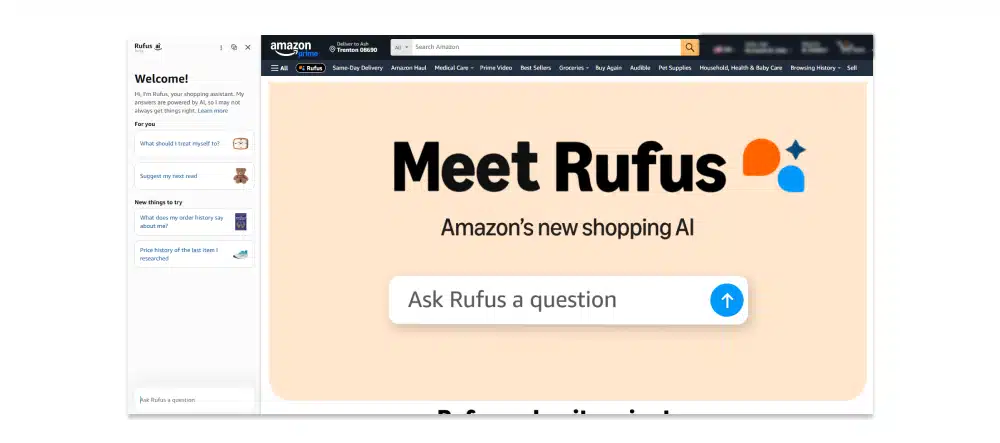
Built directly into the Amazon ecosystem, Rufus is the most “ready” agent because it already has access to your payment info and purchase history.
Rufus now supports ‘Price-Target Autonomous Buying’, it will automatically purchase an item when it hits your specified price. This moves from “assistant” to true autonomous commerce.
💡 Pro Tip: Rufus is great for internal Amazon shopping, but it won’t help customers find better deals on independent eCommerce stores, which is why open standards like ACP matter for independent retailers.e
Why This Matters for Your Business
Product Discovery Is Changing
Right now, customers browse your website, click through categories, and compare products themselves. Soon, AI will do all of that for them. They won’t visit your site at all, their AI agent will.
If your product information isn’t clear and easy for AI to read, you won’t show up in the results. The AI will recommend your competitors instead because their product data is structured better for machines.
Customer Service Is About to Get Faster
AI agents will handle the routine stuff: “Where’s my order?” “How do I return this?” “When will it be back in stock?” Your team won’t need to answer the same repetitive questions over and over.
This frees up your staff to focus on complex issues and real conversations. The AI handles the logistics in real time, even coordinating returns or issuing refunds, while your people handle the human side of the brand.
Shopping Gets Personal at Scale
AI remembers exactly what customers bought, what they liked, and what their budget is. Every recommendation is tailored specifically to them, not based on generic “people also bought” lists, but on their unique intent.
You can’t do that manually for thousands of customers, but AI can. This allows your business to offer “concierge-level” service to every single shopper automatically.
What You Need to Do Now
1. Make Your Product Data “Agent-Ready”
AI needs clear, detailed information to recommend you. This means accurate descriptions, specs, pricing, and availability. Use Schema Markup (labels in your website’s code) to tell AI exactly what each piece of info is.
Quick Tip: Most eCommerce platforms like Shopify or BigCommerce have apps that can help you automate this technical “tagging.”
2. Optimize for AI Discovery
AI prioritizes brands that provide direct, clear answers. Use FAQ sections on product pages and encourage high-quality customer reviews. The same things that help humans trust your brand, consistency and transparency, are what help AI agents verify that you are a reliable choice.
3. Check Your Platform’s “Agent Support”
Not every store is ready for AI buyers. Check if your platform is building support for the Agentic Commerce Protocol (ACP) or the Universal Commerce Protocol (UCP). These are the new standards that allow AI agents to “shake hands” with your checkout system securely.
If you’re on a custom or older system, you may need to plan for an upgrade to stay visible in an AI-first world.
Final Takeaway
Agentic commerce isn’t some distant concept. The infrastructure is being built right now, and the businesses that prepare early will have a massive advantage over competitors who wait.
When customers start using AI to shop, those AI agents will only recommend brands they can easily find and trust. If your product data is messy or your platform isn’t ready, you won’t show up. Your competitors will.
Start now. Clean up your product data. Make sure your information is accurate and structured. Work with your eCommerce platform to understand their AI readiness.
The brands AI agents recommend will win. Make sure yours is one of them.