

eCommerce Sales Tax Compliance After South Dakota v. Wayfair

South Dakota v. Wayfair changed the core rule online sellers had relied on for years. Before the decision, sales tax obligations usually turned on physical presence such as a store, warehouse, or employees in a state. After Wayfair, states can require remote sellers to collect and remit tax based on economic nexus, which means your sales volume or transaction count alone can trigger an obligation. That is why sales tax compliance after Wayfair became a practical operating issue, not a narrow legal edge case. A seller can owe tax in states where it has never opened an office.
That shift made eCommerce sales tax compliance a process, not a one-time setup. You need to determine where physical nexus, economic nexus, or marketplace facilitator rules apply; register before collecting where required; charge the correct tax; file returns on the schedule each state assigns; and keep monitoring thresholds as sales change. The catch is that states do not use one uniform rule. Thresholds, filing frequencies, product taxability, and marketplace rules vary, and they change. This article gives you a working framework for sales tax compliance after Wayfair so you can identify the right questions and verify the current rules in each state where you sell.
What South Dakota v. Wayfair Actually Changed
South Dakota v. Wayfair changed one core rule: a state no longer had to wait until a seller had stores, employees, or inventory there before requiring sales tax collection. Before 2018, that physical nexus standard protected many online sellers from collection duties outside their home footprint. Wayfair removed that constitutional barrier. After the ruling, states could impose collection obligations based on the seller’s economic activity in the state, not just brick and mortar presence.
In plain English, economic nexus means you can create a sales tax obligation by selling enough into a state, even if you never set foot there. That is why the case mattered so much for remote seller sales tax compliance. A business shipping nationwide could trigger obligations in multiple states simply through revenue or transaction volume. For eCommerce sales tax compliance, that shifted nexus analysis from “Where do we operate physically?” to “Where are we doing enough business to be taxable?”
Wayfair did not create one national threshold. The Court upheld South Dakota’s approach, but states later wrote their own rules. Many used revenue thresholds, transaction thresholds, or both. They also differed on exclusions, counting methods, effective dates, and filing requirements. That distinction matters because Wayfair sales tax compliance is not about memorizing one court case. It is about monitoring each state’s economic nexus rules and applying the right one to your sales mix.
Why enforcement expanded
Once the physical nexus rule fell, states had clear legal room to expand enforcement against remote sellers. Many also adopted marketplace facilitator laws, which require the marketplace, not the individual seller, to collect tax on marketplace transactions. That does not eliminate your compliance work. Direct website sales, marketplace exclusions, registration triggers, and return filing rules still vary by state.
- Track sales and transaction counts by state.
- Separate marketplace sales from direct sales before testing thresholds.
- Register and file where nexus exists under that state’s rules.
How to Determine Which States May Require You to Collect
Wayfair created economic nexus, but it did not replace physical nexus. States can still require collection when your business has people, property, or selling activity inside their borders. Inventory stored in a warehouse, with a 3PL, or through a marketplace fulfillment program belongs on your list immediately. So do employees, remote workers, contractors, installers, service reps, and trade show activity that goes beyond casual attendance. The common mistake is treating nexus as a real estate question. It is a business activity question. Start by listing every state where your inventory sits, where your team or contractors operate, and where you regularly sell or support customers as part of your sales tax obligations for online sellers.
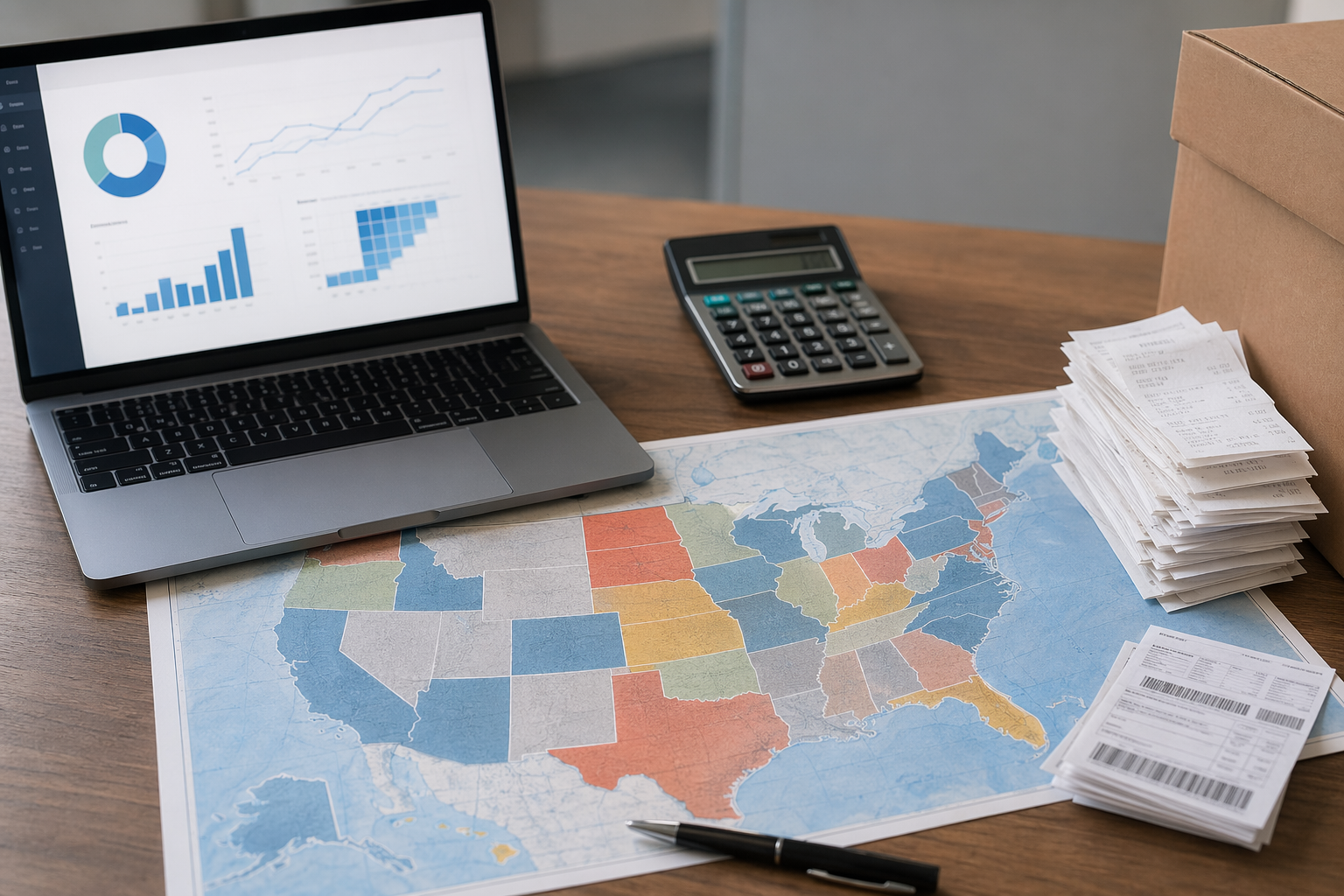
Track thresholds the way each state actually applies them
- Separate direct-to-consumer sales from marketplace sales in your reporting. A marketplace facilitator often collects tax on marketplace orders, but those orders are not counted the same way in every state when threshold calculations are made.
- Measure both dollars and order count. Economic nexus rules often use revenue thresholds, transaction thresholds, or both, so a report that tracks only sales dollars leaves a major gap.
- Match your data to the state’s testing period. Some states look at the current year, some the prior year, and some use a rolling lookback, which changes when liability begins.
- Verify the details on the state department of revenue or tax authority website. Confirm whether gross sales, taxable sales, exempt sales, and marketplace volume are included before you register or begin collecting.
This is where many sellers get tripped up. Two states can use similar threshold language and still count sales differently. The practical rule is simple: track revenue, transactions, and sales channel by state, then confirm the calculation against the state’s published guidance. That verification step is what turns raw order data into defensible eCommerce sales tax compliance.
When to Register for a Permit and Start Collecting
Crossing an economic nexus threshold does not mean you should flip on tax collection the same day without paperwork in place. The missing step is registration timing. In most states, the practical sequence is straightforward: confirm that the threshold was met under that state’s rule, apply for the required sales tax permit, receive authority to collect, and then begin charging tax on taxable sales from the effective date the state requires. Collecting before you are properly registered can create its own problem because you are taking tax from customers without the permit that authorizes you to do it.

The friction is timing. States do not all treat threshold crossings the same way. Some tie the obligation to the date you exceeded the threshold. Others apply it beginning with a later period, such as the next month or quarter after the threshold is met. That is why good eCommerce sales tax compliance depends on matching registration timing to each state’s rule instead of using one national start date.
If you discover that you exceeded a threshold in a prior period, do not guess. First identify the earliest date the state could treat you as having nexus. Then review whether a marketplace facilitator already collected some of that tax, because that can reduce the scope of direct exposure. After that, register as required and determine whether past uncollected tax, late filings, or voluntary disclosure options need review. That last step often warrants CPA or state and local tax counsel input, especially when older periods or multiple states are involved.
Collection Is More Than Turning On Tax at Checkout
Nexus answers one question: where you have to register. It does not answer what you must tax, which rate applies, or which transactions are even yours to collect. That is where eCommerce sales tax compliance gets harder. States do not treat all taxable products the same way, and they do not apply the same sourcing rules to every sale.
A seller can have the right permit and still charge the wrong tax. Tangible goods, digital goods, and service-based subscriptions are a common failure point. A physical item might be fully taxable, a downloaded file might be taxed only in certain states, and SaaS taxability varies even more because some states treat remote software access as a taxable service while others do not. Product-specific rules matter too. Clothing exemptions, food treatment, medical-use exceptions, and the taxability of shipping or gift wrapping can all change the total collected on the same order.
Sourcing rules change the rate, not just the obligation
Rate calculation also depends on where a sale is sourced. In destination-based systems, tax is generally based on the customer’s ship-to location. In origin-based systems, some intrastate sales can be sourced to the seller’s location instead. That distinction affects state, county, city, and special district rates. Turning on a blanket “collect tax in every nexus state” setting does not solve this. If the product tax code or sourcing logic is wrong, the calculation is still wrong.
Marketplace sales need separate handling
Channel mix adds another layer. Marketplace facilitator laws often require the marketplace to collect and remit tax on marketplace orders, while the seller remains responsible for direct website sales. If you lump Amazon, Walmart, Etsy, and site orders together, you risk double collection, undercollection, or mismatched returns. The practical rule is simple: map taxability by product type, apply the correct sourcing method, and separate marketplace-facilitated transactions from direct sales before you trust the numbers at checkout.
What Marketplace Facilitator Laws Do and Do Not Cover
Marketplace facilitator laws generally shift sales tax collection and remittance on marketplace sales to the platform that processes the order. That matters after Wayfair because a seller can trigger nexus in a state and still have part of its collection burden handled through marketplace sales channels like Amazon, Walmart Marketplace, Etsy, or another facilitator. The catch is simple: those laws usually cover only the transactions made through that marketplace. They do not convert the seller into fully compliant by default, and they do not erase the need to understand each state’s registration and filing rules.
Direct website orders create the clearest gap. If you have nexus, direct-to-consumer sales through your own site are still your responsibility unless a separate rule says otherwise. States also differ on administration. Some require registration even when all in-state sales are marketplace sales, including newer social commerce channel sales. Some still expect a return so the state can see marketplace-deducted revenue. Others relieve both registration and filing in that narrow fact pattern. The practical point for eCommerce sales tax compliance is that marketplace facilitator laws reduce channel-specific collection work, not the full compliance framework.
Sellers also still own the records. You need marketplace reports, exemption documentation, and internal sales records that reconcile marketplace activity with direct-to-consumer sales and the figures reported on returns. That reconciliation is where errors surface: duplicate reporting, missed website tax collection, and thresholds measured on total sales rather than only taxable sales. The workable approach is to review obligations by state and by channel, then confirm registration, filing, and recordkeeping rules before assuming the marketplace has covered everything.
Filing Returns, Remitting Tax, and Keeping Records
After Wayfair, the hard part is not just knowing where you have nexus. It is turning that obligation into repeatable filing and remittance. States assign filing frequencies based on expected or actual liability, often monthly, quarterly, or annually, and many require a return even when no tax is due. Missed zero returns still trigger penalties in many jurisdictions. For eCommerce sales tax compliance, that means your process has to be calendar-driven, not memory-driven.

- Build a state filing calendar from each registration notice. Record due dates, filing frequency, login credentials, and whether the state requires separate local reporting. Manual tracking works for sellers registered in one or two states with stable volume. Once filings spread across several states, the tradeoff shifts fast: software or outsourced compliance costs more, but it cuts missed deadlines and rate-entry errors.
- Reconcile every return to the data source before you file. Match gross sales, taxable sales, exempt sales, marketplace-facilitated sales, tax collected, refunds, and discounts to your platform reports and payment records. Marketplace sales are a common failure point in sales tax compliance after Wayfair because some states want those sales reported separately even when the marketplace remits the tax.
- Remit exactly what the filed return shows, using the payment method the state accepts. ACH debit is common, but some states impose registration cutoffs or payment scheduling rules. Filing late and paying on time still creates penalties. Filing on time and remitting short does the same.
- Keep records that can survive an audit: filed returns, workpapers, exemption and resale certificates, transaction detail, shipping documentation, refund support, and marketplace statements. Retention periods vary by state, so a multiyear archive is the practical baseline for eCommerce sales tax after South Dakota v. Wayfair.
The strongest system is the one you can run every period without improvising. Accuracy beats speed, and documented reconciliation beats guesswork.
A Practical Path to Staying Compliant
Wayfair turned eCommerce sales tax compliance into an ongoing operating process. The first question is still where you owe tax, but the answer no longer stops with physical presence. Sales volume, transaction count, inventory placement, employees, and channel mix can all create obligations, and states do not apply those rules the same way. A one-time setup breaks as soon as your footprint changes.
- Identify where nexus exists by reviewing physical activity and each state’s economic threshold.
- Register in states where your obligation is active before treating tax collection as routine.
- Configure tax collection correctly across your direct storefront, including product taxability, exemptions, and destination-based rules where applicable.
- Verify how marketplace facilitator laws apply so you know which sales a marketplace collects for and which sales still remain your responsibility.
- File on time, reconcile returns to marketplace and platform reports, and keep records that support what you collected and remitted.
Your real safeguard is a monitoring system: scheduled threshold reviews, channel-by-channel reconciliation, and documented filing controls. Revenue grows, transaction counts shift, and new business activities trigger new rules. Compliance stays intact when your process updates as fast as your sales footprint does.