
 1-888-553-8776
 Eashan Mehta
Imagine you open Instagram and a small coffee roaster is live, walking through their latest beans. They pour a bag into the grinder, talk about flavor notes, answer questions about brew methods, and pin a link so viewers can buy the exact blend they are using. That is live commerce at its core, live video where people can shop as they watch.
It matters in 2026 because shoppers are tired of flat product pages and guessing what something is really like. They want to see products in action and ask questions before they buy. Platforms like TikTok, Instagram, and Amazon are investing heavily in live shopping, which means they are giving extra reach to brands that use these tools.
For small businesses, this is a real opening. Live commerce lets you talk directly to customers, show how your products fit into everyday life, and turn a moment of interest into a purchase without sending people through a long, disconnected funnel.
What Live Commerce Is
Live commerce is when you broadcast live video and people watching can buy your products in real time without leaving the stream. Think of it like QVC or HSN, but on your phone. Or like Instagram Live or TikTok Live, but with a “buy now” button built directly into the experience.
You turn on your camera, talk about what you’re selling, answer questions from viewers, and they can click to purchase right there while you’re streaming. No separate website. No leaving the video. The shopping happens in the moment.
Where Live Commerce Actually Happens
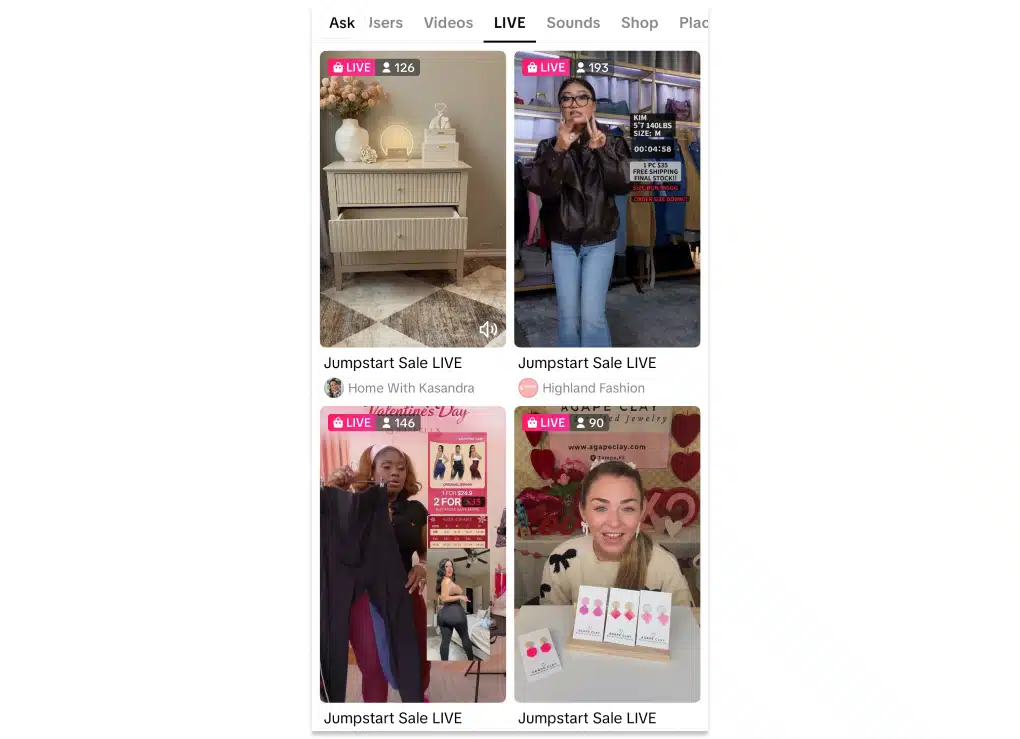
Live commerce takes place on social platforms you probably already use. TikTok Shop lets you sell products during a TikTok Live stream. Instagram Live has shopping tags you can add to featured products so viewers can tap and buy. Facebook Live Shopping works the same way, viewers see products tagged in your stream and can purchase with a few taps.
Marketplaces have their own live commerce setups too. Amazon Live lets sellers broadcast product demos directly on Amazon. Platforms like Whatnot and NTWRK specialize in live shopping events, particularly for collectibles, fashion, and limited-edition items.
You can also do live commerce on your own website using tools that embed live video and shopping together, like CommentSold, Bambuser, or Livescale. This keeps everything on your site, so you control the experience and don’t lose customers to a social platform’s algorithm.
What Makes Live Commerce Different From Regular Product Videos
The key difference is that live commerce is live, not edited or pre-recorded. Viewers can comment and ask questions on the spot. You respond immediately, adjust what you show based on their feedback, and even change offers in real time.
People can purchase directly during the stream, often with limited-time offers or low inventory to create urgency. “Only 5 left at this price” hits differently when someone’s watching you pack the last few items live.
It’s interactive. A product video on your site is a one-way presentation. Live commerce is a conversation where viewers influence what you show next and you can answer objections before they become reasons not to buy. That immediacy changes everything.
Why Live Commerce Is Growing
The live commerce market is projected to reach 68 billion by 2026, and it’s still accelerating. In China, live commerce already accounts for a significant portion of total eCommerce sales. The U.S. market is catching up fast.
How Shopper Behavior Changed

People want real interaction before they buy. They’re tired of perfect, polished marketing. They want to see how a product actually looks, hear honest answers to their questions, and feel like they’re buying from a real person, not a faceless brand.
Social proof matters more than ever. When viewers see other people commenting, asking questions, and buying during a live stream, it builds trust faster than a static product page ever could. They see someone else say “just ordered two!” and it validates their own decision to buy.
Live commerce also solves a problem regular eCommerce struggles with: answering questions quickly. In a traditional online store, a customer has a question, maybe sends an email, waits for a response, and often abandons their cart in the meantime. In a live stream, they ask the question, you answer it immediately, and they buy on the spot.
Tech and Platforms Finally Making It Easy
Five years ago, setting up live commerce required custom integrations, expensive software, and technical expertise most small brands didn’t have. Now, platforms like TikTok, Instagram, and Amazon have built shopping directly into their live streaming features. You don’t need developers. You don’t need complicated setups. You just need a phone and a product to sell.
The barrier to entry dropped dramatically, which is why small brands can compete with larger companies in live commerce, often more effectively.
Why Live Commerce Favors Small Brands
Live commerce isn’t about high production value. It’s about authenticity. And that’s where small brands have a massive advantage.
Authenticity Over High Production
Big brands struggle with live commerce because their marketing teams want everything scripted, polished, and approved by legal. Small brands can just turn on the camera and talk. Viewers don’t want perfection, they want real people showing real products and answering real questions.
A small skincare brand going live from their kitchen feels more trustworthy than a corporate brand reading from a teleprompter. The rough edges are the point. They signal authenticity in a way that professionally produced content can’t replicate.
Direct Connection and Faster Trust-Building
When you’re the owner or the face of your brand, live commerce lets you build relationships at scale. Viewers feel like they know you after watching a 30-minute stream. They’ve heard your voice, seen your personality, and watched you interact with other customers in real time.
That connection translates directly into trust. And trust translates into sales, not just during the live stream, but long after it ends. People who watch your lives become repeat customers because they feel connected to your brand in a way that browsing a website can’t create.
Turning Questions Into Immediate Purchases
In traditional eCommerce, questions delay purchases. Someone wonders if a product will work for them, clicks away to think about it, and never comes back. In live commerce, questions accelerate purchases.
“Will this fit me?” You hold it up, show the measurements, maybe even try it on. “Does it come in other colors?” You grab the other colors and show them. “Can I use this for X?” You explain exactly how it works. The question gets answered, the objection disappears, and the purchase happens immediately.
This is especially powerful for products that need explanation or demonstration. If your product benefits from being seen in action, live commerce removes the friction between curiosity and purchase.
Simple Product Testing and Feedback
Live commerce also doubles as real-time market research. You can test new products during a live stream and immediately see which ones generate interest. Viewers will tell you what they want, what colors they prefer, what price points feel right, and what features matter most.
You’re not guessing, you’re getting direct feedback from people willing to buy right now. That’s incredibly valuable for product development and inventory decisions.
Is Live Commerce a Fit for Your Brand?
Not every brand needs to jump into live commerce immediately, but it’s worth considering if a few things align.
Quick Criteria to Consider
Visual products work best. If your product benefits from being seen, clothing, jewelry, home goods, beauty, food, collectibles, live commerce makes sense. If your product is purely functional and doesn’t need demonstration, it might not translate as well.
Your audience is on social platforms. If your customers spend time on TikTok, Instagram, or Facebook, live commerce is a natural extension of where they already are. If your audience isn’t active on these platforms, you’ll need to build that presence first.
Someone is willing to be on camera. You don’t need to be a professional presenter, but someone from your team needs to be comfortable talking on video. It doesn’t have to be polished, genuine and conversational works better than scripted anyway.
What You Actually Need to Start
You don’t need much. A smartphone with a decent camera. A stable internet connection. A platform account (TikTok, Instagram, Facebook, Amazon). A basic plan for what you’ll show and talk about.
That’s it. You don’t need lighting rigs, fancy backdrops, or production crews. Some of the most successful live commerce streams happen from someone’s living room with natural lighting and a phone propped on a stack of books.
The barrier to entry is low enough that your first test costs nothing but time.
The Small-Brand Opportunity
Live commerce isn’t a gimmick or a temporary trend. It’s a fundamental shift in how people discover and buy products online. The platforms are built. The audience is there. The technology works. And small brands are uniquely positioned to take advantage of it because authenticity matters more than budget.
The brands winning at live commerce aren’t the ones with the biggest marketing teams or the most polished setups. They’re the ones willing to show up, talk to their customers, and sell in real time.
You don’t need to figure out the perfect strategy before you start. Run one small test stream. Pick a few products, go live for 20 minutes, and see what happens. You’ll learn more from that one stream than from reading ten guides on how to do it perfectly.
The opportunity is real. The question is whether you’re willing to turn on the camera.