
 1-888-553-8776
 Eashan Mehta
The way businesses buy has shifted. B2B buyers today expect the same convenience, speed, and ease they experience when shopping on consumer sites like Amazon. They want to log in, find what they need, and complete a purchase without waiting on a phone call or digging through email chains.
But here’s the thing: simplicity in web design for B2B is still essential, but now personalization matters just as much. Modern buyers don’t just want a fast checkout—they want pricing that reflects their contract terms, catalogs tailored to their account, and the ability to reorder products they’ve purchased before without hunting through your entire inventory.
This doesn’t mean eliminating the human side of B2B sales. The goal isn’t to replace your sales team with a website. It’s about giving buyers the tools to handle routine orders themselves so your team can focus on what they do best—building relationships, solving complex problems, and closing bigger deals.
For manufacturers, distributors, and wholesalers, this shift means rethinking how your B2B eCommerce platform works. If your site can’t deliver self-service for simple transactions while still offering personalized experiences based on customer accounts, you’re making it harder for buyers to do business with you. And when buying is hard, they go somewhere else.
What B2B Buyers Actually Want

B2B buyers aren’t asking for anything complicated. They just want the same experience they get everywhere else online—without the friction that’s been baked into traditional B2B eCommerce purchasing for decades.
- Convenience: Buyers want to place orders on their own schedule, not during business hours when a sales rep is available. If they need to restock inventory at 9 PM or over the weekend, they should be able to log in and get it done. Waiting until Monday morning to send an email or make a phone call slows everything down.
- Transparency: Nobody wants to guess. Buyers expect to see their pricing upfront, check product availability in real time, and review their order history without having to request it from someone else. If they need to reference a past order or confirm what they paid last time, that information should be right there in their account.
- Personalization: Not every buyer should see the same catalog or the same prices. If a customer has negotiated contract pricing or only purchases specific product lines, their account should reflect that. Showing them irrelevant products or generic pricing creates confusion and wastes their time.
- Speed: B2B purchases aren’t one-off transactions. Buyers order in bulk, reorder the same products regularly, and need to move fast. If your checkout process requires filling out the same information every time or manually adding 50 SKUs to a cart, you’re adding unnecessary steps that slow down repeat business.
The bottom line? B2B buyers want to help themselves. When they can, they buy more often and with less hassle. When they can’t, they look for a supplier who makes it easier.
The Core Features That Make This Possible
Delivering the experience B2B buyers expect requires specific functionality. These aren’t nice-to-have features, they’re the foundation of a modern B2B eCommerce site.
Self-Service Portals
A self-service portal is a dedicated customer account where buyers can manage their entire purchasing process without needing to contact anyone. They log in, see their account details, place orders, track shipments, and review past invoices—all in one place.
Key features include 24/7 ordering, complete order history, invoice tracking, and one-click reordering. For buyers, this means they’re not waiting on business hours or chasing down order confirmations. For your sales team, it means fewer routine questions and more time spent on high-value accounts.
The real-world benefit is simple: buyers who can help themselves buy more often. When reordering is as easy as logging in and clicking a button, repeat purchases happen faster and more consistently.
Personalized Pricing and Catalogs
One-size-fits-all pricing doesn’t work in B2B. Different customers have different agreements, and showing everyone the same catalog creates confusion and exposes pricing you’d rather keep private.
Personalized pricing means each buyer sees only what’s relevant to them—contract pricing based on their negotiated terms, volume discounts that reflect their order history, or regional pricing specific to their location. Customer segments let you group buyers by account type, industry, or purchase volume, so wholesalers see wholesale prices and retail partners see different terms entirely.
This is handled through customer groups, price lists, and private catalogs. Each buyer logs in and sees their customized experience without you needing to manually manage it for every order. It keeps sensitive pricing confidential while making sure each customer gets exactly what they’re entitled to.
Bulk Ordering and Reordering
B2B buyers don’t add items to a cart one at a time. They order in volume, restock regularly, and need speed. If your site makes them click through product pages and manually add 50 SKUs, you’re adding friction that kills conversions.
Bulk ordering tools like quick order forms, CSV uploads, and saved order lists make it easy to place large orders fast. A buyer can upload a spreadsheet of SKUs and quantities, pull up a saved reorder list from last month, or use a quick order form to punch in multiple items at once.
This makes repeat purchases effortless. The easier it is to reorder, the more likely buyers are to come back instead of shopping around.
Flexible Payment Terms
B2B purchasing isn’t like B2C. Businesses don’t just pay with a credit card at checkout. They work with invoices, net payment terms, purchase orders, and credit accounts.
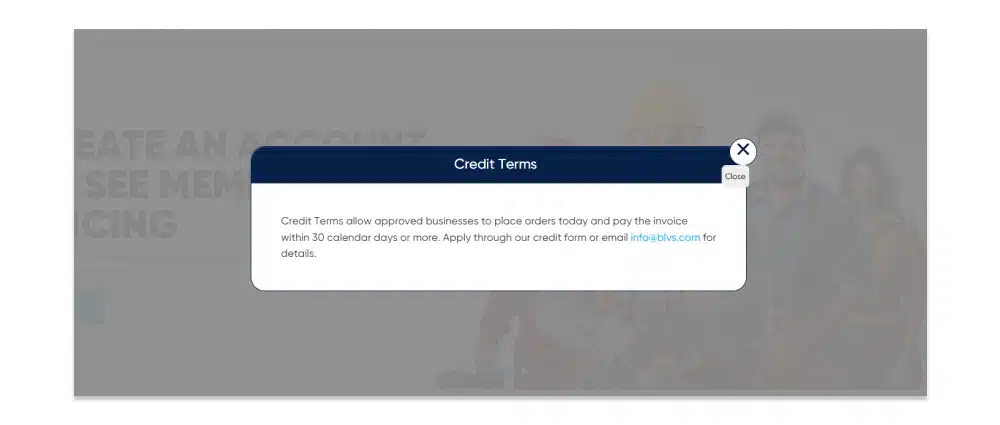 BLVS Net-30 Terms
Buyers expect multiple payment options that match how they actually do business—net 30 or net 60 terms, the ability to submit a PO number, or paying via invoice after delivery. If your site only offers standard checkout, you’re forcing buyers into a process that doesn’t fit their workflow.
Flexible payment terms and invoice management make it possible to handle these real-world scenarios without manual workarounds. It’s not flashy, but it’s essential for closing B2B sales.
What This Means for Your Business
If you’re running a B2B site, you need to start thinking like a B2C company when it comes to investing in your platform. That means prioritizing integrations, automation, and user experience the same way consumer brands do. B2B has traditionally lagged behind in eCommerce investment, but that gap is closing fast—and buyers notice when your site feels outdated compared to the consumer experiences they’re used to.
Self-service doesn’t replace your sales team. It frees them up. When buyers can handle straightforward reorders and check their own account details, your sales reps stop fielding repetitive questions and start focusing on what actually drives revenue—building relationships, solving complex problems, and closing bigger deals.
Personalization at scale is a competitive advantage. If your competitors are showing buyers customized catalogs and contract pricing while you’re sending the same generic site experience to everyone, you’re losing ground. Buyers expect relevance. When they log in and see exactly what applies to them, they move faster and buy more confidently.
Modern B2B eCommerce pays for itself. The efficiency gains from self-service portals, automated reordering, and streamlined checkout reduce manual work across your entire operation. Repeat orders happen faster, customer service requests drop, and buyers who can help themselves tend to buy more often. The ROI isn’t theoretical—it shows up in order frequency and reduced overhead.
Is Your B2B Site Ready for Modern Buyers?
B2B buyers expect B2C-level convenience now. They want to place orders on their own schedule, see pricing that reflects their account, and reorder products without friction. If your platform can’t deliver self-service portals, personalized pricing, and bulk ordering tools, you’re not just behind—you’re actively losing sales to competitors who make buying easier.
The shift to modern B2B eCommerce isn’t optional anymore. Buyers have choices, and they’ll use the supplier that respects their time and matches how they actually want to purchase.
MAK Digital specializes in building and optimizing B2B sites that deliver these experiences. If you’re ready to modernize your buyer experience and stop losing orders to outdated processes, let’s talk. We’ll show you how to build a platform that works the way your customers expect—and drives more revenue in the process.