

 1-888-553-8776
 Eashan Mehta
Website Traffic slows down. Ad costs rise. Visitors land on your site, look at one page, and leave. Many ecommerce owners see this pattern and feel stuck because the usual fixes no longer bring real improvement. A major reason is how shoppers make decisions now. They turn to search with specific questions and expect clear, useful information before they consider buying from a brand. If your site provides that clarity, you earn the visit. If it does not, another result takes the click.
This is where strong content becomes essential. Educational blogs, buying guides, product comparisons, and short videos show customers that your brand understands their needs. Good content builds trust, increases visibility, and gives shoppers a reason to stay engaged. In 2025, consistent content is the foundation of sustainable ecommerce growth.
What Content Creation Actually Means for Ecommerce in 2025
Content creation in 2025 covers far more than a standard blog post. It includes educational articles, buying guides, comparison breakdowns, short how-to videos, expert insights, customer stories, and interactive tools. Each format helps shoppers understand your products in a practical way.
Customers expect this level of clarity, especially in categories like skincare, supplements, home goods, and tech. They want to see exactly how a product works, why it matters, and what makes it different from other options. When your content provides that information, hesitation drops and confidence increases.
The goal is simple. Strong content gives customers the information they need at the moment they need it. It supports faster decisions and builds trust before they ever reach the checkout page.
Why Content Creation Fuels SEO in 2025
Search engines reward brands that teach something useful. When your site explains topics clearly and goes deeper than competitors, it becomes more valuable in the eyes of Google. That leads to stronger visibility across the keywords your customers search for.
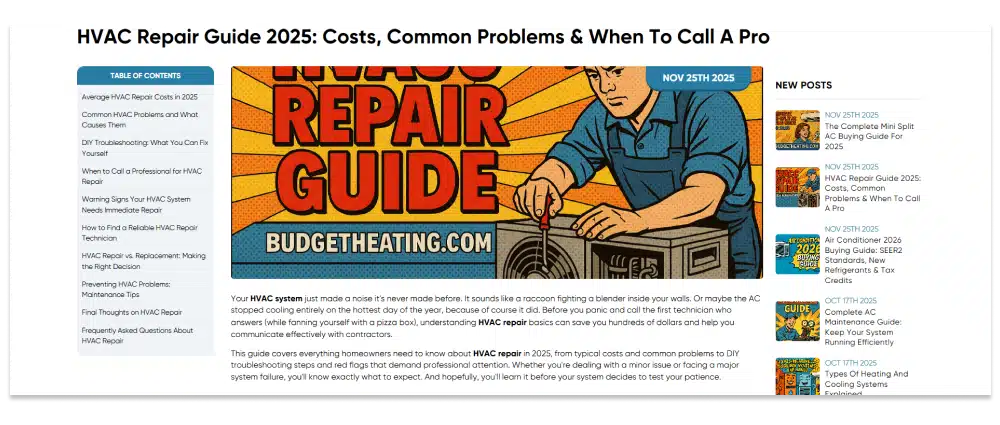 BudgetHeating.com uses clear HVAC guides to educate shoppers and build trust
Consistent content also builds topical authority. When you publish helpful articles, guides, and comparisons around a product category, Google begins to see your site as a trusted source. This makes it easier to rank for competitive keywords and the long-tail searches customers use when they are closer to making a purchase.
The SEO benefits stack up over time. You create more chances to rank, strengthen internal linking, and earn backlinks from other sites referencing your content. High-quality posts also show real knowledge and experience, which helps search engines understand that your brand is credible. The result is more qualified traffic and a search presence that grows steadily month after month.
How Quality Content Builds Brand Authority
Buyers trust brands that help them before they buy anything. When a shopper finds clear guidance, simple explanations, or helpful tips on your site, they start to rely on your expertise. That trust builds long before they reach a product page.
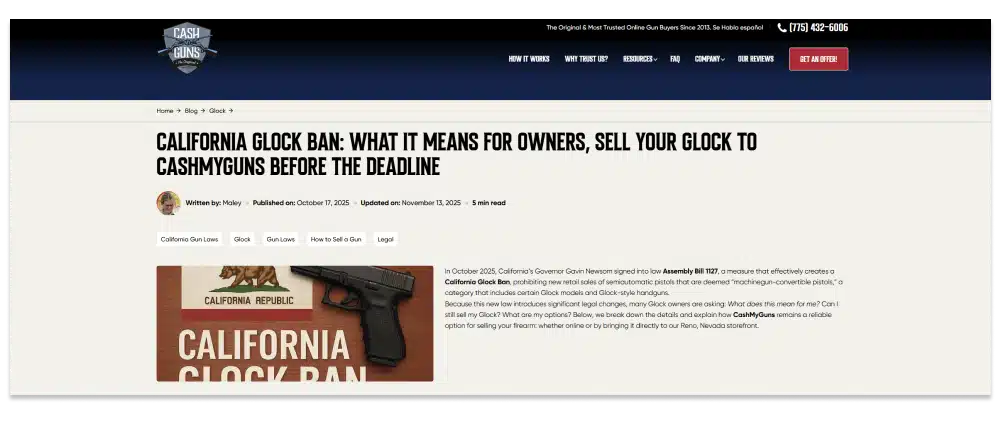 Cash My Guns builds authority through detailed guides on gun values and the selling process
Real examples show how powerful this can be. Cash My Guns has earned strong authority in their industry by publishing clear guides on firearm values, legal requirements, and the selling process. People who want to understand what their gun might be worth or how to sell it safely often check their content first because it feels reliable and informed.
This kind of authority removes friction from the buying process. When shoppers already trust your knowledge, they hesitate less. They believe your products or services will solve their problem because your content has shown that you understand their situation. That confidence often leads to faster decisions and more consistent conversions.
Why Content Matters More in 2025 Than Previous Years
Content plays a bigger role in 2025 because the market has shifted. Ads cost more, and relying only on paid traffic drains budget without building long-term visibility. Social platforms also reward educational posts, so brands that share useful information reach more people without spending as much.
Another change comes from the rise of AI-generated content. The internet is crowded with generic information, which makes customers seek out brands that provide real explanations and human experience. Shoppers want transparency and depth. A one-sentence product description is no longer enough to earn trust.
You see this clearly with supplement brands. Customers expect ingredient breakdowns, safety details, and clear guidance on how the product works. When a brand offers that information, shoppers feel more confident and are more likely to buy. Strong content meets those expectations and sets the brand apart from competitors.
Content Types That Actually Work for Ecommerce
Certain types of content work especially well for ecommerce because they support both search visibility and conversions. Buying guides built around buyer intent help customers understand what to choose based on their needs. Comparison articles make it easier to decide between similar products without feeling overwhelmed.
Short videos also perform well. A quick clip showing how to use, clean, or set up a product gives shoppers instant clarity. Customer stories add another layer of trust by showing real outcomes from real people. Seasonal content can be effective too. A skincare brand in Chicago, for example, can publish cold-weather routines that speak directly to local challenges.
Answer-driven content ties it all together. When you write posts based on search data and customer service questions, you solve real problems at the right moment. These formats move shoppers from curiosity to confidence and make the buying decision feel much easier.
Actionable Content Strategies for Ecommerce Owners
Content becomes far more effective when you break it into a few simple steps. Start with a quick audit of your site to spot thin pages or missing information. Then look at your main product categories and build content hubs around them. These hubs help shoppers find what they need and also give search engines a clearer view of your expertise.
A few practical actions can guide the process:
- Use Google Search Console to find real customer questions.
- Turn customer service inquiries into blog topics or short videos.
- Create bridge content that links informational posts to product pages.
- Plan one month of content at a time to stay consistent.
- Repurpose strong content into email, Reels, TikTok, and Pinterest.
These steps compound over time. As you publish regularly, your authority grows and each new piece performs better than the last. Small improvements add up and create steady, long-term momentum for your store.
Common Content Creation Mistakes
Many ecommerce brands fall into avoidable content traps. One of the biggest is writing without understanding search intent. When the topic does not match what customers are actually looking for, the post never gets traction. Another issue is publishing generic content that sounds like every competitor. If your article could easily be swapped with another brand’s, it will not stand out.
Inconsistent posting also hurts. Momentum matters, and long gaps between content pieces slow down growth. Some brands forget to connect their content back to their product journey. Helpful posts should lead readers toward the solutions your store provides. And while AI can support writing, relying on it alone creates thin, surface-level content. Shortcuts lead to content that never ranks and never earns trust.
How to Measure the Success of Your Content
Measuring performance does not need to be complicated. Google Search Console is a great place to start. It shows new keywords, impressions, and the queries your content is starting to rank for. Analytics tools help you track returning visitors, time on page, and how often people move from a blog post to a product page.
It also helps to look at assisted conversions. Some posts won’t produce direct sales, but they influence the buying process. Engagement on social platforms adds another layer of insight, especially if you repurpose your content across channels. Backlinks are another strong signal. When educational content earns links naturally, it shows that people find it valuable. Growth usually starts slowly, then speeds up as your authority strengthens.
When It’s Time to Bring in Experts
There comes a point when handling content on your own becomes difficult. Store owners often get too busy to publish consistently, which slows down momentum. Sometimes the challenge is strategy. You may need a clear plan built around real keywords, customer questions, and category authority, but lack the time to build it the right way.
Competitors also influence the pace. If they publish more often or with deeper insight, they will outrank you even if your products are better. And when rankings stall or product pages lose traction, it usually signals that your site needs a more advanced content approach.
MAKDigital can step in when you reach that point. We create full content strategies, perform detailed keyword research, build topic clusters, and produce SEO-aligned content designed for ecommerce growth. With the right support, your content works harder, your visibility improves, and you gain time to focus on running your business.