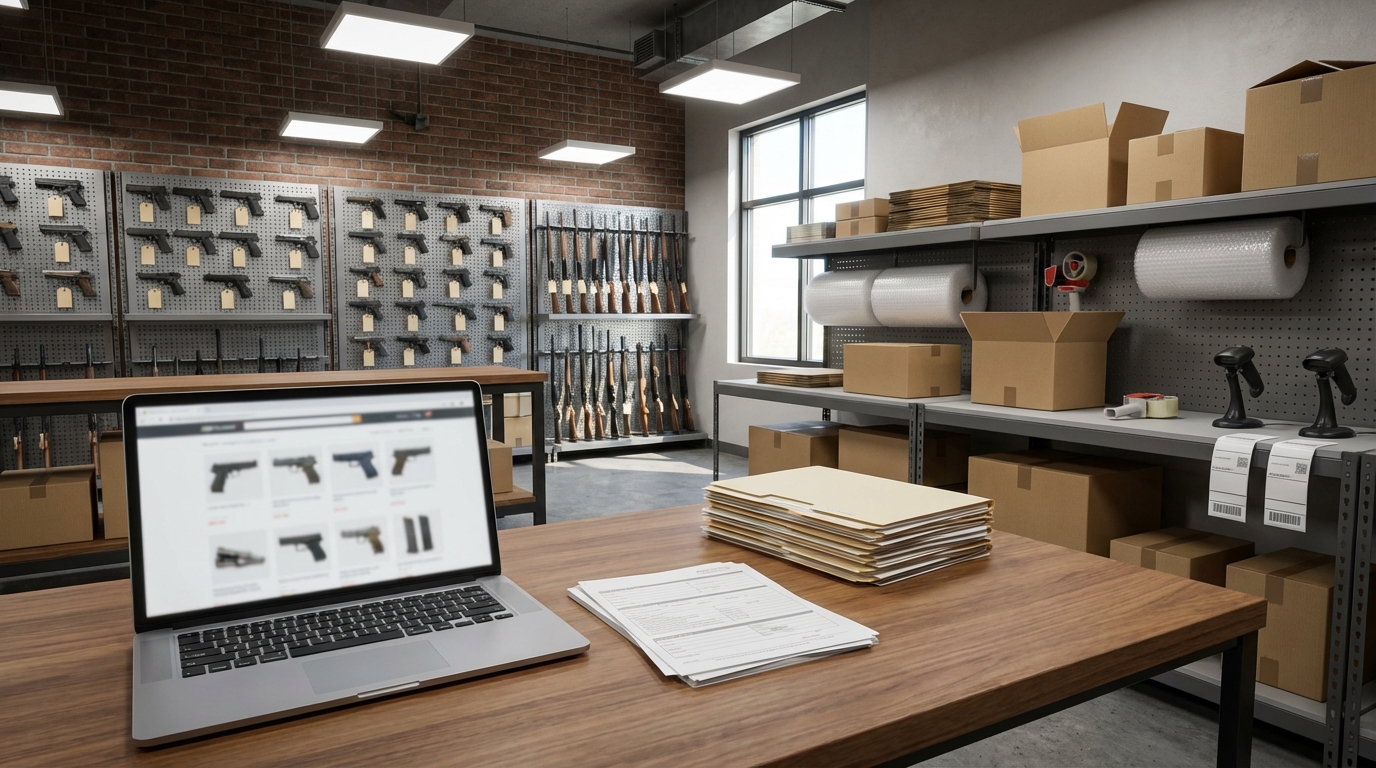

Best eCommerce Platforms for Firearms Retailers in 2026
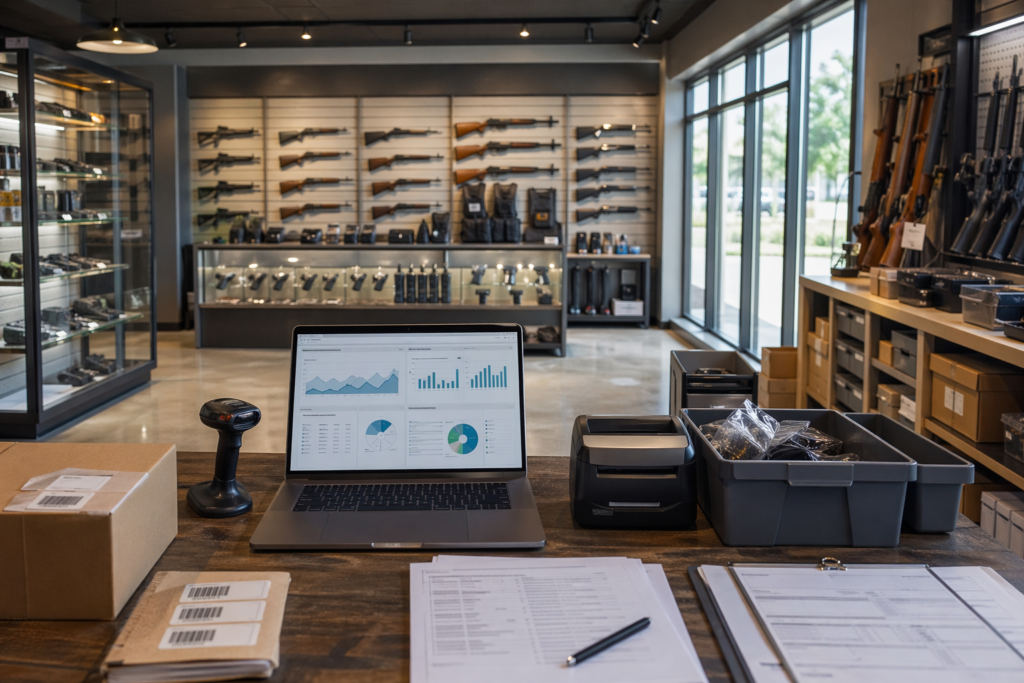
This is not a generic software roundup. Firearms retail breaks the usual platform scorecard because storefront viability depends on two gatekeepers before design ever matters: acceptable use policy and payment compatibility. A platform can look polished on paper and still be a bad fit if hosted checkout rules, processor support, or category restrictions block normal operations. Once those hurdles are cleared, the real comparison starts with operational flexibility, SEO and site performance, and the ability to support custom workflows without bolting on fragile app stacks.
By that standard, the best eCommerce platform for firearms retailers in 2026 is not the flashiest brand. It is the platform that stays viable under regulated-retail pressure. In this comparison, BigCommerce Enterprise leads because the source positions it as the strongest overall fit on policy support, payment compatibility, API flexibility, and built-in B2B and SEO tooling. That lead is real, but it is not universal. Some retailers need deeper customization, lighter operating overhead, or narrower FFL-focused workflows.
That is why this guide ranks best-fit alternatives instead of forcing one answer on every store. WooCommerce and Adobe Commerce belong in the conversation for customization-heavy builds. Gearfire and AmmoReady make sense for smaller FFLs that value built-in compliance-oriented workflows and distributor integrations. Shopify appears only where its policy and checkout constraints still leave a workable path. This article does not give legal advice or platform-restriction workarounds. It gives you a defensible shortlist and the tradeoffs that actually decide platform fit.
The decision criteria that actually matter for regulated retail
The best eCommerce platform for firearms retailers is not the one with the biggest market share. It is the one that survives regulated retail in practice. Our platform comparison starts with two separate gates: policy fit and payment compatibility. Those are not the same problem. A platform can permit a lawful catalog while its default payments stack refuses the merchant category, and a processor relationship is useless if the storefront itself creates account risk. Any option that fails either gate is not competitive, no matter how polished its marketing looks.

After that initial screen, we score operational flexibility. That means APIs, apps, and room for custom workflows, because firearms retail often needs rules that standard direct-to-consumer stores do not. It also means merchandising control, catalog structure, and B2B support for dealer, distributor, or wholesale scenarios. This is why BigCommerce Enterprise sits at the top of the field on policy support, API flexibility, and stability, while WooCommerce and Adobe Commerce remain strong alternatives for merchants who need deeper customization. Smaller FFLs can rationally prefer Gearfire or AmmoReady when built-in compliance flows and distributor integrations outweigh broad extensibility.
SEO and performance are part of the same scoring lens, not a bonus category. We will look at URL control, metadata, redirects, structured data, and how each platform handles faceted navigation, because eCommerce SEO falls apart fast when filtered catalogs create crawl waste or duplicate pages. We also weigh migration friction and long-term account risk. This follows the same logic as a prior-year firearms platform roundup: the winning platform is the one that can be adapted, operated, and kept online without rebuilding the business around its limits.
Best overall for many firearms retailers: BigCommerce
The source comparison ranks BigCommerce Enterprise first because it addresses the three issues that usually decide platform viability in firearms retail: policy posture, payment compatibility, and operational flexibility. It is presented as the strongest overall fit for merchants that need one platform to support regulated commerce, API-driven customization, B2B capability, and solid SEO tooling. That mix matters more than any headline feature, because a store that can publish products but cannot support its real checkout and processing requirements is not a workable business system.
Payments are the clearest reason BigCommerce leads. The source says both BigCommerce and Shopify can support firearms retail through third-party FFL-compliant processors, but BigCommerce is described as more flexible while Shopify is constrained by hosted checkout and greater policy risk. The same comparison credits BigCommerce with compliance-oriented checkout customization and stronger B2B and SEO tooling with less dependence on apps. For retailers dealing with high-risk merchant accounts, that flexibility improves the odds of building a stable payment stack instead of relying on brittle workarounds.
BigCommerce also stands out because it is not only a payments answer. The source cites API flexibility, B2B support, and BigCommerce SEO strengths as core advantages, which is exactly what growing dealers need when wholesale pricing, account-specific catalogs, and online store SEO all affect revenue. The friction is implementation. If your business needs specific FFL transfer handoffs, age-gating behavior, or checkout rules tied to internal compliance processes, assume you will scope custom logic or third-party integrations. BigCommerce is the best overall platform here because it gives you room to build those workflows, not because those workflows appear automatically.
This recommendation is broad, not universal. The source identifies Gearfire and AmmoReady as specialized options for smaller FFLs that want more built-in compliance and distributor integrations. But for many merchants comparing the best eCommerce platform for firearms retailers in 2026, BigCommerce offers the strongest balance of policy fit, processor compatibility, merchandising control, and long-term flexibility.
Shopify in 2026: strong mainstream commerce tools, but real policy and payment constraints
Mainstream commerce platform tradeoffs are not automatically off the table for firearms retailers. The source says both platforms can support firearms retail when paired with third-party FFL-compliant payment processors. The problem is fit, not possibility. Shopify carries more policy risk and tighter hosted-checkout constraints, so a store that looks workable at launch can run into friction once regulated payment and order workflows move beyond a standard storefront.

Why the comparison changes at checkout
That is where BigCommerce vs Shopify stops being a generic feature contest. In firearms retail, payment compatibility, age-gated steps, dealer-transfer collection, B2B ordering, and SEO all affect revenue and operations directly. The source presents BigCommerce as the stronger fit because it offers broader payment compatibility, more checkout customization for workflows such as FFL uploads and age verification, and stronger B2B and SEO tooling with less reliance on apps.
Practical fit in 2026
That does not make Shopify a bad platform. It makes it a higher-risk fit for this category. If firearms are a small part of the catalog and the payment and compliance flow is narrow, it can still be serviceable. If firearms are central to the business, the safer mainstream recommendation in 2026 is BigCommerce Enterprise. Smaller FFLs that want more built-in compliance structure should also weigh specialized systems such as Gearfire or AmmoReady.
When self-hosted or enterprise platforms make more sense
Adobe Commerce earns consideration when your catalog, pricing, and back office logic outgrow mainstream hosted platforms. The source positions Adobe Commerce as a customization-focused alternative, while BigCommerce remains the stronger overall fit because of payment compatibility, checkout flexibility, B2B and SEO strength, and lower dependence on apps. That is the real tradeoff: Adobe is not the simpler choice. It is the platform for retailers that need deeper control.
That control matters when you need customer-specific pricing, ERP and OMS integration depth, dealer locator logic, or catalog restrictions that do not map cleanly to standard SaaS workflows. Adobe gives enterprise teams room to model those requirements directly. The cost is higher implementation spend, longer deployment cycles, and tighter internal governance around releases, QA, and security.
WooCommerce for ownership and SEO control
WooCommerce is the most practical self-hosted option for retailers that want ownership without committing to an enterprise stack. It gives you direct control over WordPress content architecture, plugin selection, and technical eCommerce SEO. That can be a real advantage for category pages, brand content, and long-tail online store SEO. The friction is that performance, reliability, and maintainability depend heavily on hosting quality and plugin discipline.
For firearms retailers, that makes WooCommerce powerful but unforgiving. You can shape the storefront around unusual catalog needs and custom workflows, but plugin sprawl, update conflicts, and theme debt quickly erode that advantage. WooCommerce works best for teams with a clear development owner and a strict change-management process, not for merchants trying to minimize platform overhead.
Custom and niche self-hosted builds
Custom stacks and niche self-hosted eCommerce platforms make sense only when the workflow itself is the competitive advantage. If you need heavily normalized distributor feeds, custom OMS routing, account-level purchasing logic, or channel-specific catalog behavior, a bespoke build can fit the business better than forcing workarounds into a general platform.
But technical ownership comes with full operational burden. Security patching, infrastructure monitoring, access control, dependency management, and incident response all move in-house or to your agency partner. Self-hosting also does not solve processor acceptance or platform policy issues by itself. These are credible alternatives for complex retailers, but only if you have the developers, governance, and budget to run them well.
Best-fit recommendations by retailer type
If your business started with optics, parts, apparel, or outdoor gear and you are adding regulated items, BigCommerce is the strongest mainstream fit. The source recommends it as the best overall option because policy fit, payment compatibility, checkout flexibility, SEO strength, and B2B tooling line up with less app dependence. If you want a narrower, faster path built around smaller FFL operations, Gearfire and AmmoReady make more sense because the article identifies them as specialized platforms with built-in compliance and distributor integrations.
Mid-market omnichannel dealers
For dealers juggling store operations and online growth, BigCommerce Enterprise is the clearest recommendation. The article ranks it first for firearms retail because of policy support, API flexibility, and stability, while Shopify is presented as more constrained by hosted checkout and policy risk. That distinction matters when ERP, POS, inventory sync, and SEO all need to work together around a specialized payment stack.
Wholesale-heavy businesses
If margin depends on wholesale pricing, account roles, and quote-driven purchasing, default to the platform with stronger native B2B depth. In this platform comparison, BigCommerce stands out because the source specifically cites stronger B2B and SEO tooling with less reliance on apps. For wholesalers, that usually beats a cheaper storefront that needs constant workarounds.
Large teams with deep custom workflows
If your operation already expects custom business logic, the best firearms eCommerce platform is not always the easiest one to launch. The article positions WooCommerce and Adobe Commerce as customization-focused alternatives, making them credible choices for large catalogs, complex routing, or highly specific internal workflows. Choose them only when custom control is the priority and your team is prepared to own that complexity.
What to validate before you migrate or rebuild
A sound platform choice does not protect you from a bad migration plan. This article ranks BigCommerce highest because of policy support, payment flexibility, API access, and stronger B2B and SEO capabilities, but platform policy and processor approval still need separate validation, especially where hosted checkout limits flexibility.
Pre-migration checklist
- Review written platform terms for firearms, ammunition, parts, and accessories before design or data work starts.
- Confirm payment-partner underwriting in writing, including checkout flow, restricted categories, and any SKU-level exclusions.
- Model your catalog data early: FFL flags, hazmat attributes, serialized items, distributor feeds, kits, and MAP controls.
- Preserve titles, meta data, category copy, canonicals, and product page optimization inputs that support eCommerce SEO and search rankings.
- Map every legacy URL to a live destination. Redirects belong in launch planning, not post-launch cleanup.
- Document catalog rules for what can be displayed, quoted, backordered, or suppressed by state, carrier, or customer type.
- Inventory integrations across ERP, POS, tax, shipping, distributor sync, email, and transfer-related workflows.
- Scope custom workflows before theme approval so manual review, B2B pricing, and exception handling fit the data model.
The wrong sequence creates avoidable operational risk even on the best eCommerce platform for firearms retailers. Validate policy and payments first, lock the data model second, then migrate content and design.
Choosing the right platform starts with fit, not hype
The strongest choice is not the platform with the loudest brand. It is the one that can tolerate your catalog, connect to the right payment stack, and support the workflows your business actually runs. In this comparison, BigCommerce earned the top spot because it combines policy support, payment compatibility, compliance oriented checkout customization, API flexibility, and solid B2B and SEO capabilities. Shopify can work with third party FFL compliant processors, but hosted checkout constraints and policy risk leave less room for firearms specific requirements.
That does not make every decision simple. WooCommerce and Adobe Commerce still make sense when your operation depends on deeper customization and you have the team to manage it. Gearfire and AmmoReady remain credible options for smaller FFLs that want built in compliance workflows and distributor integrations without a larger custom build.
The practical takeaway is straightforward: revisit the retailer type recommendations, then run the migration checklist before you sign anything and decide when you should change your ecommerce platform. Confirm platform policy first. Validate payment processor compatibility second. Pressure test tax, shipping, catalog rules, B2B needs, and custom workflow gaps before migration starts. The best eCommerce platform for firearms retailers is the one that survives that checklist with the fewest operational compromises.