 1-888-553-8776
 June 1, 2026Mobile eCommerce Optimization: Making Your Store Convert on Every Device Responsive themes solve layout, not conversion. A store can fit a phone screen and still lose orders to slow product...
 2026 Guide to Enhancing Your Store's Page Speed
Page speed optimization is about delivering the first meaningful content fast, keeping layout stable, and making every interaction feel instant. Focus on Core Web Vitals on real phones and real networks. Aim for Largest Contentful Paint under two and a half seconds, Interaction to Next Paint as low as possible, and Cumulative Layout Shift under 0.1. Start by auditing critical templates, then strip render blocking CSS and JavaScript, compress and resize images, serve modern formats like WebP and AVIF, and use responsive srcset and sizes. Preload key fonts with font-display: swap, cache aggressively at the edge with a CDN, and enable HTTP 2 or HTTP 3 so multiple assets load efficiently.
Keep optimizing after the first paint. Lazy load below the fold media, defer nonessential scripts, split bundles to ship only what each page needs, and remove unused CSS. Use server level improvements such as object caching, optimized database queries, and persistent connections. Monitor with Lighthouse, PageSpeed Insights, and field data from Chrome UX Report or your Real User Monitoring tool so you see what customers actually experience. Set thresholds, annotate deploys, and track improvements against conversions, bounce rate, and SEO so speed work ties directly to business results.June 1, 2026Mobile eCommerce Optimization: Making Your Store Convert on Every Device Responsive themes solve layout, not conversion. A store can fit a phone screen and still lose orders to slow product...  May 28, 2026How to Speed Up Your BigCommerce Store: Performance Optimization Guide A faster BigCommerce storefront is a revenue issue, not a cosmetic one. Speed affects load time, customer experience...
  May 15, 2026How to Optimize eCommerce Images for SEO and Faster Load Times On product pages and category grids, the biggest speed gains often start with images because file size directly affects...
  May 12, 2026How to Fix Slow Shopify Stores: Speed Optimization Tips Store speed affects revenue before most teams notice the pattern. Faster loading improves user experience and...
 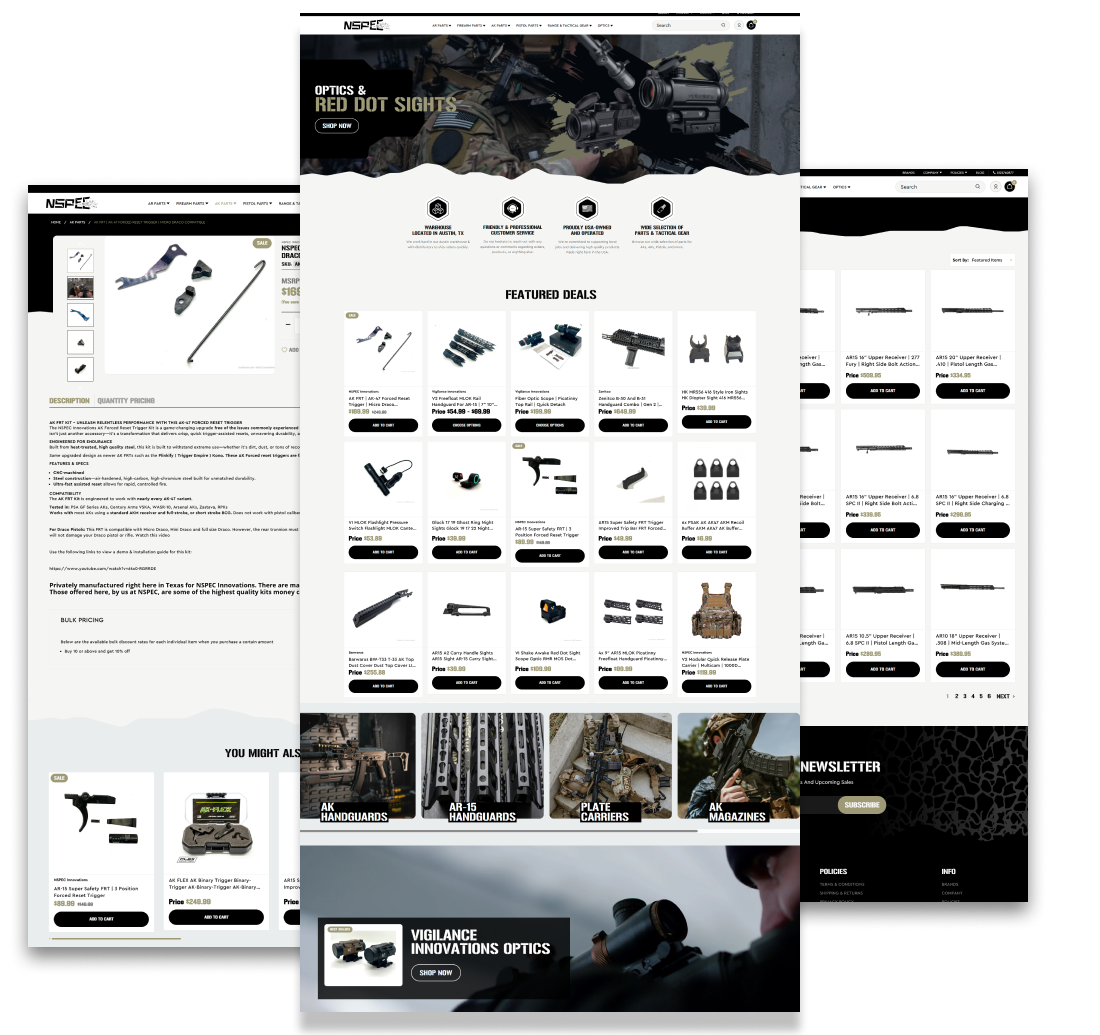 March 5, 2026From Zero to $1M+ in 10 Months: How Technical SEO and AI-Powered Content Launched NSpec Innovations Into a Competitive Market A brand-new domain. Zero authority. Zero backlinks. Zero sales history. How performance-first development, surgical...
  February 27, 2026Core Web Vitals for eCommerce: How Page Experience Affects Your Rankings Store owners should care about Core Web Vitals for eCommerce because Google does use page experience as a ranking...
  September 18, 2025Best Digital Marketing Tools for Ecommerce Stores in 2026 With over 26 million eCommerce websites live today and global online sales projected to reach $7.5 trillion by 2026...
  June 25, 2025Designing for Speed: Why Site Speed Matters Site speed isn’t just about user experience, it directly affects how your site performs in search rankings. Since Google...
  February 28, 2025How to Optimize Your Product Pages for SEO Search engine optimization (SEO) is one of the most powerful tools available to eCommerce businesses, yet many store...
  February 17, 2025Veils by Lily Website Speed Optimization: A MAKDigital Case Study Website speed is one of the most critical yet often overlooked factors in eCommerce. A slow-loading website can...
 Choosing MAKDigital means partnering with a team of experienced professionals dedicated to your success. We offer tailored solutions, expert advice, and a commitment to delivering exceptional results. Our focus on innovation and customer satisfaction sets us apart in the eCommerce industry.

Here are quick answers related to this page to clarify key points and help you apply the ideas.
It is the process of making pages load and respond quickly by improving server delivery, reducing asset weight, and streamlining the critical rendering path so users see content fast.
Focus on Largest Contentful Paint, Interaction to Next Paint, and Cumulative Layout Shift. Aim for LCP under 2.5 seconds, low INP for quick input response, and CLS below 0.1 for visual stability.
Use modern formats like WebP or AVIF, resize to real display sizes, compress aggressively, serve responsive images with srcset and sizes, and lazy load below the fold media.
Inline only critical CSS, defer or async nonessential scripts, split bundles by route, and remove unused code. Keep third party scripts to a minimum and load them after main content.
Preload key font files, enable font display swap to avoid invisible text, subset character sets, and prefer variable fonts to reduce total file requests.
Fast hosting, object caching, optimized databases, HTTP 2 or HTTP 3, and a global CDN reduce latency and speed up delivery for both static and dynamic content.
Use PageSpeed Insights, Lighthouse, and field data from Chrome UX Report or your Real User Monitoring tool. Track changes alongside conversions, bounce rate, and crawl stats.
Compress and convert images, enable CDN caching, defer noncritical scripts, preload key fonts, and fix layout shifts by setting explicit width and height on media.