

 1-888-553-8776
 Eashan Mehta
To boost your brand’s visibility in AI search engines like ChatGPT and Google Gemini, structure your content clearly. This way, AI can easily understand and reference it. This means using schema markup to label your pages. It also involves writing clear answers to common questions.
When someone asks ChatGPT, Google Gemini, or Perplexity a question, they receive one clear answer through AI overviews with a few sources cited, not just a list of links. If your brand isn’t one of those sources, potential customers can’t find you, weakening your online presence.
You should build brand authority through reviews and by providing consistent information online. AI engines mention brands they see as trustworthy experts. If your content is not well-structured or your reputation is unclear, you will not show up in AI-generated answers.
Traditional SEO strategies focus specifically on ranking in Google’s list of results. AI search is about getting cited as the answer. Here’s how to make that happen for your eCommerce business.
Structure Your Data With Schema Markup
Start every page or blog post with a bold summary (50-75 words) that directly answers the main question. Use headers that are questions people really ask. For example, use “What’s the best way to winterize a pool?” instead of a title like “Pool Maintenance Services.” Answer the question immediately in one to two sentences after the header, then expand with supporting details.
Use clear headings with a logical hierarchy (H1, H2, H3) so AI understands your main topics and subtopics. Break information into bulleted lists, numbered steps, and comparison tables; AI can easily extract and cite this structured content. Keep paragraphs short and use simple language. Avoid industry jargon when possible.
Key Schema Types That Improve AI Visibility:
- Organization Schema: Acts as your brand’s digital identity. It tells AI who you are, what you do, and where you’re located. This helps AI confidently identify and differentiate your brand from competitors.
- Product Schema: Provides details on every product you sell, name, description, price, availability, and ratings. This structured information helps AI include your products in comparisons and recommendations.
- FAQ Schema: Marks up frequently asked questions on your site. This gives AI ready-made answers to common queries about your brand, making your content a prime source for direct inclusion in AI responses.
- Review Schema: Highlights genuine customer reviews. This helps AI understand your brand’s reputation and trust. This understanding affects whether people mention your brand.
Write Clear, Answer-First Content
AI engines prioritize content that directly answers questions without fluff. If your content rambles before getting to the point, AI will skip it and cite a competitor instead.
How to structure content for AI citation:
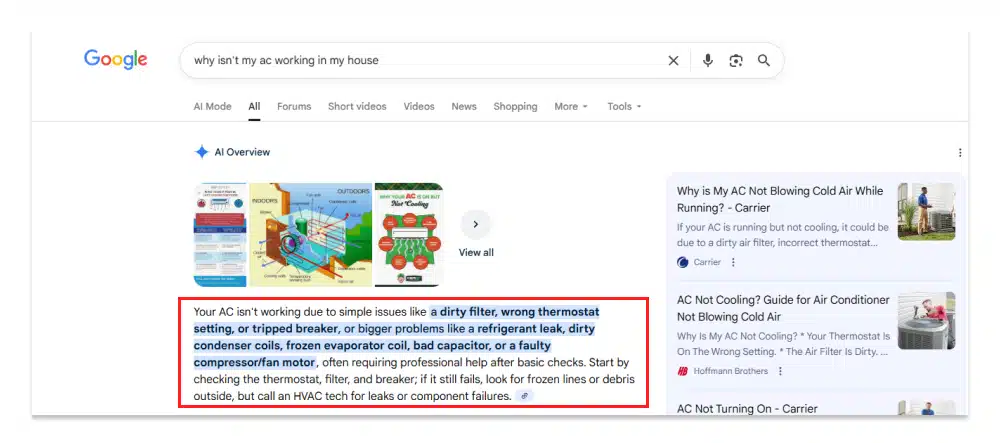
Google AI Overview Example
Building an effective content strategy for AI search starts with structure. Start every page or blog post with a bold summary (50-75 words) that directly answers the main question.
Use headers that are questions people really ask. For example, use “What’s the best way to winterize a pool?” instead of a title like “Pool Maintenance Services.” Answer the question immediately in one to two sentences after the header, then expand with supporting details.
Use clear headings with a logical hierarchy (H1, H2, H3) so AI understands your main topics and subtopics. Break information into bulleted lists, numbered steps, and comparison tables, AI can easily extract and cite this structured content. Keep paragraphs short and use simple language. Avoid industry jargon when possible.
Build Brand Authority and Trust
AI engines look for signals of expertise, authority, and trustworthiness before citing a brand. An AI is more likely to recommend a brand it perceives as credible. The way to build trust is through consistent signals across the web.
How to build brand authority for AI:
Get your brand mentioned on authoritative third-party sites like industry publications, news outlets, and trusted blogs. These citations signal to AI that your brand is recognized by credible sources. Encourage your target audience to leave reviews and respond to customer feedback on Google, Yelp, and industry-specific sites. Positive reviews contribute directly to AI’s perception of your trustworthiness.
Ensure your website clearly identifies who creates your content. Add author biographies with Person schema and detailed organizational information with Organization schema. Make sure your business information is the same everywhere online. Your name, address, and phone number should match exactly on your website, Google Business Profile, and all directory listings.
Optimize for Question-Based Searches
People ask AI engines natural language questions like ‘How do I…?’ or ‘What’s the best…?’ Generative AI tools prioritize content that directly answers these questions without fluff.
Find the right questions to answer:
Check Google’s “People Also Ask” section when you search for terms related to your business. These questions show what people are actually asking. Review your customer support emails to identify common questions customers and potential customers ask repeatedly. Use free tools like AnswerThePublic or AlsoAsked to discover popular questions in your industry.
Turn each common question into a dedicated page or blog post with a direct answer at the top. If you sell HVAC equipment, create content answering “How often should I replace my furnace filter?” or “What size air conditioner do I need for a 2,000 square foot home?” Each piece of content should provide the most direct, helpful answer possible.
Track Your AI Search Visibility
You need to know whether AI engines are actually mentioning your brand. Traditional SEO tools like Ahrefs or Moz only track Google rankings, they don’t show if ChatGPT or Perplexity is citing you.
How to monitor Your Brand’s Visibility in AI Search Engines:
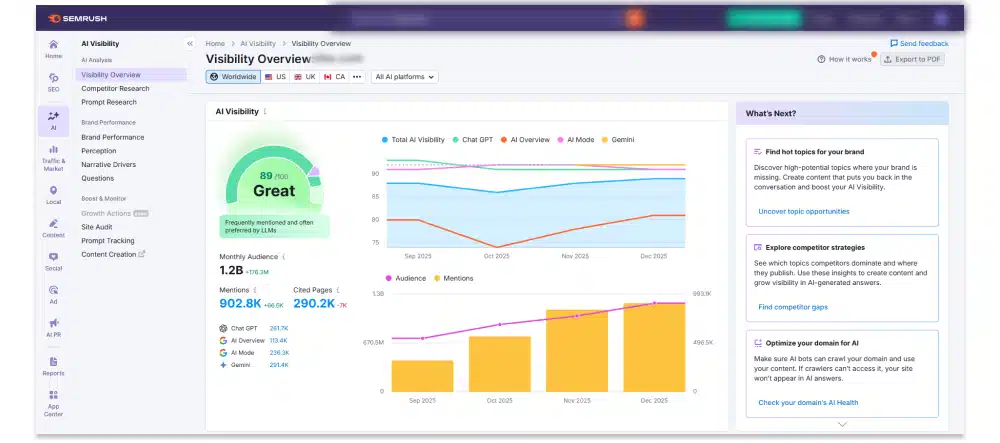
SEMrush AI Search Tool
Use specialized tracking tools like ZipTie.dev, which tracks whether your brand appears in ChatGPT, Claude, Perplexity, and Gemini responses. Semrush AI Search Grader monitors your visibility in Google AI Overviews and provides an AI visibility score. These tools query AI engines with relevant search terms and report whether your brand gets cited.
Free DIY method: Track this monthly to measure improvement. Example questions: “What are the best pool supply companies?” or “Who sells quality HVAC equipment online?”
Monitor your brand mentions, the context your brand appears in, and whether you’re receiving citations. Use this feedback to identify gaps in your content. If an AI gives wrong information about your brand, it means you need to make clearer and better content. This content should provide the right answers.
Use Structured Formatting AI Can Parse
AI engines prefer content organized in formats they can easily extract and cite. Structured content increases your chances of being included in AI responses.
What works best for AI citation:
Use comparison tables to present product or service comparisons. Create numbered lists for step-by-step instructions or processes.
Format key features as bulleted lists. Use bold text to emphasize important facts or definitions. Structure FAQs with clear question-and-answer pairs.
Example Comparison table AI can cite
| Feature | Shopify | BigCommerce |
|---|---|---|
| Best For | Small businesses, quick setup | Growing businesses, B2B sales |
| Monthly Cost | Starting at $29 | Starting at $29 |
| Built-in B2B Tools | Limited | Advanced customer groups, price lists |
AI can pull this table directly into an answer and cite your site as the source.
Measuring Success and Making Adjustments
Improving AI visibility isn’t a one-time task. You need to continually monitor performance and adjust your strategy based on results.
Set up a monthly tracking routine. Test ten to fifteen industry-related questions in multiple AI engines and document whether your brand appears. Use AI visibility tracking tools to monitor trends over time. Analyze which content receives the most citations and create similar content on related topics.
If you see gaps where competitors are mentioned but you are not, make content that answers those questions. Use better structure and clearer information. If AI provides incorrect information about your brand, publish authoritative content that corrects it. Use proper schema markup and clear formatting to ensure AI understands the accurate information.
Pay attention to which schema types drive the most visibility. If FAQ schema is getting you cited frequently, add more FAQ content. If Product schema is working well, ensure all products have complete, detailed markup.
Final Takeaway
To improve brand visibility in AI search engines, shift from traditional SEO tactics to a more structured, authority-focused method. You need to use schema markup. This helps large language models (LLMs) and other AI models understand your content better. It also helps them cite your work accurately.
Build brand authority through consistent citations, positive reviews, and expert content. Track your AI visibility regularly to identify what’s working and where gaps exist.
AI search engines are becoming the primary way customers discover brands, especially for small businesses competing online. Businesses that optimize for AI visibility now will gain a significant long-term advantage.
Start by implementing Organization, Product, and FAQ schema on your most important pages. Create five blog posts that directly answer common questions in your industry using the strategies above.
The brands winning in AI search are those that make their information clear, structured, and trustworthy, and those efforts compound long term.