
 1-888-553-8776
 Eashan Mehta
Your customers aren’t just Googling anymore. They’re asking ChatGPT, Google Gemini, and Perplexity for recommendations.
“Who’s a good lawyer for small business contracts?” “Where should I buy running shoes online?” “What’s the best local coffee shop in Brooklyn?”
If an ai model doesn’t mention your business during these queries, you’re invisible. Potential clients will never visit your website or call. You just lost a customer you didn’t even know existed.
Here’s the problem: most business owners have no idea what AI tools are saying about them. They don’t know if their information is in a generated answer. They also don’t know if it is wrong. They might worry that the system recommends competitors instead.
That’s why you need to use AI search monitoring tools. These ai platforms show whether you’re getting noticed or ignored, so you can actually fix it.
What Happens When You Don’t Monitor AI Search
You’re Losing Customers You’ll Never Know About
Someone asks ChatGPT “best marketing agency for small businesses.” AI recommends three companies. If you’re not one of them in the search results, they never visit your site. They choose someone else instead of calling you.
No notification arrives to tell you that you lost the sale. It just happens silently, over and over, via ai assisted recommendations.
Your Competitors Are Dominating AI Overviews
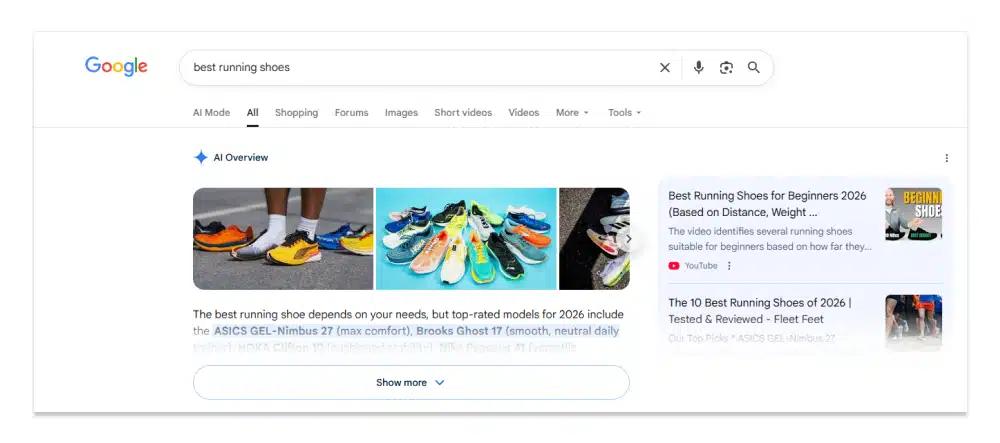
Google now places an ai overview at the very top of the page for many searches. This summary pushes traditional “blue links” down the page. If your competitor is the one cited in that overview and you aren’t, they capture the lead before the user even scrolls. Monitoring helps you see who Google is trusting as the primary source for your industry.
Your Competitors Are Getting Mentioned Instead
If AI doesn’t know about your business, it recommends whoever it finds in its data sources. That means your competitors win by default, not because they’re better, but because they’re visible and you’re not.
Every time someone asks AI for help in your industry, you’re either in the conversation or you’re out. There’s no middle ground in an ai generated landscape.
You Can’t Fix What You Can’t See
Maybe AI is showing outdated pricing. Perhaps it says you’re closed when you’re actually open. It might even recommend you for services you don’t offer anymore within various ai overviews.
If you aren’t monitoring, you’ll never know. Incorrect information destroys trust and drives away customers.
What AI Search Monitoring Actually Means
Think of it like checking your online reviews, but for ai powered search engines instead of Google or Yelp.
Here’s what monitoring tells you:
Does ChatGPT mention your business when people ask a specific search query? Does Google Gemini recommend you as a trusted option? Is the information AI shares about you accurate? Are competitors showing up more often than you?
Without tracking this, you have no idea whether AI is helping or hurting your business.
Why Use AI Search Monitoring Tools (Instead of Guessing)
You Can’t Manually Check Everything
Testing every possible customer question across multiple ai platforms takes hours. You would need to ask many different questions in ChatGPT, Gemini, Perplexity, and Claude. Their answers change all the time as new information comes in.
Many marketers ask, how can an AI search monitoring platform improve SEO strategy? The answer lies in the data. These tools identify which questions trigger brand mentions and highlight where your competitors are outperforming you in AI answers. By bridging the gap between traditional web search and AI responses, you can create a more comprehensive digital presence.
You need a system that tracks this automatically so you can focus on running your business.
Tools Show You the Full Picture
A good AI search monitoring tool finds out which questions mention your business. It shows which competitors appear instead of you. It also tells you where your information is outdated. It also tracks trends over time through machine learning so you know if your visibility is increasing.
Without this data, you’re just guessing.
Top AI Search Monitoring Tools for Small Businesses
You can’t manually check every AI platform to see if your brand is being mentioned. You need tools that automate the tracking and show you exactly where you’re visible (or invisible). Here are four leading AI search monitoring platforms, each with different strengths depending on your needs and budget.
1. ZipTie AI Search Performance Tool
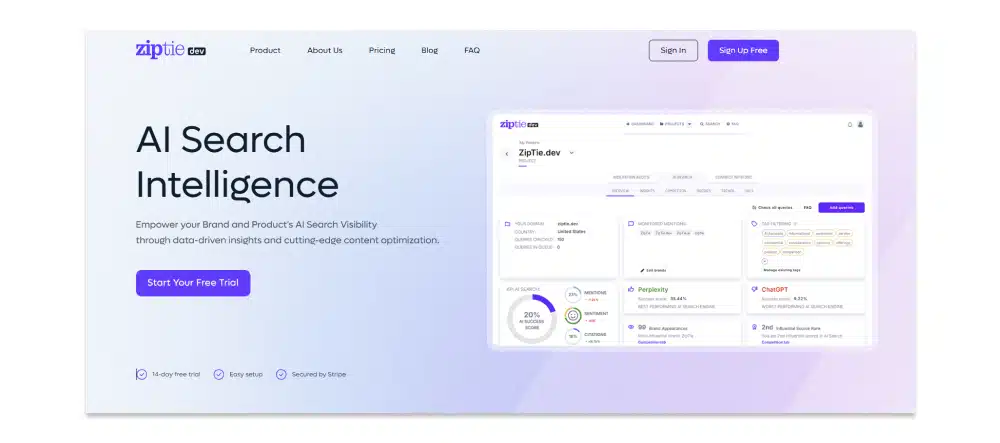 ZipTie AI Search Tool
The ZipTie AI Search Performance Tool specializes in tracking brand visibility across ChatGPT, Claude, Perplexity, and Gemini. These are the AI platforms your customers actually use for product research and recommendations. This tool monitors how often your brand appears in AI generated answers for relevant industry queries.
What makes ZipTie different: It tracks not just whether you’re mentioned, but the context of those mentions, the sentiment, and whether AI is providing accurate information about your products or services. Unlike general SEO tools that focus only on Google, ZipTie gives you visibility into the AI discovery layer that is increasingly becoming the first place customers look for recommendations.
Best for: Businesses that want dedicated AI only tracking with deep insights into how AI agents discover and recommend their brand.
2. Semrush One
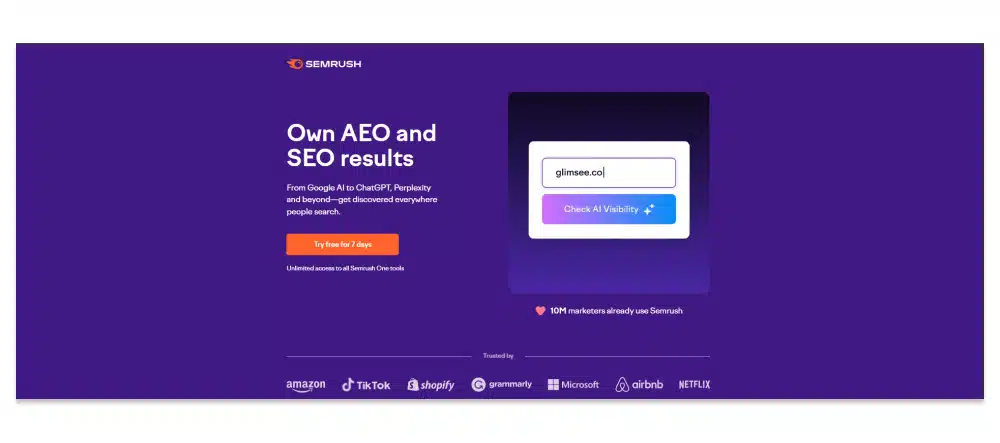 semrush one AI Search Tool
Semrush One combines traditional SEO and AI search visibility into one connected platform. It tracks your brand’s presence on Google, ChatGPT, Perplexity, Gemini, and other AI platforms, giving you a complete view of where customers find you.
What makes Semrush One different: You get unified visibility tracking in one dashboard for both Google search results and AI generated answers. It includes keyword research, backlink analysis, and AI prompt tracking together. You will see which traditional keywords drive traffic and which specific prompts trigger brand mentions. AI powered recommendations guide your optimization steps, whether that is improving schema markup or creating content AI will cite.
Best for: Businesses that want both traditional SEO tracking and AI search monitoring in a single platform.
3. BrightEdge Autopilot
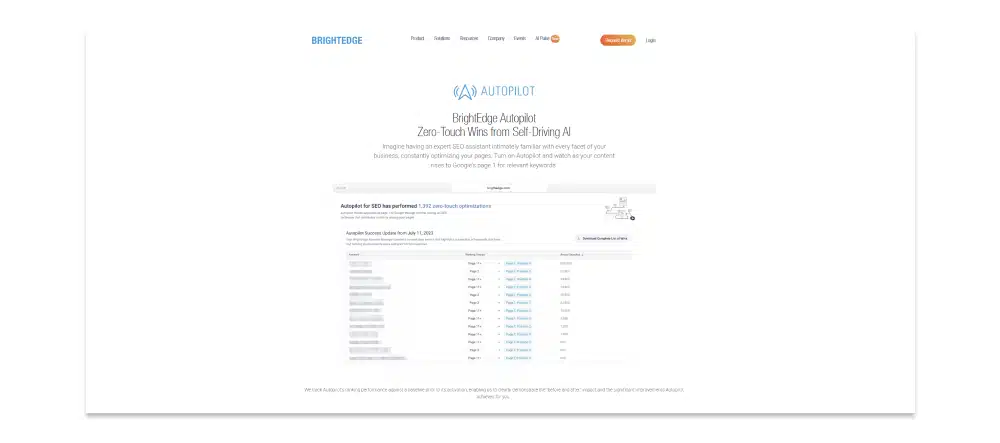 BrightEdge Autopilot AI Search Tool
BrightEdge Autopilot is an enterprise grade platform that includes AI search visibility tracking as part of its broader SEO and content performance suite. It monitors how your brand appears in AI generated answers, Google AI Overviews, and traditional search results.
What makes BrightEdge different: It is built for larger organizations with complex content strategies. The platform provides advanced analytics, automated recommendations, and content optimization workflows. It integrates with major CMS platforms and includes predictive analytics to forecast visibility trends.
Best for: Mid size to enterprise companies with dedicated marketing teams and larger budgets.
4. Conductor AI Search Performance
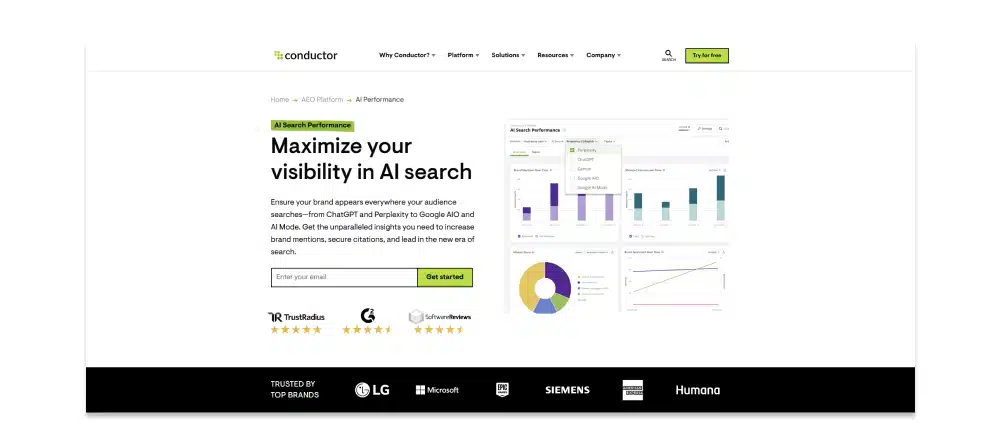 Conductor AI Search Performance Tool
The Conductor AI Search Performance module tracks brand mentions across AI platforms and provides detailed analysis of how AI engines interpret and cite your content. It focuses on content intelligence and helps you understand which topics and formats AI engines prioritize.
What makes Conductor different: Strong focus on content strategy and topic authority. The platform identifies content gaps by showing which questions AI answers but your content does not address. It includes workflow tools for content teams to prioritize optimization based on AI visibility data.
Best for: Content driven brands and publishers that need deep insights into content performance across both search and AI platforms.
| Tool | Starting Price | Free Trial | Best For |
|---|---|---|---|
| ZipTie | $99/month | 14 days | Small businesses wanting AI-only tracking at an affordable price |
| Semrush One | $199/month | 7 days | Businesses needing both traditional SEO and AI visibility in one platform |
| BrightEdge Autopilot | Custom | Demo only | Enterprise companies with dedicated marketing teams |
| Conductor | Custom | Demo only | Content-driven brands needing deep content strategy insights |
How Monitoring AI Search Makes Your SEO Stronger
Tracking Google rankings is a good start. But it’s not the full picture anymore. When you monitor what AI says about your brand, you uncover gaps and competitor advantages that tools like Ahrefs and Moz can’t show you.
What AI Search Monitoring Reveals
Google Analytics tells you how many people visited your site. Ahrefs shows your keyword rankings. But neither tool tells you whether ChatGPT is recommending your competitors when someone asks for product suggestions in your category.
An AI search monitoring platform fills that blind spot. It shows you which search queries trigger mentions of your brand across multiple AI platforms. It identifies where your competitors appear in AI-generated answers but you don’t. It highlights outdated or incorrect information AI engines are sharing about your business.
Integrating AI Search Data Into Your SEO Strategy
Once you understand how AI engines talk about your brand, you can adjust your content strategy to improve both traditional SEO and AI visibility simultaneously.
If your monitoring tool shows that competitors get cited for certain product categories but you don’t, that’s a signal to create more detailed content answering those specific questions. If AI is sharing outdated pricing or service information, you know you need to update that information consistently across all platforms.
The goal isn’t to optimize separately for Google and separately for AI. The goal is to create content that works for both, structured, accurate, helpful information that search engines can index and AI engines can cite with confidence.
How to Start Monitoring (Even If You’re Not Tech-Savvy)
Step 1: Test Manually First (Free)
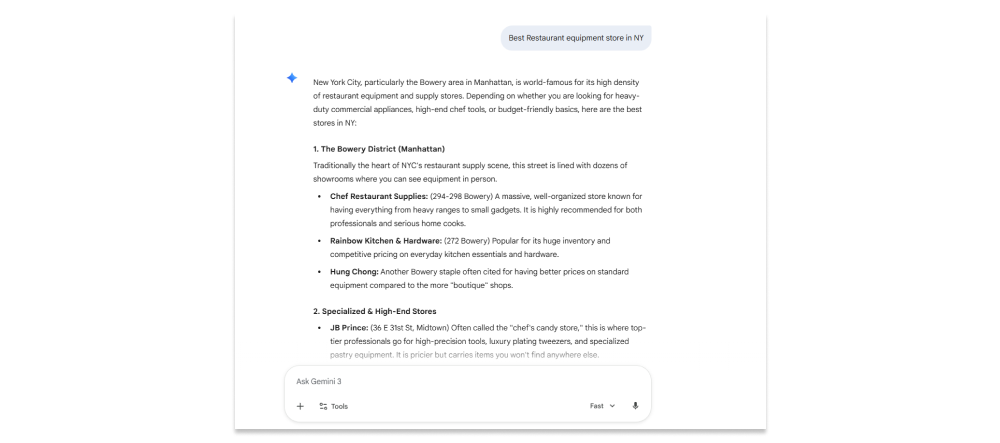
Ask ChatGPT, Google Gemini, or Perplexity 5-10 questions your customers would ask while in ai mode:
- “Best [your service] in [your city]”
- “Who should I hire for [your service]?”
- “What’s the difference between [product A] and [product B]?”
Write down whether your business shows up. If it doesn’t, you now know you have a visibility problem.
Step 2: Use an AI Search Monitoring Tool
Manual testing gives you a snapshot, but ai tools like Semrush one automate the entire process.
Set up tracking for your brand name and industry keywords. Monthly reports indicate your visibility (or invisibility) and highlight which competitors receive mentions. This takes the guesswork out completely.
Step 3: Fix What’s Missing
If AI isn’t mentioning you, it’s usually for one of three reasons:
- Your content isn’t structured for AI to understand: Add schema markup to label your pages clearly. Answer customer questions directly instead of burying information in long paragraphs. This is the fastest way to get cited in a Google ai overview.
- Your reputation isn’t strong enough: Get more reviews on Google and industry sites. Earn mentions on trusted blogs and news outlets. AI cites brands it recognizes as credible.
- Your information is not consistent: Make sure your business name, address, and phone number are the same on your website, Google Business Profile, and directory listings. Inconsistency confuses modern ai models.
Read our full guide: Strategies to Improve Your Brand’s Visibility in AI Search Engines
Checklist for Business Owners: Get Started Today
Test your current visibility (10 minutes)
- Ask ChatGPT, Google Gemini, or Perplexity 5 questions customers would ask
- Write down if your business appears in the ai generated content
Sign up for an AI search monitoring tool (15 minutes)
- Try Semrush one or similar tool
- Set up tracking for your brand name and 3-5 industry keywords
Check your business information everywhere (20 minutes)
- Google Business Profile, Yelp, industry directories
- Make sure name, address, phone, and services match exactly
Create 3 FAQ pages or blog posts (this week)
- Answer the most common questions customers ask
- Use clear, direct language
- Structure content so AI can easily cite it
Review your monitoring report monthly
- Are you showing up more or less?
- Which competitors do people mention?
- Where is your information wrong?
Final Takeaway: If You’re Not Monitoring, You’re Guessing
AI search is how customers find businesses now. If you don’t know what ChatGPT, Google Gemini, and Perplexity are saying about you, you’re flying blind. Your competitors might receive recommendations while you remain completely invisible.
Monitoring doesn’t have to be complicated. Start with manual testing, then use a tool like Semrush One to track automatically. Repair what’s broken and review your progress each month. The business owners who win are the ones who stay visible where their customers are actually looking.