
 1-888-553-8776
 Eashan Mehta
User experience (UX) is no longer a design upgrade or a secondary consideration. In 2026, it is the foundation of how eCommerce brands compete, grow, and retain customers. As online shopping continues to replace in-store experiences, your website has become your storefront, your sales team, and your brand reputation all at once.
For eCommerce business owners, this shift brings a clear reality. Shoppers expect speed, clarity, and personalization at every step. If a site feels confusing, slow, or impersonal, users leave without hesitation. Strong UX is no longer about standing out. It is about staying relevant.
Below, we break down the most important UX trends in 2026 and explain how they are reshaping the way customers interact with online stores, especially for small and mid-sized brands.
AI-Driven Personalization Becomes the Baseline
In 2026, AI-powered personalization is no longer a competitive edge reserved for enterprise brands. It has become an expectation. Shoppers now assume that websites will recognize their preferences, adapt content in real time, and remove friction from repeat purchases.
Modern personalization goes far beyond product recommendations. AI tools now tailor homepage layouts, adjust messaging based on intent, and surface products based on browsing behavior, location, and past interactions. The experience feels less like browsing a catalog and more like interacting with a store that understands the shopper.
For smaller eCommerce brands, this does not mean building complex systems from scratch. Personalization can start with smarter product suggestions, adaptive search results, and conversational AI chatbots that guide users toward the right purchase. The goal is simple: reduce decision fatigue and make the shopping journey feel effortless.
Mobile-First UX Is No Longer Optional
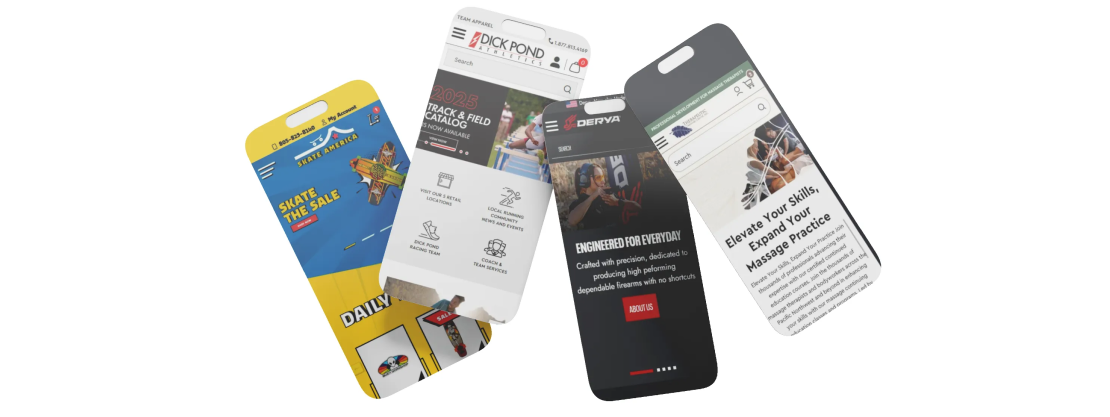
MAKDigital: Mobile-first design built for modern shoppers
By 2026, mobile shopping is the default, not the alternative. A majority of eCommerce traffic now begins and ends on smartphones. That reality has pushed mobile-first UX design from best practice to absolute requirement.
Shoppers expect fast load times, thumb-friendly navigation, and checkout flows that work seamlessly on small screens. Sites that still rely on desktop-first layouts often struggle with cluttered interfaces, slow performance, and poor usability.
Strong mobile UX prioritizes clarity. Clean layouts, simplified menus, optimized images, and frictionless checkout flows all work together to keep users moving forward. When mobile experiences feel intentional instead of adapted, conversion rates improve and cart abandonment drops.
Conversational Interfaces and Voice-Based UX
In 2026, shoppers increasingly interact with brands through conversation rather than clicks. Conversational UX includes voice search, chat-based navigation, and AI assistants that respond naturally to user intent.
Voice-enabled shopping continues to grow as consumers rely on tools like Alexa, Siri, and Google Assistant to search, reorder, and compare products. At the same time, conversational chat interfaces on websites are becoming smarter and more human.
For eCommerce brands, this means optimizing content for natural language, improving internal search accuracy, and designing experiences that feel helpful rather than transactional. When users can ask questions the same way they speak, friction disappears and confidence increases.
Immersive Shopping with AR and 3D Experiences

Augmented reality (AR) and interactive 3D product views are redefining how customers evaluate products online. In 2026, immersive UX is no longer limited to large retailers. It is becoming accessible to brands that want to reduce uncertainty and build trust.
Being able to visualize products in real-world environments or interact with them digitally helps bridge the gap between online and in-store shopping. This is especially impactful for categories like furniture, home goods, apparel, and electronics.
From virtual try-ons to 360-degree product views, immersive UX reduces returns and increases buyer confidence. When shoppers feel informed before purchasing, they are far more likely to complete the sale.
Sustainability-Driven UX Design
In 2026, sustainability-focused UX plays a growing role in purchasing decisions. Consumers are paying attention not only to what they buy, but how brands operate and communicate their values.
Sustainable UX design often shows up through thoughtful choices. Lightweight page designs that reduce energy usage, transparent messaging around eco-friendly products, and clear indicators for sustainable shipping options all contribute to a more responsible digital experience.
For eCommerce brands, sustainability is not about performance trade-offs. Minimalist layouts, optimized assets, and efficient site architecture improve both environmental impact and site performance. When sustainability and usability align, trust grows naturally.
Accessibility and Inclusive UX Standards
Accessible UX design is no longer just a compliance concern. In 2026, it is a core expectation. Shoppers expect websites to be usable by everyone, regardless of ability.
Inclusive design includes readable typography, proper color contrast, keyboard-friendly navigation, and support for assistive technologies. These enhancements improve usability for all users, not just those with disabilities.
Beyond usability, accessibility helps protect brands from legal risk tied to ADA compliance. More importantly, it signals that a brand values inclusivity, which resonates strongly with modern consumers.
Frictionless Checkout and Payment Experiences
The final moments of the shopping journey matter more than ever. In 2026, frictionless checkout UX is a deciding factor in whether a customer completes a purchase.
Shoppers expect fast, secure transactions with minimal steps. One-click checkout, saved payment methods, flexible payment options, and transparent shipping costs are now standard expectations.
Reducing checkout friction directly impacts revenue. When payment experiences feel seamless, brands see higher conversion rates and stronger repeat purchase behavior.
Why UX Is the Real Competitive Advantage in 2026
In 2026, eCommerce success is defined by experience, not features. Shoppers choose brands that feel intuitive, responsive, and trustworthy. Strong user experience design connects every part of the customer journey into one cohesive system.
Brands that invest in UX are not just improving usability. They are building long-term loyalty, reducing friction, and creating experiences customers want to return to.
If your site has not evolved with modern UX expectations, it may be costing you sales without you realizing it. MAKDigital helps eCommerce brands optimize UX strategy, from performance improvements to conversion-focused design. A professional UX audit can reveal exactly where your site is falling short and where the biggest opportunities exist for 2026 and beyond.